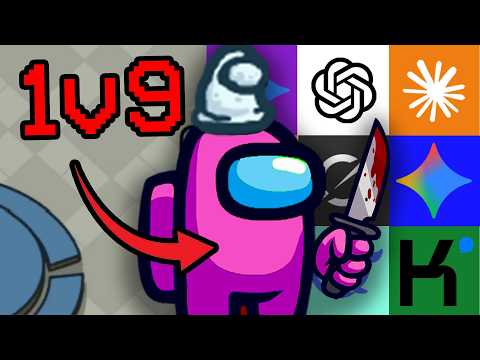
Deji accidentally setting himself ablaze establishes exactly what kind of session this is going to be: less a careful deduction game than an escalating experiment in how badly a lobby can misuse one dangerous mechanic. The pyromaniac role allows players to ignite others, while scattered fire hydrants offer a chance of survival, creating a simple risk-and-rescue dynamic. Instead of treating fire cautiously, however, the group immediately starts demanding to be burned, hunting for hydrants, and trying to turn combustion into entertainment.
Proximity chat is responsible for much of the comedy because conversations form and collapse organically as players move around the map. Private role disclosures, improvised alliances, accusations, pleas to be set on fire, and attempts to guide one another toward safety constantly overlap with the actual objectives. One particularly effective running situation has Vikk playing while unable to see properly, forcing other players to guide him by voice while the possibility of someone setting him on fire hangs over the interaction. It is ridiculous, but it also demonstrates why proximity chat works so well with a social-deduction game: location becomes part of both the joke and the evidence.
The opening game produces a surprisingly entertaining mystery beneath all that disorder. Josh attracts suspicion early and spends an extraordinary amount of time defending himself, while the lobby tries to reconstruct who was present when burning players appeared. Later, Toby becomes the focus of an increasingly passionate accusation, only for the eventual explanation to reveal how effectively incomplete information and confident testimony can distort the group's reasoning. Players repeatedly clear one another based on limited observations, then discover that those assurances are much less reliable than they sounded.
Fire becomes even funnier once the players largely abandon self-preservation. They deliberately gather in stacks, ask the pyromaniac to ignite them, camp around hydrants, and use burning bodies as the centerpiece for extended bits. The baked-tart routine around a corpse is a good example of the group's ability to stretch a bizarre spontaneous moment into something memorable. At the same time, that sequence also exposes a pacing problem: dead players can spend a long time waiting while the surviving lobby socializes instead of advancing the game.
The custom roles and abilities add further uncertainty, although they are not always communicated cleanly. Engineers use vents, traps complicate movement, protective abilities create temporary alliances, and one player discovers how useful vent travel can be for an impostor. Some abilities apparently fail, activate late, or behave differently from what players expect, producing funny reactions but also making deductions harder to evaluate. The changing number or placement of hydrants similarly affects the pyromaniac's effectiveness, with one round leaving so many extinguishing options that setting anyone on fire becomes much less threatening.
Later rounds shift back toward more traditional deception, including Harry's increasingly suspicious attempts to survive accusations and a round where venting, unexplained bodies, and conflicting eyewitness accounts create genuine uncertainty. These sections benefit from having actual deductions underneath the shouting. The funniest mistakes also emerge naturally from gameplay, such as pressing the wrong sabotage, killing someone who was openly willing to protect the impostor, or giving an opponent enough information to unravel a plan.
The main limitation is that the same freedom producing the best comedy also makes the session exceptionally messy. Conversations frequently overlap, players spend long stretches asking to be burned rather than pursuing objectives, and several meetings become arguments built on half-heard information. Fire gradually shifts from a novel threat into a recurring gag, and technical or role-related confusion occasionally makes it difficult to tell whether an outcome resulted from strategy, misunderstanding, or malfunction. Even so, the group's willingness to commit fully to absurd situations keeps the chaos entertaining more often than exhausting.
Pros
- Proximity chat creates spontaneous alliances, betrayals, overheard conversations, and location-based comedy that fit Among Us exceptionally well.
- The pyromaniac mechanic produces memorable panic as burning players scramble for hydrants or deliberately tempt the fire.
- Deji's accidental self-immolation, Vikk's blind navigation, and the extended corpse-side baked-tart bit give the session several distinctive running jokes.
- Accusations against Josh, Toby, Laser, Harry, and others create genuine deduction beneath the deliberately chaotic play.
- Custom abilities and vent mechanics provide impostors and crewmates with additional opportunities for deception and misinterpretation.
Cons
- Heavy overlapping chatter can make meetings and accusations difficult to follow.
- Players repeatedly prioritize fire-related jokes over tasks and reports, causing several rounds to drag.
- Unclear, delayed, or apparently malfunctioning abilities make some outcomes unnecessarily confusing.
- The abundance of hydrants in one round significantly reduces the pyromaniac role's danger.
- Repeated requests to be set on fire eventually make the central gimmick less novel than it is in the opening rounds.
Proximity chat and the pyromaniac mechanic give the group exactly the tools needed to turn ordinary deduction into gleefully irresponsible chaos. The session occasionally becomes too distracted by its own fire jokes and suffers from confusing role behavior, but strong improvisation, spectacular misplays, and surprisingly committed accusations keep the disorder consistently entertaining.