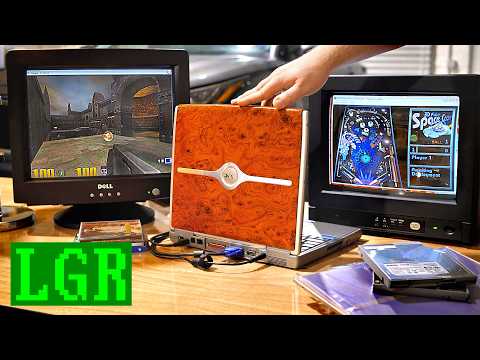
The video revisits an often-overlooked corner of physical media by exploring the PC-exclusive software and multimedia bundled with many DVD releases during the late 1990s and early 2000s. Rather than treating these additions as a historical footnote, it presents them as an ambitious attempt to expand what a movie purchase could offer beyond standard playback. That focus gives the discussion a clear identity while appealing both to nostalgia and to viewers interested in the evolution of home media technology.
A significant strength is the historical context surrounding InterActual Technologies and the emergence of PC-friendly DVD software. The presentation connects the company's role, the industry's adoption of its software, and early online synchronized viewing events into a coherent narrative. While the discussion accurately distinguishes documented historical developments from the host's personal enthusiasm, it also avoids overstating the long-term importance of these features, instead explaining why they made sense within the internet limitations of their era.
Most of the video's runtime is devoted to demonstrating the software itself across a wide range of DVD releases, and this hands-on approach keeps the subject engaging. Instead of simply listing features, the host installs the applications, navigates their interfaces, and shows what still functions today. Script-to-screen comparisons, archived websites, wallpapers, screen savers, trivia games, downloadable icons, and experimental voice dubbing software illustrate the remarkable variety these discs offered, while also revealing how inconsistent the quality could be from title to title.
The demonstrations also benefit from an honest willingness to show technical shortcomings. Several games run improperly on newer hardware, missing browser plugins prevent certain features from loading, and some applications require older operating systems to function correctly. Rather than editing around these obstacles, the presentation uses them to highlight the preservation challenges surrounding early multimedia software, making the exploration feel authentic rather than selectively curated.
The video's enthusiasm occasionally leads to subjective judgments—certain films are described as having exceptionally strong feature sets, while others are dismissed as underwhelming—but these opinions are clearly presented as personal evaluations rather than objective facts. Likewise, broader observations about broadband internet reducing the appeal of DVD-ROM content and studios shifting toward newer formats are presented as reasonable historical explanations rather than exclusive causes, acknowledging industry trends without claiming a single definitive reason for the feature's decline.
By the conclusion, the retrospective succeeds not because it argues these extras were revolutionary, but because it demonstrates how creative they often were within the technological limits of their time. The comparisons across many different releases establish useful patterns, showing both the ambitious experimentation of early DVD authoring and the uneven execution that accompanied it. Even viewers without nostalgia for the period gain a clearer appreciation for an unusual chapter in consumer software and physical media history.
Pros
- Provides clear historical context for the rise and decline of PC-exclusive DVD features alongside practical demonstrations.
- Shows a wide variety of real software, games, archived websites, and multimedia extras rather than relying on descriptions alone.
- Candidly documents compatibility problems and preservation challenges instead of presenting only ideal outcomes.
- Balances historical information with entertaining commentary, making a niche topic accessible to both collectors and general technology enthusiasts.
- Highlights the technological limitations of the era in a way that explains why these features were once genuinely appealing.
Cons
- The large number of individual DVD examples occasionally becomes repetitive, with similar categories of extras appearing across multiple discs.
- Some demonstrations are limited by missing plugins or compatibility issues, preventing a complete look at every advertised feature.
- Personal enthusiasm for physical media and specific releases sometimes outweighs deeper discussion of how broadly consumers actually used these PC-exclusive features.
This retrospective offers an informative and enjoyable exploration of a largely forgotten experiment in digital entertainment, combining historical research with practical demonstrations that show both the creativity and the limitations of DVD-ROM extras. Its passion for the subject never obscures the distinction between documented history and personal opinion, making it an engaging look at an unusual period in home media.