Fresh-sawn lumber, wet beams and a roof that still needs to survive serious winter snow give the cabin work a satisfyingly practical character. Rather than presenting construction as a seamless transformation, the creator shows the slower realities of producing his own material, including boards that cup or twist, inconsistent cuts and pieces that simply are not suitable for their intended job. The explanations of strapping, blocking, plywood seams, fascia cuts and checking a roof for square provide enough detail for viewers to understand why each step matters without turning the project into a formal carpentry lesson.
That work gains an interesting point of comparison when the river trip leads to an old remote cabin. Its chainsaw-ripped boards, heavy timbers, simple bunks, old tools and improvised construction immediately capture the creator's attention, and his enthusiasm feels genuine. He studies details such as the combined rafter-and-roof-board arrangement and door construction rather than treating the building merely as an abandoned curiosity. Speculation about its age, former occupants and last use is generally presented as guesswork, however, which is appropriate given that no documented history of the structure is established here.
The older cabin also quietly reinforces themes already present in the creator's own project: making useful shelter from available materials and accepting roughness when it serves a purpose. That connection is especially apparent when he later discusses his ungainly tarp-covered outbuilding, which he openly dislikes aesthetically but continues using because dry storage is valuable. His comments about improving it, supporting it against snow loads and eventually replacing temporary structures with stronger, better-looking ones make the property feel like an evolving working homestead rather than a polished showcase.
There is useful honesty throughout the construction material. A board cut too thick remains part of the discussion, wet lumber is acknowledged as likely to shrink, and twisted beams are rejected for roof strapping rather than forced into service. The roof-squaring demonstration is particularly accessible for less experienced viewers, while small observations about blocking placement and fascia orientation add practical value. At the same time, many techniques are presented conversationally from the creator's own experience rather than as comprehensive building guidance, so viewers should not mistake the episode for a complete structural or code-oriented tutorial.
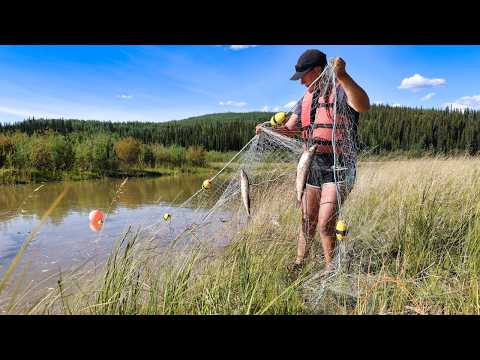
The boating sections provide the week's larger sense of adventure. After first exploring the unfamiliar river with experienced companions, the creator returns with his own outboard jet boat and explains features intended for shallow, rocky water before pushing farther upstream. Fishing, camping, animal tracks, salmon sightings and extremely shallow channels give these sequences strong wilderness atmosphere, while his decision to scout the river with others before attempting it alone demonstrates a more measured approach than simply charging into unknown water. Claims about particular tracks or unexplained bubbling water remain appropriately tentative rather than being presented as established identifications.
Structurally, however, the installment is unusually fragmented. It begins with construction, shifts into preparations and a group river trip, jumps forward to gardening and carpentry after an explicit editing interruption, and then rewinds to resume the solo boating journey. The creator explains why he is rearranging the chronology, and the decision prevents an uninterrupted block of similar boat footage, but it also makes the episode feel like several good pieces assembled around one another rather than a single developing story. Promotional discussion of the boat company and referral arrangement further slows the transition into the wilderness material, though the financial relationship is disclosed openly.
Pros
- The discovered cabin provides a fascinating real-world contrast to the creator's own remote building work without relying on unsupported claims about its history.
- Carpentry explanations cover squaring, blocking, plywood support, fascia cuts and lumber selection in an approachable, practical way.
- Mistakes, warped material and temporary structures are shown candidly rather than editing the project into an unrealistically perfect build.
- Scouting the unfamiliar river with experienced companions before returning alone adds useful context to the later boating adventure.
- The old cabin, wildlife, fishing and shallow-water travel give the installment a strong sense of remote wilderness exploration.
Cons
- Rearranging the chronology between boating and carpentry makes the overall narrative noticeably disjointed.
- The old cabin inspires considerable speculation, but viewers receive little firm information about who built it, when it was occupied or how it was used.
- The cabin project advances relatively little during the installment because boating, editing, gardening and other property tasks divide the available time.
- Boat promotion and referral discussion briefly interrupt the otherwise immersive wilderness material.
Remote building and wilderness exploration complement each other particularly well here, with the forgotten cabin offering an unexpectedly fitting reflection of the creator's own efforts to build practical shelter in an isolated landscape. The scattered chronology prevents the installment from becoming a truly focused cabin-build episode, but the combination of useful carpentry detail, candid problem-solving and memorable river exploration remains engaging.