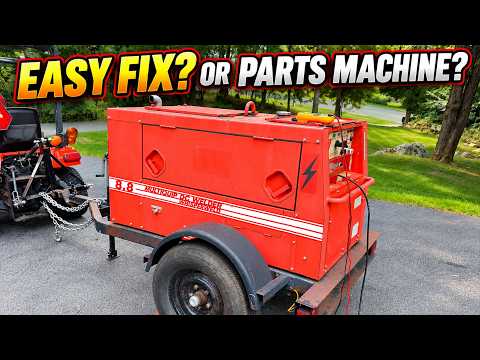
An antique counting machine offers an intriguing restoration subject, particularly because its mechanical workings represent a form of calculation that predates modern electronic devices. Bringing such an object back into working condition could provide a fascinating combination of craftsmanship, mechanical problem-solving, and technological history. Unfortunately, the presentation offers remarkably little clear information about the machine itself, making it difficult to appreciate the restoration beyond its basic premise.
The central attraction is the promise of transforming an aging mechanical device into something functional again. Vintage counting equipment can contain intricate arrangements of gears, numbered components, and interconnected mechanisms that reward careful examination. However, the presentation does not clearly establish the machine's original condition, identify its manufacturer, or explain which components require attention. Without these details, the viewer lacks a meaningful starting point for judging the restoration's difficulty or success.
The limited spoken commentary suggests a sequence of practical actions, including placing objects aside, cutting something into smaller sections, and moving between tasks. These fragments convey a hands-on approach, but they do not reliably identify the materials, tools, or mechanical components involved. Consequently, there is insufficient information to determine whether the procedures represent cleaning, repair, fabrication, or another stage of the restoration. The absence of clear explanations leaves potentially interesting craftsmanship without the context needed to evaluate it.
One particularly noticeable weakness is the repetitive verbal presentation. References to placing something to the side recur extensively, while other remarks provide little additional understanding of the work. Repetition can be tolerable in restoration content when accompanying actions demonstrate visible progress, but repetitive commentary alone contributes little educational value. Here, the lack of meaningful technical explanation makes the material unusually difficult to follow.
The historical dimension also remains largely unexplored. A vintage counting machine could provide an opportunity to discuss how its mechanism operates, what kinds of calculations it performs, and how its design differs from later technologies. None of those questions receives a clear answer. Even basic information about the machine's approximate age and intended application would help establish why preserving it matters beyond the general appeal of restoring an old object.
The conclusion presents another difficulty. Although outro music indicates that the presentation has reached its ending, the available commentary does not establish whether the machine was successfully repaired, accurately reassembled, or tested for reliable operation. A convincing restoration demonstration would ideally show the completed device performing its intended function, preferably with enough explanation to verify the result. Without an identifiable operational test, the central promise remains insufficiently demonstrated.
Pros
- An antique mechanical counting device provides an appealing restoration subject with potential historical and technical interest.
- The hands-on premise creates an opportunity to explore traditional mechanical construction and the challenges of preserving older equipment.
- The presence of an outro provides at least a recognizable endpoint to the presentation.
Cons
- Little clear information is provided about the machine's identity, age, original condition, or operating mechanism.
- Repetitive and fragmented commentary makes the restoration process difficult to understand.
- Specific tools, repair procedures, materials, and mechanical problems are not adequately explained.
- The presentation misses opportunities to connect the restoration to the historical development of mechanical calculation.
- No clearly documented functional test establishes whether the finished machine operates correctly.
Restoring a vintage counting machine is an appealing concept, but the lack of intelligible technical detail prevents this presentation from delivering much educational or evaluative substance. Repetitive commentary, missing historical context, and an unclear final result leave important questions unanswered. The subject has genuine potential, yet the restoration's execution and success cannot be meaningfully assessed from what is communicated.