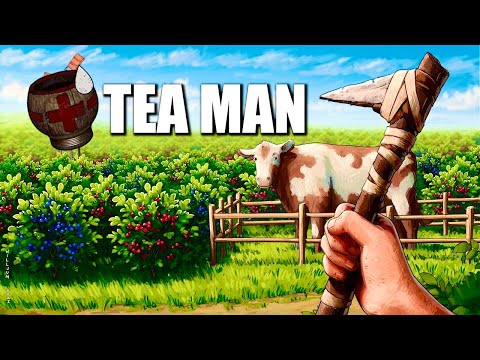
Surviving alone in Rust while constructing a fortress large enough to accommodate an entire clan requires considerably more than collecting resources and placing walls. Wilgen's ambitious solo adventure demonstrates how careful planning, unconventional farming strategies, and calculated combat decisions can transform a vulnerable starting position into an imposing defensive stronghold. Beginning on the third day of an established wipe, the journey follows his attempts to complete a tier-three workbench, reinforce his expanding base, and establish the resource production necessary to survive until the server resets. Rather than relying exclusively on aggressive PvP encounters, the experience emphasizes preparation and efficiency, creating a satisfying blend of survival gameplay, technical experimentation, and occasional high-stakes confrontations.
The military tunnels provide an excellent early example of Wilgen's resourceful approach to solo progression. Recognizing that directly confronting organized groups would be unnecessarily dangerous, he exploits opportunities created when other players eliminate the scientists but leave the red-card puzzle untouched. This strategy allows him to obtain valuable elite fragments while minimizing exposure to stronger opponents. His eventual attempt to clear the remaining scientists himself introduces a welcome dose of tension, particularly when insufficient ammunition and medical supplies nearly turn the expedition into a disaster. The progression toward the tier-three workbench feels earned because the audience witnesses both the successful decisions and the mistakes that threaten to undermine them.
Base construction forms the adventure's central attraction, with Wilgen gradually transforming an already substantial structure into a heavily fortified defensive complex. His plans include extensive metal upgrades, strategically positioned auto turrets, compartmentalized shooting positions, external tool cupboards, and a towering rooftop stronghold intended to remain secure even if the lower sections are compromised. The explanations surrounding these decisions are especially useful because they reveal the defensive reasoning behind individual features rather than simply showcasing an enormous finished building. However, the scale also exposes some practical weaknesses, including missing garage doors, an increasingly punishing upkeep requirement, and wind turbines whose unexpectedly large placement boundaries prevent him from completing portions of the outer defenses. These setbacks make the construction process more believable while highlighting the difficulties of maintaining such an oversized base alone.
The resource production systems are arguably the adventure's most distinctive contribution. Wilgen demonstrates how a relatively small riverside farming operation can sustain an enormous project through berries, farming teas, cloth production, and beehives. His experiments with crafting teas and workbench upgrades reveal the potential for consistently producing armor with additional slots, while powerful ore-gathering combinations make extraordinary farming sessions possible. One expedition reportedly yields approximately 46,000 metal ore, illustrating the enormous productivity these systems can achieve under the conditions shown. The later discovery that honey can be processed into low-grade fuel adds another interesting dimension, especially when several generators operate together. These experiments provide genuine practical value for experienced Rust players, although the presentation occasionally moves through recipes and equipment combinations too quickly for newcomers to follow without additional explanation.
Combat encounters supply an effective counterweight to the extensive construction and farming sequences. Wilgen repeatedly approaches nearby raids, occasionally suffering frustrating defeats but also securing impressive equipment through opportunistic victories. His successful confrontation with heavily armored opponents produces valuable defensive gear, while another encounter rewards him with his first AK of the wipe. The battles become particularly engaging when he must weigh the potential rewards against the risk of losing valuable equipment or temporary farming buffs. Not every fight ends favorably, and his occasional uncertainty about enemy positions adds authenticity to the encounters. Nevertheless, some repeated attempts to interrupt neighboring raids begin to feel similar, particularly when promising engagements end abruptly without substantially advancing the larger objective.
The presentation benefits from an enthusiastic narrator who explains his immediate decisions while maintaining a clear sense of long-term progression. His excitement over discovering efficient farming combinations, acquiring valuable weapons, and completing major defensive upgrades makes the experience entertaining even during relatively routine activities. The collaboration with Monstera introduces a welcome change of pace, as she creates personalized banners inspired by the honey and beekeeping systems that define the wipe. Their conversations about fuel generators lead to another productive experiment, while the finished artwork gives the fortress a recognizable identity beyond its defensive capabilities. This quieter creative section helps distinguish the adventure from more conventional Rust survival stories. The extended Raycon sponsorship, however, interrupts the building momentum, and some resource management sequences could have been condensed without sacrificing their instructional value.
The conclusion offers an interesting contrast between the fortress's enormous defensive potential and the actual events of the wipe. Despite constructing elaborate fortifications, preparing combat kits, establishing a raid alarm, and anticipating attacks from powerful neighboring groups, Wilgen never receives the major siege that his preparations appear designed to withstand. This creates a degree of anticlimax, particularly after so much attention has been devoted to the rooftop defenses and turret placements. Yet the absence of a final raid also reinforces the adventure's central achievement. Wilgen survives until the server reset with his fortress intact, having established a functioning network of resource production and defensive preparations through predominantly solo play. Although the effectiveness of the completed defenses remains largely untested against a determined raid, the journey succeeds as an impressive demonstration of what patience, experimentation, and strategic planning can accomplish in Rust.
Pros
- Wilgen's ambitious fortress construction provides a compelling long-term objective that gives the adventure a clear sense of progression.
- The military tunnel expeditions demonstrate clever solo survival tactics through calculated timing, careful positioning, and opportunistic looting.
- Detailed explanations of turrets, external tool cupboards, shooting positions, and defensive layers make the construction process informative.
- The combination of farming teas, beehives, and crop production showcases efficient resource strategies with practical applications.
- Experiments involving armor crafting and honey-powered fuel production add genuine discovery and technical interest to the gameplay.
- Dangerous raid counters and unpredictable PvP encounters deliver excitement without overshadowing the larger survival objective.
- Monstera's personalized fortress banners provide a memorable creative finishing touch that reflects the adventure's distinctive farming theme.
Cons
- The lack of a major attack on the completed fortress leaves its elaborate defensive systems largely untested.
- Repeated resource gathering and base upgrade sequences occasionally slow the pacing despite their importance to the overall project.
- Some crafting combinations and resource calculations receive insufficient explanation for viewers unfamiliar with Rust's more advanced mechanics.
- The extended Raycon sponsorship disrupts the momentum of an otherwise engaging construction sequence.
- Several encounters with neighboring raiders produce similar outcomes, creating occasional repetition without significant narrative advancement.
- Unresolved construction limitations, particularly the wind turbine placement problem, prevent the fortress from fully realizing its intended design.
Wilgen delivers an entertaining and surprisingly informative Rust survival adventure that demonstrates how efficient farming, intelligent resource management, and careful defensive planning can support an extraordinary solo construction project. The combination of tense combat, inventive experiments, and personalized fortress design makes the journey rewarding even when the action slows. Although the anticipated final raid never materializes and some repetitive sequences could benefit from tighter editing, the successful survival of an enormous, resource-intensive fortress provides a satisfying conclusion to an impressive undertaking.