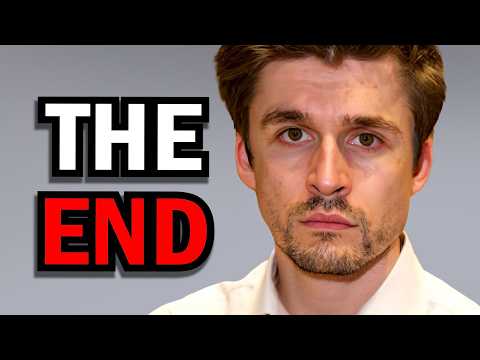
Reggie’s emotional public statements introduce allegations serious enough to demand careful handling, particularly his claim that he was taken advantage of when he was young and his separate assertions involving Rakai and Kai Cenat. The commentary recognizes these as allegations at first, but quickly moves from reporting what Reggie said to constructing a much broader theory about Kai, his associates and streaming culture. That shift gives the piece urgency, but it also creates its biggest credibility problem.
The most defensible portions are those that simply present Reggie’s statements and explain why they matter. His comments are lengthy enough for viewers to hear his accusations in context, including his assertion that Kai knows something about what allegedly happened to Rakai. The narrator also acknowledges at one point that Kai has not responded and repeatedly uses conditional language such as “if Reggie is telling the truth.” Those qualifications are important because nothing presented here independently establishes Reggie’s allegations as fact.
Unfortunately, that restraint does not last. Rakai’s mannerisms, clothing and sexually suggestive jokes are repeatedly interpreted as possible evidence of something darker, even though the clips themselves do not demonstrate such a connection. The commentary goes further by suggesting Kai may have known about alleged trauma and effectively turned its consequences into content. That is an extraordinarily serious inference, and the material shown does not substantiate it. Reggie’s allegation warrants attention; treating unrelated or ambiguous behavior as corroboration does not make the case stronger.
The Blackboy Max material creates a similar problem. His comments about feeling sexualized and maintaining his morals could have supported a worthwhile discussion about pressure, identity and attention-seeking incentives in streaming. Yet another included clip has Max explicitly insisting that his behavior and presentation are his own choices and telling viewers to be themselves. Rather than seriously considering that statement as evidence complicating the theory, the commentary folds his behavior into a proposed pattern of streamers being molded by an unseen “force.” The result is a conclusion considerably broader than the evidence supplied.
Presentation choices further blur the distinction between documented statements and interpretation. References to earlier allegations involving someone associated with Kai are introduced with essentially an instruction for viewers to look them up themselves, while claims about Kai’s supposed rebranding are followed by speculation that he might have anticipated these accusations catching up with him. No evidence is supplied for that proposed motive. Statements about an “AMP streamer factory” and the repeated linking of gender-nonconforming clothing or jokes about sexuality to hidden wrongdoing make the argument increasingly insinuative rather than investigative.
There is nevertheless a legitimate subject buried inside the speculation. A person connected to this streaming circle has publicly made disturbing allegations, and the question of whether people who knew about alleged abuse responded appropriately is potentially significant. The commentary also identifies a broader issue worth examining: whether young creators can face incentives to escalate increasingly provocative personas for attention. A more disciplined piece could have separated those questions, established what is actually known, sought responses from the people accused or discussed, and left viewers with clearly defined uncertainties instead of presenting personal suspicions as the explanation for virtually every clip shown.
Pros
- Reggie’s statements are presented at enough length for viewers to hear the substance and emotional seriousness of his allegations directly.
- The commentary initially identifies the central claims as allegations and occasionally uses appropriate conditional language when discussing their implications.
- Questions about responsibility toward younger creators and incentives for increasingly provocative streaming content are legitimate subjects for further examination.
Cons
- Serious allegations are repeatedly extended into conclusions that the material presented does not independently establish.
- Rakai’s clothing, mannerisms and sexual jokes are treated as suggestive evidence of alleged trauma without substantiation connecting the two.
- Blackboy Max’s explicit assertion that his presentation reflects his own choices receives insufficient weight because it conflicts with the broader theory being advanced.
- Speculation about Kai’s rebranding, knowledge and motives is presented without evidence establishing those connections.
- Earlier accusations are invoked without enough supporting context or documentation for viewers to evaluate their relevance.
- The escalating theory about a hidden force shaping streamers overwhelms the narrower allegations that could have been examined more responsibly.
A potentially important account from Reggie gives the commentary a serious subject, but the presentation repeatedly outruns what its evidence can support. Greater separation between allegation, observable behavior and speculation would have produced a far more credible examination of the people and streaming culture involved.