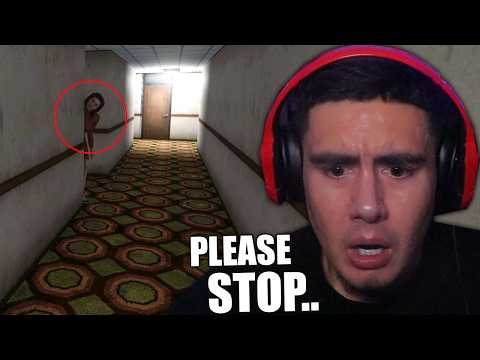
Tormented Souls 2 wastes little time establishing its unsettling atmosphere, placing Caroline and her younger sister Anna inside a seemingly religious sanctuary where the welcoming smiles quickly give way to violence and captivity. Returning to the series after enjoying the original five years earlier, the creator approaches this sequel with considerable enthusiasm for its traditional survival horror design. What follows is an extensive journey through grotesque environments, elaborate puzzles, dangerous creatures, and increasingly bizarre supernatural revelations. The combination of genuine appreciation for the game and spontaneous comedic commentary makes this an entertaining exploration of a genre that continues to thrive outside its biggest franchises.
The game's environmental design immediately earns praise, particularly its densely detailed interiors and oppressive atmosphere. From the disturbing religious institution to an abandoned shopping mall, a processing plant, a cemetery, a school, and an underwater laboratory, each location introduces a distinctive visual identity. The creator repeatedly admires the environments, especially the shopping mall's resemblance to Silent Hill 3 and the cinematic camera angles reminiscent of older Resident Evil games. These observations provide useful context for understanding the sequel's influences without reducing it to a simple imitation. Although the facial animations occasionally look awkward, the environments consistently demonstrate the game's strongest visual qualities.
Puzzle design emerges as the experience's greatest achievement, offering challenges that frequently require more than locating keys or matching obvious symbols. A particularly creative sequence involves interpreting paintings through physical actions, including spinning like a ballerina, raising a lighter, aiming a crossbow, and swinging a hammer. Other memorable challenges involve chess movements, musical clues, astronomical symbols, mechanical devices, and intricate combinations of inventory items. The creator's genuine satisfaction when solving difficult puzzles communicates their appeal exceptionally well. His comparison with the relatively straightforward puzzles of modern Resident Evil games also highlights why these more demanding challenges feel refreshing, even when their solutions become frustratingly obscure.
One of the sequel's most imaginative mechanics involves traveling between different versions of reality and manipulating events to influence the present. This concept produces several clever environmental puzzles, including altering the placement of objects to change accessible routes and planting apple seeds that eventually produce fruit needed to satisfy a monstrous teacher. The creator clearly enjoys this system, repeatedly expressing appreciation for how actions in one reality transform conditions in another. These interactions give the game's supernatural elements a meaningful mechanical purpose rather than relying exclusively on disturbing imagery. However, the process occasionally demands considerable backtracking, particularly when the correct sequence of actions becomes apparent only after extensive exploration.
Combat provides frequent bursts of tension through encounters with grotesque enemies, including pig-headed creatures, animated mannequins, disturbing humanoid figures, and increasingly monstrous bosses. The limited ammunition, unconventional weapons, and restrictions on simultaneously using a light source and firearm reinforce the survival horror experience. The creator's reactions are especially entertaining when unexpected enemies emerge or seemingly harmless figures suddenly attack. Nevertheless, combat appears less consistently refined than exploration and puzzle-solving. Certain weapons feel ineffective, some encounters become awkward, and the creator expresses frustration with confined combat situations that interrupt the otherwise deliberate pacing. The final confrontation with Nautilus delivers an appropriately spectacular conclusion, although its mechanics are not entirely graceful.
The underlying story gradually expands from Caroline's desperate search for Anna into a supernatural mystery involving distorted time, religious manipulation, monstrous experiments, and a disturbing connection between the sisters. The revelation that Anna has apparently endured fourteen years of captivity introduces an intriguing narrative complication, while the mysterious Miguel provides occasional assistance and contributes to the eventual resolution. The creator's humorous responses keep these developments entertaining, but his commentary sometimes moves past major revelations before exploring their significance. Frequent jokes, abrupt reactions, and references to other horror games create an energetic presentation, although they occasionally compete with the atmosphere and emotional stakes of the story.
Despite the extensive adventure, the presentation benefits from the creator's willingness to acknowledge its less enjoyable moments. He openly admits to removing substantial stretches of wandering, experimenting with puzzle solutions, and searching for missed objectives, helping the experience remain focused on meaningful discoveries. Some particularly difficult puzzles still produce fragmented explanations, leaving viewers with limited insight into how their solutions were reached. Nevertheless, the combination of challenging gameplay, enthusiastic commentary, distinctive environments, and a satisfying ending makes the journey rewarding. His decision to pursue the requirements for a favorable ending also demonstrates meaningful engagement with the game's systems, culminating in a surprisingly warm conclusion that contrasts effectively with the preceding horror.
Pros
- Exceptionally detailed environments create an oppressive atmosphere across numerous memorable locations, including the abandoned shopping mall, school, and underwater laboratory.
- Creative, demanding puzzles reward observation, experimentation, and unconventional thinking, particularly the painting-based challenges.
- The ability to manipulate events across different realities introduces inventive mechanics that strengthen exploration and environmental storytelling.
- Genuine enthusiasm, spontaneous humor, and entertaining reactions make the extended gameplay experience consistently engaging.
- Classic survival horror elements, including limited resources, unsettling enemies, and cinematic camera perspectives, provide a satisfying connection to the genre's roots.
- A developing supernatural mystery and rewarding conclusion give the lengthy adventure a meaningful sense of progression.
Cons
- Extensive backtracking and occasionally obscure puzzle solutions create frustration and interrupt the momentum.
- Certain combat encounters feel awkward, with ineffective weapons and restrictive situations undermining the otherwise satisfying gameplay.
- Awkward facial animations occasionally contrast with the impressive environmental presentation.
- Heavy editing around difficult puzzles sometimes makes solutions difficult for viewers to understand.
- Frequent jokes and rapid transitions occasionally diminish the impact of important narrative revelations and atmospheric horror.
Tormented Souls 2 delivers an impressive return to traditional survival horror, combining remarkable environmental design, imaginative puzzles, and disturbing supernatural storytelling. The creator's infectious enthusiasm and entertaining reactions make its strengths easy to appreciate, even when frustrating backtracking, uneven combat, and occasional narrative distractions interrupt the experience. With its creative mechanics, challenging exploration, and satisfying conclusion, this is an excellent showcase of why classic survival horror remains so compelling.