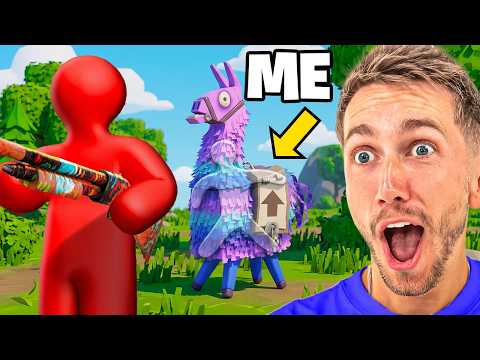
The premise works because the expected outcome is established immediately: a self-described trapper challenges ten stronger Minecraft players in their preferred PvP modes while attempting to compensate with relentless trash talk. Rather than pretending to enter as an equal, the host openly expects to lose most of the matches. That makes the unexpected early victories genuinely funny and gives even the defeats some tension, since merely pushing an accomplished opponent close becomes part of the joke.
The opening matches provide the concept with an unusually strong start. An apparent upset over Sharpness in pot PvP is followed by another surprising victory in Axe, leaving the host openly baffled by his own 2–0 record. The reactions feel more entertaining because he does not suddenly claim that the wins prove superior overall ability; at this stage, he repeatedly acknowledges that the opponents are better and suggests luck or trash talk may have contributed. That self-awareness keeps the exaggerated boasting clearly comedic rather than presenting isolated best-of-one results as a serious competitive ranking.
The losses are often just as useful to the video. Against Dolphin, the host emphasizes popping two totems despite being outmatched in an unfamiliar mode, while the cart duel against Theo becomes a prolonged near-upset involving running, inventory mistakes and repeated attempts to finish the fight. The banter about Theo's bird persona and the recurring jokes about scripted SMP characters give the duel personality beyond its result. At the same time, the constant shouting and repeated declarations that an opponent is low can become exhausting when a fight stretches out.
The shieldless UHC matchup is one of the better demonstrations of how the video's gimmick can actually interact with gameplay. The host identifies it as one of his stronger modes but deliberately selects a formidable opponent, then spends much of the fight mixing conventional PvP with insults, arguments about lag and increasingly desperate commentary. Most importantly, he persuades his opponent to hand over a golden head and eventually converts the unusual situation into a win. Calling that a product of getting into someone's head is playful rather than rigorous proof of a psychological strategy, but it is one of the few victories where the conversation itself visibly affects the circumstances of the duel.
That distinction matters because the video never establishes that trash talk is actually responsible for most of its results. The sword victory over the player described as the best in Europe is extremely close, with the host eventually attributing the deciding exchange to having lower ping before joking that the single win provides "undeniable proof" of superiority. Elsewhere, defeats are comically dismissed as fake game modes, glitches, favorable ping or other excuses. These shifting standards are plainly part of the character being performed, though the title's cause-and-effect premise is ultimately more of a comedic framing device than something the matches demonstrate consistently.
The final stretch maintains the adversarial energy but increasingly relies on profanity, personal jabs and exaggerated excuses. A black-screen interruption is immediately turned into a reason why a loss supposedly does not count, another opponent is repeatedly reduced to being "ping carried," and the final matchup escalates into insults about voices, jobs and server quality. Viewers who enjoy abrasive competitive banter will likely find the escalation central to the appeal, especially when opponents respond in kind. For others, the repetition can flatten the comedy because many exchanges eventually follow the same cycle of boasting, panic, excuses and renewed boasting.
Pros
- The underdog setup gives every duel immediate stakes without pretending the host is normally better than the specialists he challenges.
- Unexpected early victories create genuine surprise and prevent the concept from becoming a predictable sequence of losses.
- Several opponents engage enthusiastically with the trash talk, producing entertaining back-and-forth rather than one-sided commentary.
- Different PvP modes keep the mechanical circumstances changing across the series of fights.
- The shieldless UHC victory particularly suits the premise because the verbal interaction directly contributes to the unusual golden-head advantage.
- Self-aware exaggeration about being better than elite opponents gives the victories a consistent comedic payoff.
Cons
- The matches do not actually demonstrate that trash talking caused most of the victories, making the central premise more comedic framing than proven strategy.
- Repeated shouting, profanity and declarations that opponents are low become monotonous across longer fights.
- Losses repeatedly trigger similar jokes about fake modes, ping, glitches or other excuses, diminishing the freshness of the running gag.
- Some later trash talk moves from playful competitive boasting into more abrasive personal insults that may narrow the video's appeal.
- Limited explanation of the different PvP modes means viewers unfamiliar with competitive Minecraft may not always understand why particular opponents or moments are impressive.
The video turns a deliberately lopsided series of Minecraft challenges into an energetic underdog comedy, helped considerably by victories that even the host seems surprised to achieve. Its strongest moments combine close gameplay with opponents willing to participate in the joke, although the claim that trash talk is producing the wins remains mostly playful storytelling and the abrasive banter grows repetitive. As competitive entertainment rather than a serious test of PvP superiority, the concept delivers more successfully than its intentionally ridiculous conclusions suggest.