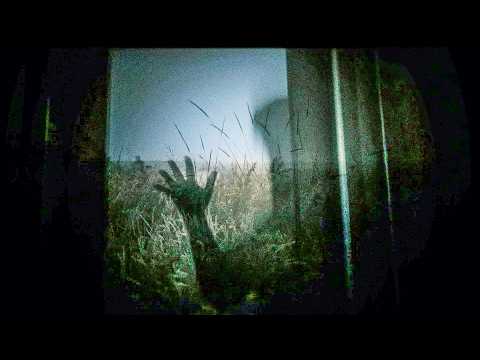
A woman's skeleton hidden inside a hollow tree in wartime England provides a suitably unsettling opening to this collection of historical mysteries. The 1943 discovery of human remains in Worcestershire's Hagley Wood introduces the strange case of Bella, an unidentified woman whose death inspired theories involving murder, espionage, witchcraft, and a possible drunken prank gone horribly wrong. The narrator reconstructs the discovery through colorful storytelling before examining the anonymous graffiti asking who put Bella in the witch-elm and the questionable confession attributed to Jack Mossop. The competing explanations create genuine intrigue, while the inconsistencies surrounding the alleged confession demonstrate why the case remains unresolved. However, the presentation occasionally favors dramatic speculation over careful distinctions between documented evidence, disputed testimony, and local folklore.
The disappearance and murder of four-year-old Grégory Villemin shifts the presentation from historical curiosity into devastating family tragedy. Years of threatening telephone calls, anonymous letters, vandalism, and apparent resentment toward Grégory's father establish a disturbing background to the child's death in October 1984. The narrator organizes the subsequent investigation into a chronological sequence of arrests, accusations, contradictory handwriting assessments, and unsuccessful forensic examinations. Particularly troubling is the account of Jean-Marie Villemin killing his cousin Bernard Laroche after believing him responsible for the murder. This section effectively illustrates how investigative failures and conflicting testimony can compound an already horrific crime. Nevertheless, the narrator's sweeping criticism of French police procedures sometimes substitutes indignation for a fuller examination of the available evidence, while certain claims about later forensic findings and suspects receive more certainty than the presentation adequately establishes.
The exploration of the Pied Piper of Hamelin offers a welcome change of pace by examining the possible historical origins of a familiar fairy tale. Beginning with an original rhyming retelling of the legend, the narrator moves into references to a commemorative stained-glass window, an old monastery prayer, and a town record recalling the departure of children in 1284. The discussion introduces several possible explanations, including military recruitment, natural disasters, abduction, and migration. The suggestion that the missing children may actually have been young people leaving their hometown to establish lives elsewhere provides an interesting alternative to the supernatural interpretation. Yet the account moves too quickly from fragmentary historical references to the assertion that 130 children definitively disappeared in a single mysterious event. The surviving traditions are worth examining, but they do not necessarily establish the literal circumstances described in the legend.
The final mystery, encephalitis lethargica, is arguably the most disturbing because it concerns an actual neurological disease rather than an unidentified criminal or an ancient legend. The narrator describes the illness's emergence during the First World War, its association with extreme sleepiness, involuntary eye movements, cognitive impairment, paralysis, and severe long-term neurological consequences. Accounts of patients becoming nearly motionless while remaining trapped in profoundly altered physical states are especially chilling. The discussion also acknowledges that the disease's underlying cause remains uncertain, making it a legitimate subject for historical and medical investigation. Unfortunately, several medical statements are presented too absolutely, particularly the suggestion that survivors never recovered and that no effective treatment has ever been proposed. The estimated infection and mortality figures also need clearer sourcing and qualification.
Across these four subjects, the narrator's most recognizable quality is a relentlessly irreverent comedic style. Exaggerated accents, absurd dialogue, profanity, morbid jokes, and deliberately ridiculous descriptions make difficult historical material accessible without requiring viewers to have previous knowledge of the cases. The original Pied Piper poem is a particularly imaginative addition, breaking up the conventional mystery narration with a creative performance that suits the subject. There is also an effective variety of mysteries, moving from an unidentified corpse and an unresolved murder to medieval folklore and an obscure medical condition. However, the humor does not always suit the material. Jokes about national stereotypes, physical characteristics, and particularly gruesome suffering sometimes distract from the victims and undermine the seriousness of the investigations. The extended medical-service sponsorship also interrupts the momentum after the opening case, even though its comedic framing is consistent with the narrator's personality.
The broader weakness is an inconsistent approach to historical and scientific reliability. The presentation frequently acknowledges uncertainty and offers multiple theories rather than pretending that every mystery has a definitive solution. That restraint is valuable, especially when discussing Bella's identity and the possible origins of the Hamelin legend. At other times, however, speculative explanations, uncertain historical details, forensic conclusions, and sweeping medical claims are delivered with similar confidence. More explicit attention to the quality of historical records, the limitations of investigative evidence, and the distinction between established medical observations and unresolved questions would strengthen the educational value considerably. Even with those shortcomings, the accessible structure, memorable storytelling, and genuinely unusual subject selection make the collection consistently engaging.
Pros
- The Hagley Wood mystery combines a disturbing discovery, unusual physical evidence, anonymous graffiti, and an unreliable alleged confession into an absorbing opening investigation.
- The Grégory Villemin case benefits from a chronological presentation that makes a complicated history of accusations, arrests, and investigative reversals easier to follow.
- The Pied Piper discussion effectively connects familiar folklore with historical references and competing explanations for the legend's origins.
- The encephalitis lethargica segment introduces a lesser-known neurological illness through vivid descriptions of its symptoms and devastating consequences.
- Original comedic writing, exaggerated characterizations, and the narrator's energetic delivery establish a distinctive storytelling personality.
- The variety of criminal, historical, folkloric, and medical mysteries maintains interest while exploring different kinds of unresolved questions.
Cons
- Historical interpretations and investigative claims sometimes receive greater certainty than the evidence presented can support.
- The discussion of encephalitis lethargica includes overly categorical statements about recovery, treatment, and long-term outcomes without sufficient medical qualification.
- Repeated national stereotypes, crude humor, and jokes surrounding traumatic events occasionally diminish the seriousness of the subject matter.
- The Grégory Villemin investigation receives strong criticism of police conduct without consistently distinguishing documented failures from the narrator's personal judgments.
- The Pied Piper segment treats the historical basis of the legend more definitively than the fragmentary surviving accounts warrant.
- The lengthy sponsorship interrupts the atmosphere established by the opening mystery.
An entertaining and occasionally chilling collection of unresolved cases, this presentation succeeds through varied subject matter, energetic narration, and a willingness to explore competing explanations. Its irreverent personality makes obscure historical material approachable, but uneven factual qualification and excessive humor sometimes interfere with the seriousness and reliability of the storytelling. Viewers seeking unusual mysteries and memorable entertainment will find plenty to enjoy, while those looking for rigorous historical or medical analysis should approach some of its conclusions cautiously.