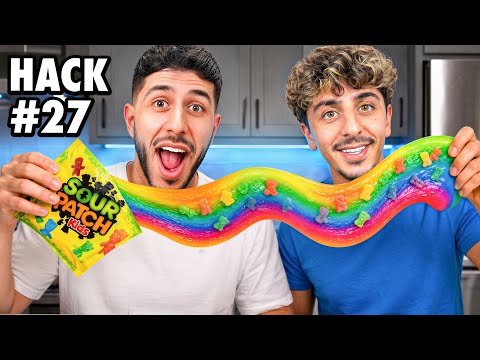
Turning chicken into bread, transforming watermelon into sushi, and making bagels from almond flour and yogurt are just a few of the questionable culinary experiments explored in this entertaining food challenge. Joined by culinary creator and former Next Level Chef contestant Barefoot Tim, the host sets out to determine whether popular internet recipes deserve their viral reputations. Using a straightforward rating system that separates kitchen disasters from mediocre creations and genuinely clever ideas, the pair recreate an assortment of unconventional dishes. Their reactions range from outright disgust to unexpected enthusiasm, producing an amusing examination of how easily attractive food videos can disguise disappointing results.
The early experiments establish the unpredictable nature of the challenge. Carnivore bread made from meat, eggs, and protein powder earns a zero after producing something closer to an unpleasant meatloaf than traditional bread. A chocolate-and-water mousse fares only slightly better, receiving a two because of its unappealing texture despite an acceptable chocolate flavor. Roasted watermelon prepared as a substitute for sushi receives similarly harsh criticism, with the sweetness, seasoning, and lingering crunch creating an awkward combination. These failures demonstrate the central weakness of many viral recipes: producing something visually recognizable does not necessarily recreate the flavor or eating experience of the food being imitated.
Fortunately, several experiments prove that simplicity and unconventional techniques can deliver worthwhile results. Air-fryer donuts made from refrigerated dough earn an impressive 8.5 for their buttery richness and minimal preparation, while a cottage cheese flatbread becomes a surprisingly successful sandwich wrap despite resembling a crepe more than bread. Soft scrambled eggs also earn an eight, although the hosts acknowledge that the technique is already familiar to experienced cooks. Other satisfying discoveries include a creamy watermelon dessert, crispy Parmesan onion rings, and a baked feta pasta that receives praise for its accessible ingredients and family-friendly appeal. These successes provide welcome variety and prevent the challenge from becoming a predictable exercise in mocking unusual food trends.
The most useful moments come when the hosts explain why certain recipes succeed or fail rather than relying exclusively on exaggerated reactions. Their discussion of the chocolate mousse considers how blending might affect the chocolate-and-water mixture, while the failed yogurt-based cheesecake prompts an explanation of how ingredient ratios and moisture retention influence texture. Similarly, the rice-paper croissant experiment highlights how inadequate seasoning can leave an inventive preparation almost flavorless. The comparison between parchment-baked homemade doner meat and traditionally prepared meat offers another practical distinction between a convenient substitute and the original dish. Although these observations remain informal rather than controlled culinary demonstrations, they give viewers a better understanding of the compromises behind supposedly effortless recipes.
The chemistry between the host and Barefoot Tim contributes substantially to the entertainment. Their playful disagreements, sarcastic commentary, and occasionally exaggerated disgust make even the least appetizing experiments enjoyable to watch. The frozen-fry preparation illustrates their willingness to challenge their own expectations, as an initially suspicious water-soaking technique produces respectable results without convincing either participant that the additional effort is worthwhile. The microwave Oreo cake also receives a balanced assessment, earning a seven despite suggestions that butter, salt, or ice cream could improve it. Their willingness to acknowledge modest successes and disappointing outcomes makes the scoring more credible than a presentation built entirely around declaring every recipe either miraculous or terrible.
However, the evaluation occasionally suffers from inconsistent standards and uneven execution. Some dishes are judged primarily against their traditional counterparts, while others receive generous ratings for convenience or originality even when they are acknowledged as imperfect substitutes. The cottage cheese flatbread benefits from being evaluated as a wrap rather than bread, whereas the almond-flour bagels receive an uncompromising zero partly because they fail to resemble conventional bagels in texture and flavor. Several preparations also involve additional toppings, seasonings, or adjustments that complicate the distinction between testing the original recipe and improving it. The broad scoring categories are easy to follow, but the absence of consistent criteria for taste, practicality, cost, and preparation time limits the usefulness of the rankings as direct comparisons.
Pacing is another occasional weakness, particularly when extended jokes, profanity, and promotional interruptions pull attention away from the cooking. The lengthy advertisement for the host's restaurant disrupts the momentum of the frozen-fry experiment, while repeated reactions to unpleasant textures become somewhat predictable. Some dishes receive substantial discussion despite relatively straightforward outcomes, and the presentation rarely examines ingredient costs or nutritional claims in meaningful detail. Nevertheless, the concluding potato-and-cheddar omelette provides an effective payoff. Scoring 8.5 and ultimately winning the challenge, it demonstrates the appeal of combining familiar ingredients through a clever, accessible technique without pretending to reinvent an established food.
Pros
- Features a diverse selection of viral recipes, including unusual substitutes, convenient desserts, unconventional cooking techniques, and practical family meals.
- The host and Barefoot Tim share entertaining chemistry, humorous disagreements, and spontaneous reactions that sustain interest throughout the experiments.
- Provides useful culinary explanations about texture, moisture, seasoning, ingredient ratios, and why certain substitutions fail.
- Offers balanced assessments that recognize successful recipes alongside disappointing results rather than dismissing every internet food trend.
- Highlights several accessible cooking ideas, particularly the air-fryer donuts, cottage cheese wrap, baked feta pasta, and potato-and-cheddar omelette.
- Uses a straightforward scoring system and a clear overall winner to give the collection of experiments a satisfying structure.
Cons
- Inconsistent evaluation standards sometimes make it difficult to compare recipes fairly, especially when convenience and originality receive different emphasis.
- Additional ingredients, toppings, and preparation adjustments occasionally blur whether the original viral recipe or an improved variation is being assessed.
- Repetitive jokes, exaggerated disgust, and frequent profanity sometimes overshadow more informative culinary observations.
- The extended restaurant promotion interrupts the cooking challenge and weakens its momentum.
- Limited attention to ingredient costs, nutritional claims, and preparation efficiency reduces the practical value of some conclusions.
An entertaining and occasionally informative culinary challenge, this collection of viral recipe experiments succeeds by combining genuine curiosity, engaging personalities, and enough surprising successes to balance its spectacular failures. Its strongest moments demonstrate how thoughtful techniques can elevate ordinary ingredients, while inconsistent scoring and occasional distractions prevent it from becoming a particularly rigorous cooking guide. Ultimately, the presentation delivers an enjoyable reminder that viral popularity is no guarantee of quality, but unusual internet recipes can sometimes offer genuinely worthwhile ideas.