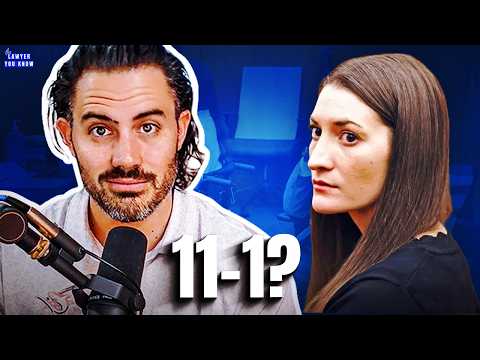
Susan Clancy’s appearance for the defense creates an unusually delicate courtroom problem: she is the grandmother of the three children who died, yet she continues to speak warmly about Lindsay Clancy and describes her as someone who was struggling and seeking help. Lawyer Lee argues that prosecutors should have recognized the danger of attacking such a sympathetic witness, and her criticism becomes especially pointed when the questioning shifts from Susan’s relationship with Lindsay to Catholic teaching about murder as a mortal sin. The judge’s intervention and subsequent curative instruction provide concrete support for Lee’s view that the prosecution pushed too far, although whether jurors were similarly offended remains her interpretation rather than an established result.
The discussion of Susan’s cross-examination is strongest when it separates potentially relevant impeachment from questioning that appears unnecessarily personal. Prosecutors had legitimate reasons to probe how close Susan really was to Lindsay, how much time she spent in the home and whether her connections or family loyalties might affect her testimony. Lee makes a persuasive presentation-level argument, however, that telling Susan about negative remarks Lindsay allegedly made to a therapist added little after the jury had already heard the substance of those remarks. Her conclusion that the strategy could make prosecutors appear needlessly harsh is plausible, but the segment sometimes speaks with more certainty about likely jury reactions than the available courtroom material can support.
The far more consequential portion concerns defense expert Dr. La Posada. Initially called to discuss Clancy’s injuries after going through a second-floor window, the witness is drawn on cross-examination into an extended explanation of strangulation physiology. Lee effectively explains why this testimony could matter to the prosecution’s theory: the expert describes rapid unconsciousness followed by a much longer period in which pressure must continue before death occurs. Because the defense case centers on criminal responsibility rather than whether the children died by strangulation, the resulting testimony directs attention toward the duration and physical mechanics of the killings at an especially unfavorable moment for the defense.
Lee’s reconstruction of how that testimony developed is detailed and easy to follow. She first explains the prosecution’s reference to the expert’s testimony in an older case, then shows how the doctor distinguished manual from ligature strangulation and continued elaborating rather than limiting her answers. The segment becomes particularly effective when it connects those explanations to the prosecution’s courtroom demonstration with the exercise band, which was intended to challenge the defense suggestion that pressure might have continued without active involvement. Calling the entire exchange a “worst nightmare” for the defense is emphatic commentary, but the underlying strategic concern is clearly demonstrated rather than merely asserted.
At times, however, the analysis drifts beyond what the courtroom record shown here can establish. Lee interprets the defense lawyer’s crossed legs and body orientation as evidence that he disliked or rejected the expert’s answers, a body-language reading that is inherently speculative and adds little to the stronger evidentiary analysis surrounding it. She also repeatedly forecasts how devastating particular moments may be with the jury. Those predictions are reasonable topics for legal commentary, but they would benefit from more consistent qualification given that jurors’ actual impressions remain unknown.
The remaining experts broaden the discussion from courtroom tactics to the substance of the insanity defense. Pharmacology testimony addresses dissociation, psychosis, possible reasons Clancy might not have fully disclosed symptoms and the possibility that psychotic episodes can emerge abruptly. Cross-examination supplies an important counterweight by emphasizing that Clancy apparently did not report hearing a voice to the listed medical providers before the deaths. A later doctor describes meeting her roughly 10 days afterward, her confused condition and his decision to let her call Patrick, while denying any suggestion that he coached her to claim auditory symptoms. Lee generally handles these competing points responsibly by presenting them as testimony and theories rather than resolving disputed psychiatric questions herself.
The presentation succeeds because it identifies two genuinely different strategic problems instead of reducing the day to a simple prosecution-versus-defense scorecard. The prosecution may have created unnecessary sympathy for Susan through an overly aggressive cross, while the defense appears to have opened a much more substantive vulnerability through its own expert’s answers. Lee’s legal framing, courtroom excerpts and explanation of why certain testimony matters make the breakdown useful even when some of her language becomes dramatic. More restraint around jury psychology and body-language interpretation would make an already strong analysis more rigorous.
Pros
- Clearly explains why Susan Clancy presented an unusually risky target for aggressive cross-examination and distinguishes legitimate credibility questions from potentially counterproductive personal attacks.
- Uses the judge’s intervention and curative instruction as concrete evidence that the religion-related questioning created a courtroom problem.
- Carefully traces how a defense expert’s testimony about strangulation physiology developed into potentially damaging evidence concerning duration and continued pressure.
- Connects technical medical testimony to the central legal dispute over criminal responsibility rather than treating disturbing details as sensational material alone.
- Includes meaningful prosecution counterpoints to the defense experts, particularly the absence of earlier reported auditory hallucinations.
Cons
- Predictions about how jurors will react are sometimes expressed more confidently than the available evidence permits.
- The body-language interpretation of defense counsel’s posture is speculative and considerably weaker than the legal and evidentiary analysis surrounding it.
- Repeated descriptions of the expert exchange as catastrophic for the defense occasionally push the commentary toward dramatic framing when the trial’s ultimate impact remains unresolved.
The day’s courtroom developments give Lawyer Lee unusually strong material for examining how tactical choices can undermine either side, and her explanation of the defense expert’s damaging testimony is particularly clear. The analysis is substantially grounded in the exchanges presented, though greater caution about jury reactions and body-language speculation would sharpen its credibility. Overall, it is an informative and compelling trial breakdown that distinguishes the more serious evidentiary setback from the prosecution’s potentially self-defeating treatment of a sympathetic witness.