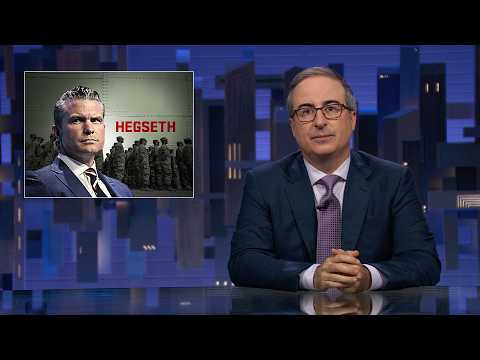
The strongest part of this episode is its decision to treat headline-grabbing prosecutions as symptoms of a broader institutional problem rather than the whole story. John Oliver argues that the more consequential issue is a Justice Department being reshaped around presidential loyalty, political retaliation, weakened professional standards, and redirected enforcement priorities. That gives the piece a clearer purpose than simply cataloguing embarrassing cases involving reflecting pools, sandwiches, or prominent Trump critics.
The episode builds that argument through several different kinds of evidence. It points to large numbers of attorney departures, difficulty replacing them, controversial hires, unsuccessful prosecutions, and instances of alleged or documented prosecutorial misconduct. The examples involving failed grand-jury indictments are particularly effective because Oliver explains why such failures can be significant before showing prosecutors repeatedly struggling to clear that threshold. The Wyoming example adds needed weight by demonstrating that incompetence can threaten serious criminal cases, not merely politically charged prosecutions that viewers may already regard as dubious.
Its discussion of politically targeted investigations is more openly interpretive. Oliver argues that cases involving figures such as James Comey, Letitia James, Adam Schiff, and Jerome Powell appear connected to Trump's personal demands for action, citing Trump's own public message urging Pam Bondi to pursue several named adversaries. That is strong material for questioning prosecutorial independence, but the episode sometimes moves rapidly from evidence of presidential pressure to broader conclusions about the motives behind individual investigations without examining the underlying allegations in each case. For a political argument this serious, separating demonstrable interference from inferred motivation more consistently would make the case harder to dismiss.
The civil-rights section is the episode's most substantive expansion beyond personality-driven controversy. By examining changes in voting litigation, university admissions investigations, abandoned police-department cases, and the termination of an Alabama wastewater agreement, the video shows how leadership philosophy can alter which citizens receive federal protection even without a spectacular courtroom showdown. The Lowndes County example is especially effective because the policy dispute is connected to tangible consequences for residents facing inadequate sewage infrastructure and previously threatened penalties. Oliver's framing is unmistakably critical of Harmeet Dhillon's priorities, but the concrete example helps prevent the discussion from remaining purely ideological.
Presentation remains unmistakably Last Week Tonight: dense reporting repeatedly interrupted by elaborate insults, visual riffs, absurd comparisons, and jokes that sometimes run well beyond their informational purpose. Many of them are sharp, especially when puncturing theatrical political statements or exposing the absurdity of disproportionate law-enforcement responses. Others weaken the seriousness of the analysis, particularly personal jokes about appearance and competence that contribute little to the institutional case being made. Viewers already receptive to Oliver's style will probably find the rhythm entertaining, but those seeking a more restrained examination of Justice Department independence may find the constant ridicule unnecessarily polarizing.
The episode ultimately makes its most persuasive point when it focuses less on individual villains and more on institutional trust. Its discussion of prosecutors' heightened ethical obligations, judicial skepticism toward government representations, experienced attorneys leaving the department, and the difficulty of rebuilding professional norms provides a credible explanation for why politicization could have effects lasting beyond any single administration. The closing emphasis on judges, grand juries, and ordinary jurors functioning as remaining checks also gives the piece a more constructive ending than its otherwise bleak assessment. Even though its political conclusions are forcefully argued from one perspective, the episode succeeds in showing why competence, independence, and restraint inside the Justice Department matter regardless of which party controls the presidency.
Pros
- Builds a coherent institutional argument instead of relying solely on sensational or politically prominent prosecutions.
- Uses failed indictments and prosecutorial misconduct examples to illustrate concrete consequences of weakened professional standards.
- Broadens the discussion through the Civil Rights Division and the Lowndes County wastewater case, showing how policy changes can affect ordinary residents.
- Clearly explains why prosecutorial independence, ethical obligations, and public trust matter beyond individual cases.
- Ends by identifying courts, grand juries, and jurors as functioning checks rather than presenting institutional collapse as inevitable.
Cons
- Sometimes moves too quickly from evidence of presidential pressure to conclusions about the motives behind particular investigations.
- Gives limited attention to the underlying allegations in several politically charged cases it describes as retaliatory or meritless.
- Frequent insults and extended comedic riffs occasionally distract from an argument that is strongest when focused on documented institutional changes.
- Personal jokes about officials' appearance or intelligence add little analytical value and can make the presentation feel more partisan than necessary.
This is a forceful and often persuasive examination of what can happen when political loyalty, weakened professional standards, and shifting enforcement priorities converge inside an institution that depends heavily on public trust. Its strongest reporting looks beyond spectacular failed prosecutions toward quieter changes in staffing, civil-rights enforcement, and prosecutorial credibility, though the argument would benefit from more careful separation between documented interference and inferred political motivation. The comedy keeps a dense subject lively, but occasionally undercuts the seriousness of the case being made.