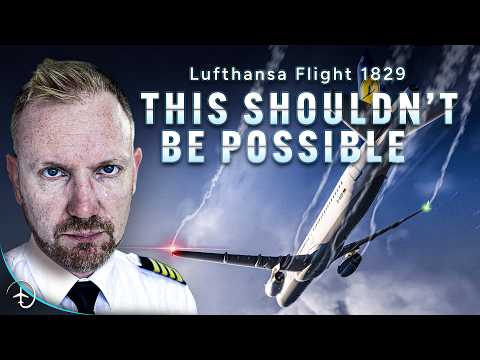
This video reconstructs a dangerously close runway conflict at Bordeaux Airport while steadily widening its focus from one controller’s mistake to the organizational practices that made the error possible. The early explanation of the airport’s mixed traffic environment is especially useful, establishing how commercial jets, military flights, business aircraft, and small general aviation planes can all compete for a controller’s attention. Although this setup is lengthy, it gives the later workload problems essential context rather than treating the incident as an isolated lapse.
The central sequence is presented with impressive clarity. A small Robin aircraft is instructed to line up and wait after an Airbus departure, while an approaching easyJet flight continues toward the same runway without a landing clearance. The video carefully explains wake turbulence separation, radio congestion, flight-progress strips, cockpit visibility, and the Robin’s poor visual contrast against the runway markings. These details show how several individually manageable conditions combined into a serious threat without relying on sensational narration alone.
The strongest portion follows the gradual disappearance of the Robin from the controller’s mental picture. Because its strip was not moved to the runway position, the controller lost a key visual reminder while handling several radio calls and multiple combined control duties. The arriving pilots looked for an obstruction but did not see the mostly white aircraft against the light runway surface. The account makes the resulting landing clearance feel disturbingly understandable without excusing it, demonstrating how workload, expectation, and incomplete cues can undermine otherwise experienced professionals.
The Robin pilot’s intervention provides the decisive moment. After hearing the landing clearance and realizing the controller no longer recognized his call sign, he calmly reported that he was still lined up on the runway. The controller immediately ordered a go-around, and the Airbus descended to just over 100 feet above the ground before beginning to climb. The video communicates the severity through specific reported altitudes and the pilot’s view of the jet passing overhead, while also explaining why remaining stationary was safer than attempting a last-second runway exit.
Beyond the immediate incident, the investigation’s reported findings give the story its broader importance. According to the video, controller positions were informally combined, scheduled personnel were sometimes absent, supervisors maintained parallel rosters, and management had limited visibility into actual staffing. The discussion of normalization of deviance effectively connects these practices to shrinking safety margins. However, some commentary about unions, strikes, and managerial motives reflects the presenter’s personal judgment and is more pointed than the otherwise evidence-focused reconstruction.
The video also raises the issue of French-language radio traffic at an international airport. The presenter clearly identifies this as his own professional concern and acknowledges that investigators did not consider it causal or relevant to the event. That distinction is responsible, though the extended argument risks drawing attention away from the documented causes involving staffing, combined positions, workload, and strip management. The sponsor interruption also arrives during the technical setup and temporarily weakens the momentum of an otherwise tightly developed narrative.
Pros
- Reconstructs a complex runway conflict in a clear chronological sequence supported by operational details.
- Explains wake turbulence, controller workload, flight-progress strips, cockpit visibility, and go-around performance accessibly.
- Connects the controller’s immediate error to broader reported staffing and oversight failures.
- Carefully identifies when the presenter is offering personal opinion or speculation rather than repeating investigative findings.
- Avoids reducing the incident to a single careless individual and instead examines the erosion of multiple safety barriers.
Cons
- The extensive airport and control-position background makes the opening slower than necessary.
- Commentary about controller unions and workplace practices occasionally becomes more editorialized than the evidence presented.
- The language-standardization discussion receives substantial attention despite the investigation reportedly not identifying it as a contributing factor.
- The sponsor segment interrupts the development of an already complicated operational explanation.
This is a compelling and technically accessible examination of how accepted shortcuts, incomplete staffing oversight, and a small procedural omission nearly placed two aircraft on the same runway at the same time. Its systemic analysis is far more valuable than simple blame, even though a few personal arguments extend beyond the investigation’s documented conclusions.