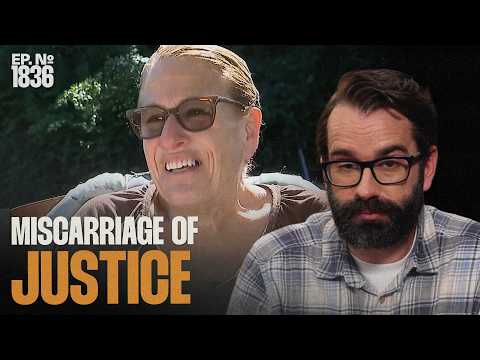
Donald Trump’s account of being physically carried away from a building believed to be in danger of collapsing becomes the centerpiece of a much broader character indictment. The critique argues that Trump inserted himself into a ceremony honoring the victims of September 11 by presenting a dramatic story of his own proximity to danger. Its central objection is not merely that the account is alleged to be false, but that turning a memorial occasion into a story about personal heroism reflects a longstanding pattern of self-promotion.
The strongest section reaches back to Trump’s televised comments on September 11, 2001, when he discussed the relative height of 40 Wall Street after the World Trade Center towers had fallen. Playing those remarks rather than merely describing them gives viewers something concrete to evaluate. The commentary interprets them as evidence that Trump immediately viewed the catastrophe through the lens of his own property and status. That interpretation is forcefully argued, although statements about what Trump personally thought or intended go beyond what the quoted remarks alone can establish.
The discussion of Trump’s promised $10,000 contribution to the Twin Towers Fund adds a more evidence-oriented dimension. The host says New York City Comptroller Scott Stringer’s office reviewed donor records without finding Trump’s name and also examined Trump Foundation tax filings from 2001 through 2014, identifying only a later $1,000 contribution to a different program. These details make the allegation considerably more specific than a generic accusation of dishonesty, but the presentation still asks viewers to accept the host’s account of those records without showing enough underlying material to independently assess possible limitations or alternative explanations.
A similar evidentiary distinction matters when the piece turns to Trump’s claim that hundreds of his workers participated in recovery efforts. Here, the host attributes the lack of corroboration to the Associated Press and cites a former New York City fire chief who reportedly told PolitiFact that he had no knowledge of Trump bringing construction workers to the cleanup. That is relevant counterevidence, but absence of corroboration is not identical to definitive proof that no Trump employees helped. The commentary repeatedly converts disputed or uncorroborated claims into categorical declarations that Trump is lying, where more careful wording would strengthen its credibility.
Structurally, the piece effectively connects three periods—Trump’s comments in 2001, the later charitable record and the 2026 anniversary remarks—around a consistent thesis about self-promotion. That gives what could have been a short reaction clip a coherent argument and prevents the historical material from feeling entirely incidental. The drawback is that the host repeats the same character judgment many times, using increasingly hostile descriptions rather than developing substantially new evidence. Profanity, insults and assertions about Trump’s empathy may energize an audience already sympathetic to the argument, but they also reduce the analytical distance of what is presented as a factual critique.
The final political expansion is considerably weaker than the focused 9/11 material. Claims that Trump is pilfering the Treasury, arranging “fake settlements,” rewarding “insurrectionist henchmen,” and giving billions in defense contracts to his children are introduced rapidly without supporting evidence or explanation in the presentation. Those allegations are serious enough to require careful substantiation, yet they function primarily as rhetorical reinforcement for a conclusion the host has already reached. The closing appeal, which says the White House is trying to prevent the host from reaching an audience and references placement on an “enemies list,” similarly makes consequential claims without establishing them here, leaving the ending more activist than investigative.
Pros
- Uses Trump’s own 2001 remarks to give viewers direct material relevant to the argument about self-promotion after the attacks.
- Builds a clear chronological case connecting the 2001 comments, the disputed charitable contribution and the 2026 anniversary remarks.
- Provides specific attribution for the donor-record review and the reported lack of corroboration for Trump’s cleanup-worker claim.
- Identifies a meaningful distinction between commemorating victims and using a memorial setting to emphasize one’s own experience.
Cons
- Treats disputed and uncorroborated accounts as proven lies more confidently than the evidence presented consistently supports.
- Repeated insults and assertions about Trump’s motives and capacity for empathy weaken the critical distance of the analysis.
- The later accusations involving the Treasury, settlements, political allies and family defense contracts are serious claims introduced without meaningful supporting evidence.
- Repetition of the same self-promotion thesis makes the second half less disciplined than the relatively focused opening.
- The subscription appeal introduces additional claims about White House retaliation without establishing them within the piece.
The critique is most persuasive when it places Trump’s own remarks beside specific records and attributed reporting, allowing the argument about self-promotion to rest on identifiable evidence. It becomes less reliable when inference turns into certainty and a focused examination of 9/11-related claims expands into a sweeping catalogue of unsupported political accusations. The result is forceful commentary with a solid central case, but its partisan rhetoric and uneven evidentiary standards limit its effectiveness as rigorous analysis.