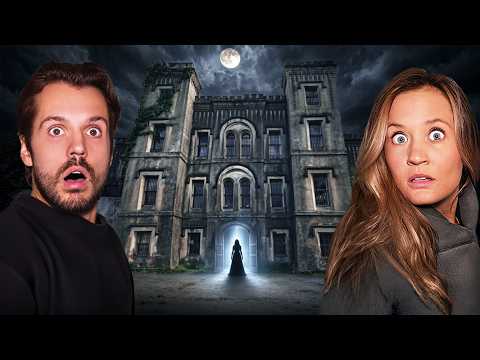
A school lockdown turns a familiar children’s character into an active threat, with students fleeing a Cat in the Hat who no longer cures boredom with harmless games. Tyler and Snowy’s search for hidden VHS tapes gives the adventure a clear mystery structure: each discovery reveals another supposed chapter in the creature’s history while the present-day version continues stalking players through the school. It is an effective premise for horror-oriented gameplay because collecting the tapes and surviving the cat are tied to the same central question.
The first tape establishes the formula through Emily, a child left waiting for her babysitter, Sarah. The cat arrives instead, claims Sarah cannot make it, and initially seems almost friendly as he produces a bunny and offers to play. Hide-and-seek gradually changes from playful to threatening, however, and the subsequent news report suggests that Emily, her parents, and Sarah have all died while connecting the incident to unexplained disappearances elsewhere. The shift is straightforward but effective, especially because the cat’s obsession with making children participate in games gives his behavior a consistent horror logic.
A second encounter develops that pattern with Ethan, whose concern about a monster under his bed is dismissed before the cat appears. Red Light, Green Light and Sleeping Lions turn recognizable children’s games into increasingly dangerous challenges, while the cat repeatedly mixes cheerful language with obvious menace. The material is not especially subtle, but the contrast between childhood play and punishment provides some of the creepier imagery and gives the hosts plenty to react to without requiring a complicated explanation.
The Conrad and Sally material is the most elaborate part of the discovered backstory. Their strict household rules, inattentive babysitter, and encounter with the cat lead into supernatural transformations, an attack on an unpleasant adult visitor, and the revelation that the creature’s friendly face is apparently a mask. There are recognizable echoes of familiar Cat in the Hat concepts, including boredom, rule-breaking, and Conrad and Sally themselves, but they are reworked into an intentionally grotesque horror scenario. The sequence also provides the strongest escalation because fire apparently fails to stop the cat, forcing Tyler and Snowy to abandon their earlier assumptions about how easily he might be defeated.
Presentation is relentlessly energetic throughout. Tyler and Snowy continually comment on what they are seeing, search classrooms and other areas for tapes, flee the cat, and encourage viewers to keep watching for the next revelation. That momentum suits a younger gaming audience and prevents lengthy stretches of simple exploration, but the commentary frequently states things that have just been shown on screen. Repeated calls for likes and subscriptions, including making audience engagement part of the final boss fight, further interrupt the horror atmosphere rather than strengthening it.
The final section expands the story considerably by introducing the cat’s woodland base, an underground laboratory, multiple clones, a captive ally, and ultimately a boss battle. The laboratory revelation is amusingly at odds with earlier suggestions that the cat is supernatural, and the characters themselves briefly notice the contradiction, but the story never seriously reconciles the two explanations. Baseball bats and viewer support eventually succeed where fire did not, leading to the cat being buried in a pet cemetery. It is a satisfying gameplay payoff in the immediate sense, although the mythology becomes increasingly improvised as the adventure moves from VHS horror mystery to laboratory escape and conventional boss fight.
Pros
- The hidden VHS tapes give the school exploration a clear objective while gradually expanding the central horror mystery.
- Familiar children’s games such as hide-and-seek and Red Light, Green Light are effectively repurposed as threatening encounters.
- The Conrad and Sally sequence delivers the most substantial escalation, including transformations, the mask reveal, and the cat surviving fire.
- Tyler and Snowy maintain enthusiastic chemistry and a fast pace through both the story sequences and active gameplay.
- The eventual laboratory infiltration and boss encounter provide a concrete payoff rather than ending immediately after the final tape.
Cons
- Frequent narration of obvious events can make the reactions feel redundant rather than additive.
- Repeated engagement prompts interrupt suspense, particularly when likes and subscriptions are incorporated into the climax.
- The explanation shifts between a supernatural cat and a laboratory-created experiment without resolving how those ideas fit together.
- The later clone, laboratory, rescue, and boss-fight developments pile on new concepts quickly, making the conclusion less focused than the VHS mystery that precedes it.
- The horror relies heavily on repeated chases, grotesque transformations, and the same deadly-game concept rather than steadily developing its mythology.
The VHS scavenger hunt turns a recognizable children’s character into an energetic horror-game antagonist, with the corrupted games and increasingly disturbing tapes supplying its best ideas. The mythology becomes messy once clones and laboratory experiments enter the picture, but the lively reactions, steady progression, and full boss-fight conclusion keep the adventure entertaining despite its repetition.