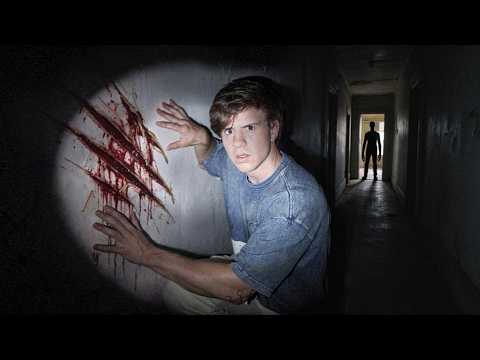
Fourteen years after his first investigation inside Charleston’s old city jail, Dakota returns to the location that helped launch his interest in paranormal investigation, giving the night a personal dimension beyond the usual haunted-location setup. His memories of visiting at 16 with his father establish a genuine sense of anticipation, and the rest of the group recognizes the significance of revisiting a place tied so closely to the origins of his career. That history makes the investigation feel more consequential than simply spending another night in an intimidating building.
The historical introduction provides useful context for why the jail has developed such a formidable reputation, covering overcrowding, disease, executions, Civil War prisoners and several notorious inmates. Particular attention goes to Lavinia and John Fisher and Alonzo Small, whose stories subsequently shape much of the investigation. However, the presentation frequently blends documented-sounding history, local legend and paranormal lore without clearly separating them. Claims such as thousands of deaths, details surrounding Lavinia Fisher’s alleged crimes and execution, and the identities assigned to reported spirits would benefit from stronger qualification rather than being incorporated so readily into the haunting narrative.
Once inside, the group makes effective use of the jail’s oppressive environment and Dakota’s previous experience there. Early responses from the PS device—including words interpreted as references to coffins, homicide, hanging, Minnesota, bridal imagery and escape—create an intriguing sequence because several appear relevant to subjects being discussed. The investigators occasionally acknowledge coincidence and uncertainty, particularly when considering how a supposed spirit might know Dakota was from Minnesota. That skepticism is welcome, but it becomes increasingly scarce as the night progresses and more ambiguous outputs are fitted into an emerging story.
The most dramatic stretch comes when the device produces combinations the group interprets as direct threats toward Dakota. Words including “dead,” “kill,” “homicide” and “run,” followed by references to crosses, holiness and removing something, are assembled into the theory that an unholy presence is angered by the crosses the four investigators are wearing. It is undeniably effective paranormal entertainment, especially because Dakota becomes visibly unsettled, but the conclusion goes considerably further than the evidence shown. A device generating contextually suggestive words does not establish their paranormal origin, much less demonstrate that Lavinia Fisher or another identifiable spirit is delivering threats.
Physical experiences deepen that problem. An ear being brushed, a sudden leg cramp after asking about Alonzo’s injury, an itchy neck and a perceived wave of air are all treated as potentially meaningful events. Likewise, distorted recorder audio is interpreted as possibly communicating or intimidating the investigators. These incidents make for tense viewing, but ordinary explanations are not explored in comparable depth. The team is generally candid when unsure what happened, yet its excitement often transforms temporal coincidence into narrative connection before alternative causes have been seriously considered.
The Estes Method provides a suitably dramatic finale, with Dakota blindfolded and listening to a spirit box while the others ask questions beyond his hearing. Responses such as “upstairs,” “take it off,” “holy child,” “goodbye” and an apparent threat to stab someone seem to echo themes established earlier, which makes the session compelling within the investigation’s internal logic. Still, the method produces fragmented phrases that require substantial interpretation, and the repeated identification of Lavinia remains speculative. The episode is strongest when treated as an atmospheric paranormal investigation rather than proof that particular deceased prisoners communicated with the group.
Pros
- Dakota’s personal connection to the jail gives the return visit an unusually meaningful emotional foundation.
- The location’s prison history and stories surrounding individual inmates provide a strong framework for the investigation.
- Several device responses appear strikingly relevant to ongoing conversations, creating sustained tension even without establishing a paranormal cause.
- Splitting into teams and ending with the Estes Method gives the lengthy investigation a clear progression and escalating sense of danger.
- The group occasionally acknowledges coincidence and uncertainty instead of presenting every unexplained event as definitive proof.
Cons
- Historical fact, legend and reported paranormal lore are frequently blended together without enough qualification.
- Ambiguous device outputs are increasingly interpreted as a coherent conversation despite limited evidence that the words are connected or paranormal.
- Physical sensations such as cramps, itching and perceived touches receive paranormal interpretations without equivalent consideration of ordinary explanations.
- The theory that Lavinia Fisher is responsible for the threatening communication becomes increasingly confident despite the investigation never establishing the speaker’s identity.
- The Factor sponsorship and later merchandise promotion interrupt an otherwise steadily building atmosphere.
The personal significance of returning to the jail gives this investigation more weight than a routine overnight ghost hunt, while the increasingly hostile responses create an effective escalation toward the Estes Method finale. It succeeds as suspenseful paranormal entertainment, but its historical storytelling and supernatural conclusions would be stronger with clearer distinctions between documented information, legend, coincidence and genuinely unexplained observations.