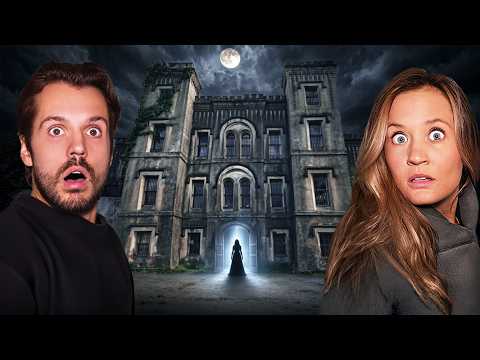
A towering lighthouse above the Pacific and an old keeper’s residence provide unusually strong natural atmosphere before any paranormal equipment even comes out. The isolated walk between the buildings, narrow lighthouse stairs, condemned attic and preserved rooms make the location feel genuinely imposing, while the hosts’ obvious fascination with the lighthouse itself gives the investigation more texture than a simple search for scares. Their appreciation for the architecture and the difficult lives of former keepers is particularly effective because it allows the setting to carry much of the mood without manufacturing constant supernatural drama.
The central mystery surrounding the reported “woman in black” gives the investigation a useful purpose. Rather than simply accepting the commonly repeated name Rue, the hosts explore competing possibilities involving Annie Hanson and Jenny DeRoy, including the account that “Rue” emerged from a Ouija board session and the theory from Annie’s great-grandson that she may be searching for a lost wedding ring. Photographs, the black wedding dress and stories supplied by people connected with the property add interesting historical context, but none of this establishes that a ghost exists or identifies one. The presentation is generally responsible about preserving that distinction, repeatedly framing these identities as theories rather than discoveries.
The paranormal sessions produce plenty of activity to discuss but little that can be treated as compelling evidence. Motion sensors activate, devices produce words and emotions, a REM pod responds at suggestive moments, noises appear on recordings and what sounds like a female voice briefly catches the investigators’ attention. Some coincidences are undeniably entertaining, particularly responses that appear to align with names or questions, yet the equipment itself provides no demonstrated method for establishing that its outputs originate from spirits. The newer device cycling through words, numbers and emotions illustrates the problem especially well: outputs such as “70,” “jealous,” “sad” and “puzzled” quickly invite interpretations that are far more specific than the underlying signals justify.
Fortunately, the hosts frequently undercut their own temptation to overinterpret. They identify vibrations caused by their movements, acknowledge when sessions are inactive and openly consider ordinary explanations for overnight tapping and bumps. Ryan’s late-night reasoning is one of the strongest moments: despite hearing noises apparently coming from the attic above him, he considers pipes, other occupants and normal building sounds and says that something more substantial would be necessary to convince him. The closing narration similarly asks whether the recordings captured anything paranormal rather than declaring that ambiguous sounds prove a haunting.
Humor remains a major part of the presentation, sometimes successfully and sometimes at the expense of momentum. Extended jokes about the enormous couch, “wild woopy,” dirty socks, flute music and increasingly ridiculous conversations with supposed spirits make the personalities entertaining even when nothing paranormal happens. The downside is that several investigation sequences become long comedy routines built around devices producing random or ambiguous responses. The S-dism session that apparently yields “Satan,” for example, is amusing precisely because the hosts do not treat it with much seriousness, but it also demonstrates how easily fragmented audio can be turned into a narrative through timing and interpretation.
The overnight stay gives the episode a satisfying structural payoff because the investigators actually remain in the supposedly active rooms after spending so much time discussing their reputations. Cameras are positioned to document objects before sleep, noises are recorded, and the hosts invite more definitive activity rather than ending after the daytime investigation. Nothing decisive happens, which ultimately strengthens the episode's credibility more than an exaggerated conclusion would have. The result is an entertaining haunted-location investigation whose history, setting and personalities are considerably more persuasive than its paranormal evidence.
Pros
- The lighthouse, keeper’s quarters and isolated coastal setting create exceptional atmosphere without requiring artificial scares.
- Competing theories about the woman in black are presented as unresolved possibilities rather than established supernatural facts.
- Historical photographs, personal accounts and stories connected with former residents give the investigation a meaningful narrative foundation.
- The hosts repeatedly consider ordinary explanations for noises, vibrations and other ambiguous events.
- Spending the night in the reportedly active rooms provides a natural culmination to the investigation.
Cons
- Paranormal devices generate highly ambiguous outputs that are often interpreted more specifically than their demonstrated capabilities justify.
- Extended comedy around the couch, flute, socks and device responses occasionally overwhelms the investigation.
- Several apparent responses sound intriguing in context but provide little independent basis for connecting them to specific deceased people.
- The central question of the woman in black's identity remains unresolved despite being presented as the investigation's primary objective.
The spectacular setting, unresolved history and willingness to acknowledge mundane explanations make this a particularly enjoyable haunted-location investigation even though its supernatural evidence remains inconclusive. Its best moments come when curiosity and skepticism coexist, while some overlong comedy and highly interpretive gadget sessions dilute the mystery. As atmospheric paranormal entertainment rather than proof of a haunting, it works very well.