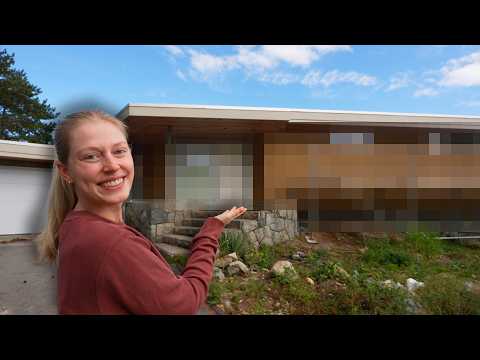
Removing more than half a ton of accumulated clutter gives this makeover an unusually satisfying starting point. The garage has become storage for broken equipment, old food, furniture, sentimental belongings, and remnants of previous videos, much of which Corbin admits belongs to him. Rather than buying an entirely new room's worth of decorations, he turns the cleanup into an opportunity to repurpose the oversized collection of arcade machines, furniture, signs, appliances, and novelty items he has accumulated elsewhere. That makes the finished space feel less like a professionally designed man cave than a family garage reorganized around objects with their own history, which suits both the personality of the video and his dad's enthusiastic reaction.
The cleanup is simple but important because the transformation depends more on reclaiming space than remodeling it. A dump trailer is loaded with roughly 0.54 tons of material for a reported $90 disposal fee, while items worth keeping are separated from obvious garbage, including a flag connected to Corbin's grandfather. The episode does not linger on organization systems, shelving, flooring, paint, lighting, or other conventional renovation work; once the garage is emptied, the focus shifts quickly toward filling it again with better things. That limits its usefulness as a practical garage-conversion guide, but the before-and-after contrast is strong because the room remains recognizably a garage rather than being disguised as a completely different space.
Retrieving old props from his friends' college apartment gives the project most of its personality. Big Buck Hunter, a TouchTunes jukebox, Budweiser refrigerator, hand dryer, diner booth, traffic light, giant television, tiered couches, turf, and a large bear all come with stories from earlier pranks or projects. Touring the apartment becomes a miniature museum of Corbin's videos, including the tiny sleeping area where he says he spent many nights and the oversized objects that have gradually migrated there from his parents' house. The detour slows the makeover itself, but it establishes why these items matter. The man cave effectively becomes a permanent home for props that would otherwise need to be removed when his friends move out.
The installation phase is appropriately informal. A large television replaces pegboard, the beer fridge returns after being transported on its side, the inflatable gorilla couch is restored despite previously causing trouble in the house, and Big Buck Hunter is revived after a rough move. Most importantly, the arrangement preserves his father's 2001 CR250 motorcycle as a centerpiece rather than sacrificing garage functionality for entertainment space. Corbin repeatedly emphasizes that his dad can still use the room as a garage, and the finished layout supports that idea better than a full conversion would. The additions are eclectic rather than coordinated, but a motorcycle, beer refrigerator, arcade machine, jukebox, oversized seating, and television create a space tailored to the recipient rather than to generic interior-design expectations.
The trip to win a replacement goldfish for his mother is the episode's biggest diversion. It grows from the earlier death of Larry during another project and gives his mom something of her own during a makeover primarily intended for his dad, but the fair sequence contributes little to the garage transformation. The same loose approach extends to several moving scenes, jokes, repeated reactions, and struggles with oversized objects. These moments reinforce the channel's prank-and-family style, yet viewers interested primarily in the makeover receive relatively little explanation of layout decisions, mounting, power requirements, organization, or how the room will function long term.
The reveal succeeds because the parents react not just to a cleaner room but to the return of familiar objects. Corbin's dad immediately gravitates toward Big Buck Hunter, imagines watching motocross while sitting near his motorcycle and drinking beer, and requests a cup holder, while his mom is pleased that the collection is now contained in the garage rather than inside the house. Their reactions validate the central design choice: this does not need to be a polished lounge because its appeal comes from giving the family's accumulated novelty items a designated place. The ensuing Big Buck Hunter competition also lets the room function immediately instead of ending with a static tour of everything that was installed.
Adding a boxing machine after the initial reveal improves the ending because it gives Corbin's dad one more object with personal significance. His reaction connects it to machines he remembers using in bars years earlier, and the father-son challenge provides a more active final beat than another walkthrough. It also reinforces how the project develops throughout the episode: the best additions are not necessarily expensive or visually cohesive, but things that prompt stories, competition, and shared use. The garage consequently feels finished enough to enjoy while remaining open to further additions, including the requested beer holder and whatever future chaos inevitably migrates into the space.
Pros
- Removing roughly 0.54 tons of clutter creates a substantial transformation before any entertainment equipment is installed.
- Reusing Big Buck Hunter, the TouchTunes jukebox, beer fridge, television, furniture, and other previous-video props gives the room personality without presenting the makeover as a shopping spree.
- Individual objects carry family or channel history, making the finished garage feel personal rather than designed around a generic man-cave checklist.
- Keeping the 2001 CR250 visible as a centerpiece ties the space directly to something Corbin's dad has owned since before Corbin was born.
- The garage retains its basic function while gaining entertainment features, avoiding a conversion that would make the original space unusable.
- Both parents' reactions support the practical premise: his dad enjoys the new entertainment space while his mom appreciates that the oversized collection is no longer inside the house.
- The late boxing-machine addition creates another genuine father-son interaction and gives the ending an energetic payoff.
Cons
- The makeover involves relatively little renovation or design work, with most of the transformation coming from decluttering and moving existing items into the garage.
- The college-apartment tour and goldfish trip are entertaining but take substantial time away from the central garage project.
- Installation receives little practical explanation regarding mounting, electrical needs, organization, layout planning, or long-term storage.
- The finished space is intentionally eclectic, but the episode spends little time considering how the large collection of arcade equipment, furniture, motorcycle, and garage functions will coexist as the room is used.
- Several moving struggles, jokes, and repeated reactions could be tightened without losing the informal family dynamic.
The makeover works less as a renovation tutorial than as a satisfying act of cleanup and repurposing, turning years of oversized prank props and family memorabilia into a garage that finally has a purpose beyond storing clutter. Limited design detail and several lengthy diversions keep it from being an especially informative transformation, but the personal history behind the objects, preservation of the motorcycle, enthusiastic parental reveal, and father-son arcade competition give the finished man cave genuine character.