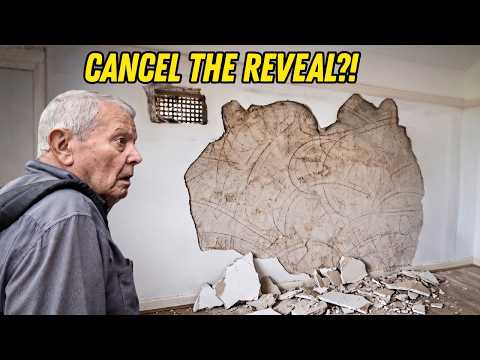
The emotional center of this installment is not the renovation itself but the contrast between Rick’s deteriorated home and the extraordinary response surrounding him. After extensive woodworm damage forced much of the flooring and kitchen to be removed, the project finally appears to be moving forward: compromised timber has been taken out, surviving wood has been treated, new flooring is going down and plastering is underway. Against that physical progress comes the news that the fundraising total has climbed first to £115,000 and then £126,000. Rick’s stunned reaction gives those numbers meaning beyond a fundraising milestone, particularly when he reflects on discovering that there is still goodness in the world.
The video also does a useful job of explaining how a garden cleanup expanded into a far more serious intervention. Rick is described as having lived without kitchen electricity or a boiler, alongside collapsed ceilings, vermin infestations and damage associated with an earlier leak. The team originally offered him a 30-day hotel stay while they transformed the interior, only to discover that the property required substantially more work than anticipated. That recap is important for viewers joining the series late, although returning viewers will inevitably encounter a fair amount of familiar material before the episode settles into the current stage of the renovation.
Woodworm remains the major practical obstacle, and the footage of timber disintegrating into dust makes the severity visually understandable without requiring exaggerated explanation. The team says that Tevye has identified compromised timber for removal while sound material is being retained and treated to prevent further problems. That is a reasonable account of what they are doing, but the video does not provide enough technical detail to independently establish the extent of the infestation, the precise treatment being used or whether all affected structural areas have been identified. Given how consequential those questions become later, more systematic explanation of the inspection and remediation process would strengthen the renovation coverage.
Much of the middle section succeeds through accumulated signs of community participation. Family members and volunteers work on flooring and plastering, Benchmark supplies a kitchen deal, security installers offer cameras and an alarm system, gifts arrive from viewers, and even refilling Rick’s neglected bird feeders becomes part of preparing the property for his return. These smaller gestures prevent the £126,000 fundraiser from becoming the only measure of generosity. The informal joking among the workers also keeps an enormous and potentially grim job personable, although the loose editing occasionally makes individual conversations and construction steps difficult to follow.
There is satisfying visible progress as new flooring replaces badly damaged boards and plaster transforms rough walls into surfaces that finally resemble a habitable interior. Rick seeing the solid replacement floor is especially effective because an earlier warning had framed the old staircase and weakened timber as a potential future danger. His improved appearance and increasingly hopeful demeanor are treated as another sign of progress, but the video wisely lets his own reactions carry most of that emotional weight rather than attempting to turn them into a broader claim about his wellbeing. The renovation remains unfinished, and the presenter acknowledges that the woodworm has already pushed the project beyond what was originally expected.
Then the episode changes direction after what initially feels like its conclusion. While editing footage filmed by Emily and Tevye, the presenter notices extensive holes in roof timber visible near an area where pigeons had been entering. He identifies the damaged member as a roof-supporting rafter and says Tevye will return to test the structural timbers, with the possibility that widespread damage could require major roof work. The concern is clearly genuine, but crucially the full extent of the roof problem has not yet been established. Ending on that discovery is an effective cliffhanger precisely because the episode does not actually know whether it represents localized damage or another catastrophic expansion of the job.
Pros
- Rick’s reactions to the £115,000 and later £126,000 fundraising totals provide a sincere emotional payoff to the community’s support.
- Visible flooring, plastering and demolition work gives the episode tangible renovation progress rather than relying primarily on before-and-after promises.
- The recap clearly explains how a modest garden intervention expanded into a much larger effort after serious problems inside the house were discovered.
- Contributions from volunteers, businesses, viewers and family members give the project a convincing sense of collective effort beyond the fundraising total.
- The late discovery of potentially affected roof timber creates genuine stakes while leaving the extent of the new problem appropriately unresolved.
Cons
- Technical discussion of the woodworm treatment and inspection is fairly limited considering that potentially structural timber damage has become the project’s central problem.
- The extended recap repeats substantial background information before the current renovation work gains momentum.
- Rapid, loosely edited workshop banter and fragmented conversations sometimes make the construction process harder to follow than necessary.
- The dramatic roof discovery arrives after an apparent ending, making the final section feel structurally appended even though it contains arguably the episode’s most consequential development.
- The connection suggested between water or pigeon activity and the newly discovered woodworm damage is presented informally rather than established through a detailed assessment.
The combination of Rick’s response to an extraordinary fundraising effort and substantial physical progress makes this an uplifting chapter without pretending the renovation is close to straightforward. Its construction explanations could be more rigorous, but the newly discovered roof damage provides a credible reason for the project’s continuing uncertainty rather than manufactured suspense. The strongest element remains the human scale of a community repeatedly adapting as a simple act of help grows into a formidable restoration.