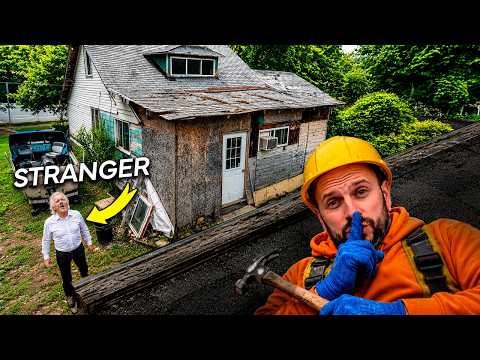
Rick’s attachment to his old pond gives the exterior renovation an emotional purpose beyond simply improving the property’s appearance. Restoring it becomes part of a wider effort to create somewhere he can safely relax, and that personal connection helps the garden work feel more meaningful than a standard makeover sequence.
The scale of the project is substantial. The team repairs and waterproofs the pond, builds decking around its curve, removes deteriorated paths, erects scaffolding, strips failing render, clears gutters and pressure-washes the roof. The frequent movement between jobs communicates how much work is happening simultaneously, although the constantly shifting timeline — repeatedly joking about being on day 34, 35 and beyond of a 30-day makeover — also makes the project feel less organized than the original deadline suggests.
Practical problem-solving is one of the stronger elements. Loose roof tiles are assessed before cleaning begins, gutter debris is collected rather than simply washed into the drainage system, and the discovery of woodworm prompts specialist treatment. Importantly, the presentation does not exaggerate the structural consequences: the team says they were fortunate that the affected timber had not compromised the roof structure and proceeds with treatment rather than manufacturing a larger emergency.
There is also considerable attention to the physical process of renovation. Scaffolders explain how the structure is assembled, the team discusses levelling and edging the garden, and specialists describe why gutters need clearing before the roof is washed. Some of these conversations are fragmented and casual, but they give the episode a useful hands-on quality and show that the transformation depends on numerous trades and small decisions rather than one dramatic reveal.
Rick’s appearances provide the emotional centre. He deliberately avoids seeing the unfinished work, talks about strangers recognizing him and wishing him well, and clearly appreciates the support being offered. The filmmakers frame the project as potentially life-changing and repeatedly use language about saving him, but the episode itself primarily demonstrates improvements to his home, safety and living conditions rather than providing evidence for a literal medical claim that his life has been saved.
The lounge reveal is particularly effective because Rick’s reaction is allowed to unfold without much complication. He notices the wallpaper, lighting, blinds and dining area, struggles to find words and repeatedly says he cannot believe it is the same house. His gratitude toward Ben and acknowledgement of the trust required to let someone intervene in his home give the makeover genuine emotional weight, while Ben’s reminder that the house remains Rick’s private home adds a welcome sense of respect for his boundaries.
As an installment in an ongoing renovation, however, the episode remains deliberately incomplete. The garden is withheld for a later reveal, finishing touches in the lounge still need to be chosen, and the episode ends while major exterior work remains underway. That structure builds anticipation effectively, but it also means viewers looking for a self-contained transformation receive more process than payoff despite the dramatic framing.
Pros
- Restoring Rick’s pond gives the exterior work a personal purpose rooted in his memories rather than treating the garden as purely decorative.
- The renovation covers a wide range of practical work, including drainage, roofing, render removal, decking, paths and pest treatment.
- Specialists explain several procedures and respond sensibly when previously hidden problems such as woodworm are discovered.
- Rick’s lounge reveal produces a convincing emotional payoff without needing exaggerated staging.
- The episode repeatedly emphasizes Rick’s comfort, safety and control over his own home.
Cons
- Repeated claims about “saving” Rick’s life are stronger than what the episode itself can substantiate.
- The original 30-day framing becomes increasingly misleading as the project runs well beyond that deadline.
- Rapid switching between jobs and casual conversations sometimes makes the renovation process difficult to follow.
- The episode withholds the main exterior reveal, leaving the central makeover noticeably unfinished.
- Several technical explanations are brief or fragmented, limiting how much viewers can learn from otherwise interesting renovation work.
The renovation works best when it focuses on Rick’s growing sense of ownership, comfort and trust rather than the more dramatic language surrounding the project. Extensive hands-on work and an affecting lounge reveal make this a rewarding chapter, even though the stretched timeline and postponed garden payoff prevent it from feeling fully complete.