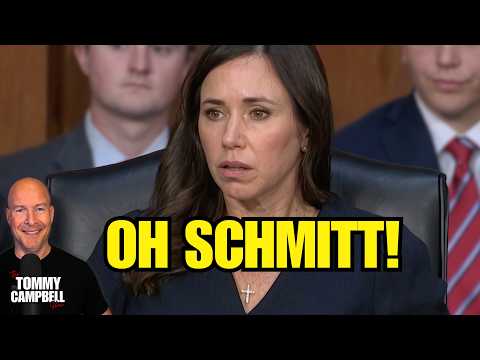
Eric Schmitt’s attempt to corner Jack Smith provides the panel with an almost tailor-made example of the political behavior it wants to condemn. Joe Scarborough argues that Schmitt’s questioning did more than simply fail: it exposed a style of politics built around producing viral confrontations rather than establishing facts or addressing voters’ immediate concerns. The discussion is energetic and often funny, but its openly contemptuous tone sometimes overwhelms the more substantive criticism underneath it.
The central argument is that Schmitt tried to manufacture a damaging moment and instead created one at his own expense. The hosts repeatedly return to his apparent confidence before the exchange, his reaction when the questioning went wrong, and his subsequent decision to defend his performance rather than acknowledge a mistake. Their broader point is more interesting than the mockery itself: congressional hearings increasingly reward politicians for generating short clips that can circulate online, creating an incentive to pursue theatrical confrontations regardless of whether the underlying claim survives scrutiny.
That argument expands into criticism of Republicans for revisiting January 6 and the investigations of Donald Trump shortly before an election. Scarborough contends that doing so invites renewed attention to assaults on police officers at the Capitol, Trump’s pardons and the classified-document case at precisely the moment Republicans would presumably prefer voters to focus elsewhere. These are presented through an unmistakably partisan interpretation, however, and predictions about historic Republican losses or historically low polling are asserted rather than demonstrated with polling data during the segment.
The discussion of alleged Justice Department weaponization is similarly forceful but insufficiently disciplined. The panel contrasts Republican accusations against Smith with its own claims about Trump, Pam Bondi, Jeanine Pirro, Jerome Powell and other figures, arguing that the current administration represents the politicization Republicans claim to oppose. Some potentially significant allegations are delivered rapidly and treated as settled within the conversation, without the supporting evidence or contextual detail necessary for viewers to independently evaluate them. Scarborough’s sweeping prediction that history will judge this the most corrupt and politicized Justice Department in American history is plainly an opinion, not a conclusion established by the segment.
The better supporting material comes when the program actually plays hearing footage. Chuck Grassley asking Smith whether he had consulted former CIA director John Brennan, followed by Smith saying he had never met Brennan, gives viewers a concrete exchange to consider rather than merely hearing the panel characterize Republican questioning. The hosts use it to support their contention that lawmakers and staff are drawing questions from poorly checked theories circulating online. Whether that explains the broader hearing is not established, but the clip makes this particular criticism much more persuasive.
There is also a useful political observation beneath the jokes about sports, Katie Britt’s reaction and Schmitt’s previous Ohio State-related remarks. The panel argues that lawmakers are incentivized to perform for partisan audiences and social media rather than use hearings to investigate carefully or concentrate on issues such as food, fuel and health-care costs. That is the segment’s most worthwhile theme, yet it repeatedly competes with insults, laughter, exaggerated historical comparisons and extended ridicule. Calling Schmitt stupid and repeatedly returning to the “dirtbag” label may entertain an audience already sympathetic to the hosts, but it does little to persuade anyone outside that audience.
Presentation is therefore both the segment’s strength and its limitation. The hosts have obvious chemistry, quickly identify the comic possibilities of a failed gotcha, and turn an awkward hearing exchange into lively television. But sports tangents, speculative electoral commentary and increasingly elaborate insults make the discussion less focused than it could have been, while the closing membership promotion abruptly shifts from political analysis into a lengthy sales pitch. A tighter segment centered on the actual hearing footage, the factual basis of the questions and the incentives behind congressional performance would have made the critique considerably stronger.
Pros
- Hearing footage gives the audience a concrete basis for evaluating at least some of the panel’s criticism.
- The discussion identifies a worthwhile broader issue in lawmakers pursuing viral social-media moments during congressional hearings.
- Schmitt’s response after the hearing is used to examine political incentives against admitting obvious mistakes.
- The panel’s chemistry and humor make an otherwise procedural political hearing lively and accessible.
Cons
- Insults and ridicule frequently substitute for deeper analysis of Schmitt’s claims and the hearing itself.
- Sweeping assertions about polling, electoral consequences and historic Justice Department corruption receive little supporting evidence within the segment.
- Numerous claims about Trump administration figures are delivered too quickly to provide the context needed for independent evaluation.
- Sports diversions and other tangents weaken the focus of the political discussion.
- The lengthy membership promotion creates an abrupt and distracting ending.
A genuinely revealing failed exchange gives the panel strong material for examining how congressional hearings can become exercises in partisan performance, and the actual hearing clips make that case better than the insults do. The segment is entertaining and occasionally insightful, but its strongest argument is diluted by sweeping assertions, tangents and rhetoric aimed more at humiliation than careful analysis.