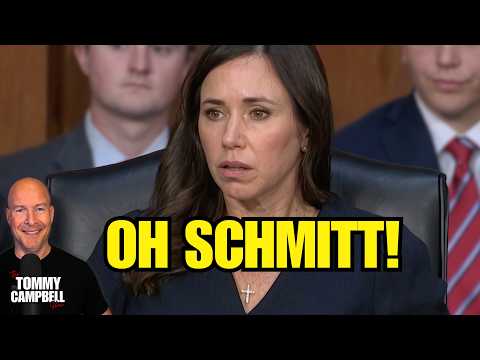
Senator Eric Schmitt’s attempt to connect Jack Smith to Atlanta through a February 2024 basketball game gives the compilation an unusually clear centerpiece. Schmitt presents the exchange as a potential perjury trap, only for Smith to recall attending Maryland’s game against the Iowa Hawkeyes and for Amy Klobuchar to identify the apparent Hawks/Hawkeyes confusion. The assembled segments repeatedly return to that reversal, emphasizing how an accusation delivered with extraordinary confidence can collapse when the underlying factual premise has not been adequately checked.
The most useful material is the hearing footage itself. Smith is shown explaining why his investigation obtained congressional phone records, defending his charging decisions as evidence-driven, and arguing that Republican witnesses were central to the election-related case. Those excerpts give viewers substantially more information than the surrounding commentary alone would provide. Importantly, however, Smith’s statements that investigators developed proof beyond a reasonable doubt and that Trump engaged in criminal conduct remain the former special counsel’s account of his case; the compilation frequently treats those assertions as settled conclusions rather than maintaining that distinction.
On the basketball dispute, the presentation offers considerably more than ridicule. Klobuchar says the Iowa-Maryland game occurred on February 3, 2024, Smith identifies the game and the presence of the Marshals Service, and later commentary says footage places him in section 109 at that Maryland game. Within the material presented, those details directly undermine Schmitt’s Atlanta premise and make the original confrontation look poorly researched. Schmitt’s decision to call Smith a “dirtbag” before the discrepancy was resolved also makes the exchange legitimately relevant to questions about preparation and conduct during a congressional hearing.
Unfortunately, the compilation spends far too long celebrating the mistake. Hosts and guests cycle through descriptions of Schmitt as stupid, incompetent, dishonest, a fool and a doofus, while one commentator compares him unfavorably with Joseph McCarthy and another demands that staff members resign. The rhetoric may entertain viewers already sympathetic to the coverage, but it adds little after the factual error has been demonstrated. A sharper segment would have concentrated on how the mistake occurred, what the displayed messages actually established, and whether any evidence remained for the alleged coordination once the basketball-game interpretation fell apart.
There is also an interesting media story buried beneath the mockery. The compilation cites supportive social-media posts that allegedly appeared quickly after Schmitt’s questioning and were subsequently deleted, along with a prescheduled friendly interview and an Axios item about possible future political ambitions. These details are used to suggest that the exchange had been prepared as a made-for-media breakthrough. That interpretation is plausible within the narrative being presented, but the material does not establish who coordinated with whom, who supplied advance information, or whether the timing resulted from an organized publicity effort rather than ordinary political-media behavior.
The broader political analysis is much less disciplined. Multiple commentators characterize Republicans’ motives, predict electoral consequences, describe the hearing as a partisan charade and make sweeping claims about corruption, Justice Department politicization and historical judgment. Assertions about polling, deleted posts, Trump administration conduct and other political controversies are often introduced as established facts without supporting documentation in the presentation. These digressions turn what could have been a focused examination of a demonstrable hearing-room error into an extended partisan victory lap.
As a compilation, it also suffers badly from repetition. Viewers see substantial portions of the same Schmitt-Smith exchange again and again as different hosts deliver variations on essentially the same reaction. There is enough substantive material here for a strong, concise segment about evidentiary standards, congressional theatrics and the danger of building an accusation around inadequately verified information. Stretching that point across numerous programs ultimately makes the coverage feel less like analysis and more like a montage assembled to maximize humiliation.
Pros
- Uses extended hearing footage so viewers can see Schmitt’s accusation, Smith’s response and Klobuchar’s intervention rather than relying entirely on commentary.
- Presents a specific factual discrepancy involving the Atlanta Hawks and Iowa Hawkeyes that directly challenges the premise of Schmitt’s attempted confrontation.
- Includes Smith’s substantive explanations of his investigative decisions and his argument that Republican witnesses played important roles in the election-related investigation.
- Raises a worthwhile issue about fact-checking serious accusations before presenting them in a congressional hearing.
Cons
- Replays the same basketball exchange excessively after its central factual problem has already been established.
- Repeated insults and ridicule overwhelm the more substantive examination of Schmitt’s evidence and preparation.
- Frequently treats Smith’s descriptions of Trump’s alleged criminal conduct as settled conclusions rather than clearly maintaining their status as claims made by the former prosecutor.
- Suggests a coordinated media rollout around Schmitt’s questioning without demonstrating the coordination behind the timing.
- Introduces numerous broader claims about polling, corruption, media behavior and political motives without providing enough supporting evidence.
- Allows partisan celebration of Schmitt’s mistake to overshadow the hearing’s more consequential questions about Smith’s investigations and investigative methods.
The Hawks-versus-Hawkeyes mistake provides a legitimate and revealing example of why serious accusations require careful verification, and the hearing footage makes that point effectively. The compilation weakens a strong factual centerpiece by replaying it relentlessly, piling on personal ridicule and expanding into political conclusions that receive far less evidentiary support. A tighter, less celebratory treatment would have made the underlying journalistic critique considerably more persuasive.