Charlie Kirk’s stated defense of allowing even deeply offensive speech becomes the organizing principle for a much broader argument about censorship, Israel, Gaza, political power, and the return of cancel culture on the right. Tucker Carlson builds the opening carefully around the distinction he sees between answering objectionable speech with more speech and attempting to silence the speaker. The Charlie Kirk clip gives that discussion a concrete foundation, but Carlson then stretches the principle considerably further, treating censorship not merely as suppression of speech but as something that invariably reveals malice, contempt, and a desire by powerful people to protect themselves. Those categorical claims are asserted rather than demonstrated, and his description of slander also becomes overly simplified when he contrasts it with supposedly true or sincerely believed protected speech.
The discussion becomes more pointed when Carlson turns to Republican figures including Mike Lawler, Nikki Haley, and Mark Levin. His central criticism is internally coherent: politicians and commentators who once opposed “cancel culture” should have to explain why restrictions, deplatforming, compulsory identification, or other consequences for controversial speech are compatible with their earlier principles. The clips provide viewers with actual statements to consider, particularly Lawler saying certain speech “cannot be tolerated,” Haley advocating verified identities on social media, and Levin explicitly embracing cancellation and deplatforming. Yet Carlson repeatedly moves beyond those statements into claims about donors, motives, attitudes toward violence, and what these figures supposedly want to happen to their opponents without supplying evidence sufficient to establish those conclusions.
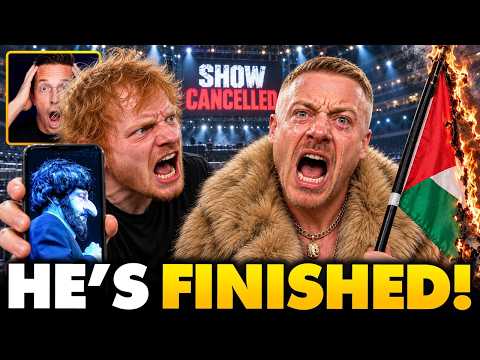
Macklemore’s removal from a Gillette Stadium event supplies the clearest practical case study. Carlson quotes Macklemore distinguishing criticism of Israel from hostility toward Jewish people and contrasts those words with a Fox News headline labeling him an “anti-Semitic rapper.” That comparison usefully focuses attention on whether the label accurately describes the statement presented. Carlson also raises a legitimate distinction between an audience rejecting a performer through ticket sales and a venue owner deciding that the performer will not appear. His argument becomes less disciplined, however, when he speculates about taxpayer subsidies without establishing the specifics of Gillette Stadium, invokes Robert Kraft’s appearance in “the Epstein files” without explaining the relevance or context, and describes an entire wealthy class in sweeping moral and national-loyalty terms.
The segment involving Blake Neff brings the argument closer to its stated theme because Carlson confronts someone associated with Charlie Kirk’s legacy over whether censorship could ever become an acceptable response to conspiracy theories or other harmful ideas. Quoting Neff’s statement that society may need either to “make our peace with censorship” or find a way to combat the problem without it gives Carlson something substantive to challenge. His answer—that objectionable ideas should be rebutted rather than suppressed—is clear and consistent with the principle established at the beginning. Comparing even consideration of censorship to making peace with genocide, however, is an extreme analogy that generates heat rather than clarifying what forms of moderation, private platform rules, government restrictions, or social consequences are actually being debated.
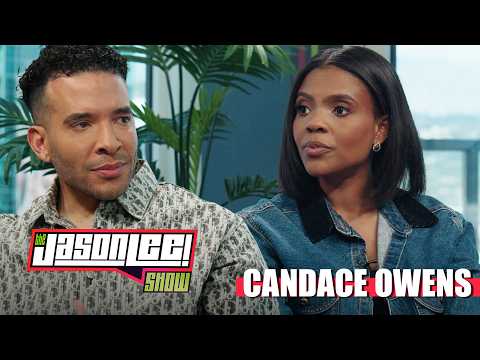
Ana Kasparian’s extended interview improves the discussion by introducing a guest from a different political background who nevertheless shares many of Carlson’s concerns about speech. Their exchange acknowledges that censorship pressures and cancel-culture tactics can emerge from multiple political factions, while Kasparian usefully separates government restrictions from private consequences and discusses the practical importance of people defending one another’s ability to express unpopular opinions. At the same time, the conversation continues to mix distinct issues—constitutional protections, private property, employment consequences, campaign finance, social-media moderation, government grants, Israel policy, and economic concentration—without consistently separating their legal and ethical differences. Later discussion of allegations involving Graham Platner also ventures into highly consequential claims about an alleged sexual assault, with Kasparian expressing disbelief based on circumstances described in the conversation rather than evidence capable of resolving what happened.
The result is an unusually forceful argument for ideological consistency that is strongest when it places public statements beside professed free-speech principles and weakest when it assumes hidden motives or treats complicated factual disputes as settled. Carlson and Kasparian make a worthwhile case that people should scrutinize censorship even when it is directed at speakers they dislike, and their willingness to criticize political allies gives that principle more substance than a purely partisan defense would. But the presentation repeatedly undermines that case through inflammatory comparisons, unsupported assertions about donors and loyalties, speculative historical claims, and broad declarations presented with more certainty than the material shown can justify. A tighter distinction between government censorship, private venue decisions, reputational consequences, and genuine threats would have made the free-speech argument substantially more rigorous.
Pros
- Charlie Kirk’s own remarks provide a concrete starting point for examining whether contemporary political figures are applying free-speech principles consistently.
- Clips from Mike Lawler, Nikki Haley, Mark Levin, and StopAntisemitism allow several of the people being criticized to be heard directly rather than merely paraphrased.
- The Macklemore section meaningfully distinguishes criticism of a government from hostility toward an ethnic or religious population and questions whether the characterization presented matches the quoted remarks.
- Carlson applies his criticism to figures associated with his own political side, reinforcing the episode’s stated principle that opposition to censorship should not depend on which faction currently holds power.
- Ana Kasparian adds useful ideological contrast and acknowledges censorship pressures from multiple political camps.
Cons
- Claims about politicians’ donors, motives, loyalties, and desired consequences for critics are repeatedly presented as established conclusions without evidence sufficient to demonstrate them.
- Government censorship, private property decisions, employment consequences, social pressure, online anonymity, and platform moderation are often grouped together despite important legal and practical differences.
- The discussion makes several sweeping factual and historical assertions—including about stadium subsidies, political movements, COVID policy, Israel and Gaza, and the Kennedy assassination—without providing enough support to evaluate them.
- Extreme comparisons involving slavery, genocide, North Korea, and Nazi-era violence frequently overwhelm distinctions that are essential to a serious free-speech discussion.
- The interview’s treatment of a sexual-assault allegation moves from skepticism about reporting and timing to personal disbelief about the allegation without evidence capable of establishing what occurred.
- Personal ridicule and inflammatory descriptions of opponents weaken an argument otherwise centered on answering objectionable ideas through reasoned counterargument.
A consistent defense of unpopular speech is a substantial subject, and the strongest portions expose genuine tensions between anti-cancel-culture rhetoric and calls to punish or deplatform disfavored speakers. The argument loses considerable credibility, however, whenever principled criticism gives way to unsupported motive claims, inflammatory analogies, and factual assertions presented with unwarranted certainty. More careful distinctions and stronger evidentiary discipline would have made its case for free expression considerably more persuasive.