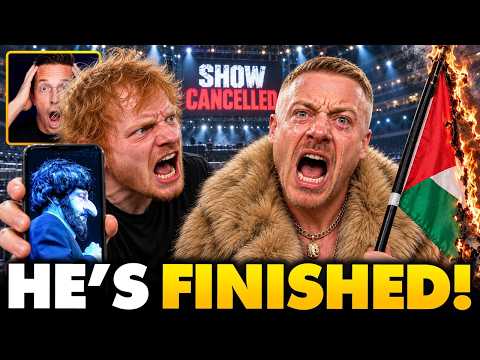
Ted Cruz’s appearance at a Texas college football game provides the attention-grabbing opening, with audible boos interrupting his discussion of proposed college-sports legislation. The commentary immediately interprets the hostile reception as deserved, but the actual stadium moment is surprisingly brief. Rather than examining how widespread the booing was, what prompted individual spectators, or Cruz’s substantive argument about college athletics, the piece uses the clip primarily as a launching point for a much larger argument about media access and political censorship.
The transition centers on an apparent contrast the host finds significant: ESPN, owned by Disney, gives Cruz airtime while an interview between Jimmy Kimmel and Democratic Senate candidate James Talarico was moved to YouTube rather than appearing on ABC television. That juxtaposition gives the commentary a coherent theme beyond simply celebrating an embarrassing moment for Cruz. However, the presentation moves quickly from observing different treatment to asserting why it occurred, claiming that FCC Chair Brendan Carr and Donald Trump sought to keep Talarico off the air because of electoral concerns in Texas. Within the material presented here, that motive is asserted rather than independently demonstrated.
The strongest supporting material comes from FCC Commissioner Anna Gomez, whose comments directly address concerns about government pressure influencing broadcasters’ editorial choices. Importantly, Gomez also says that, as a regulator, it would be inappropriate for her to pressure ABC about whether it should air the interview. Including that qualification adds useful substance and demonstrates the distinction between criticizing alleged government pressure and demanding a particular programming decision. Talarico’s own comments about what he calls a dangerous form of “cancel culture” further establish how the people involved characterize the dispute, although they remain arguments from interested participants rather than neutral proof of the host’s broader conclusions.
The discussion of the Kimmel-Talarico interview’s online audience is another effective element. The host says it had accumulated roughly 6.5 million YouTube views compared with approximately 1.5 million viewers for Kimmel’s normal television audience, using those figures to argue that moving the interview online produced a Streisand-effect response. Even accepting the stated numbers, comparing YouTube views with conventional television audience measurements is not necessarily an apples-to-apples comparison. Still, the basic point—that restricting one distribution route does not necessarily prevent widely followed material from finding a large audience elsewhere—is clearly illustrated.
From there, the commentary becomes considerably more partisan and less disciplined. Claims that pro-Trump figures control or will soon control numerous major media organizations, that Republicans cannot “win on the merits,” and that censorship is being employed because of electoral weakness are presented categorically without enough evidence or counterargument in the piece itself. The rapid list of accusations involving prices, Middle East wars, the Epstein files and gasoline prices expands the scope dramatically without providing the sourcing or context needed to evaluate each assertion. Calling the situation “autocracy 101” similarly substitutes a sweeping political judgment for a careful demonstration of how the specific events satisfy that description.
Talarico’s closing campaign comments reinforce the partisan character of the segment rather than broadening it. He describes himself as an underdog, portrays wealthy political spending as part of a corrupt system and argues that powerful opponents fear his movement. The host then connects those claims back to Cruz’s reception and offers his own highly inflammatory explanation for why spectators booed, ending with personal insults and a call for viewers to support his channel against what he describes as White House efforts to suppress him. The result is energetic and thematically consistent political advocacy, but the original football-game incident ultimately receives much less analysis than the headline suggests.
Pros
- The Cruz stadium clip provides an immediate, concrete hook and leads into a broader argument rather than functioning entirely as viral spectacle.
- Gomez’s remarks introduce a substantive discussion about regulatory pressure, editorial independence and broadcasters’ First Amendment concerns.
- The comparison between television reach and the interview’s reported YouTube audience gives the censorship argument a tangible example.
- The presentation maintains a clear through-line connecting media access, political pressure and alternative distribution platforms.
Cons
- The actual circumstances and significance of Cruz being booed receive little examination despite being the headline attraction.
- Motives attributed to Trump, Carr and other political actors are frequently asserted more confidently than the material presented establishes.
- Numerous claims about media ownership, economic conditions, foreign policy and other controversies are introduced without sufficient sourcing or context.
- Comparisons between YouTube views and traditional television audience figures are treated too straightforwardly despite representing different measurements.
- Personal insults and sweeping partisan conclusions increasingly replace evidence-driven analysis.
- Competing interpretations of the ABC decision and the broader regulatory dispute receive almost no meaningful consideration.
A memorable stadium moment develops into a more substantial discussion of political pressure on broadcasters, with Gomez’s comments providing the piece’s most useful material. Yet the commentary repeatedly moves from legitimate questions about editorial independence to categorical claims about motives, censorship and electoral strategy that are not adequately established within the presentation. Its forceful advocacy is unmistakable, but a narrower argument with better sourcing and more engagement with alternative explanations would have been considerably stronger.