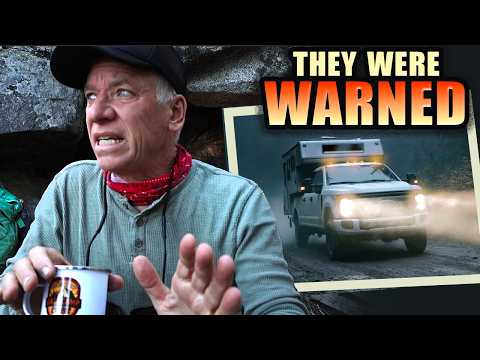
A wood stove, a generous pile of supplied firewood, and temperatures already falling rapidly after sunset establish the central challenge almost immediately. The camping setup feels genuinely dependent on whether the unfamiliar stove can heat the van effectively, giving the evening a simple but effective source of uncertainty without manufacturing unnecessary drama. Watching the temperature climb toward 12 degrees inside while the outdoors eventually drops below freezing provides a satisfying payoff to that experiment.
Much of the charm comes from small practical moments rather than extreme survival. Extra clothing becomes “double pants” and eventually quadruple layers, while dinner turns into a comedy of trial and error when bread placed near the stove catches fire. The successful second attempt keeps the mishap lighthearted, and the combination of cooking, fire management, temperature checks, and settling into bed gives the overnight portion a believable rhythm.
Wildlife encounters add another dimension without overwhelming the camping story. Wallabies are observed from a distance, a cold-slowed ant is allowed to recover, and a brushtail possum appears near the van after making enough noise to prompt an investigation outside. The host generally reacts with curiosity while recognizing when an animal appears frightened and backing away, which makes these sequences feel more observational than intrusive.
The temperature measurements are particularly useful because they give the cold conditions something more concrete than repeated descriptions of feeling freezing. The outside reading reaches two degrees before bedtime and minus two the following morning, while the stove appears to make the van substantially warmer. These readings are presented casually rather than as a controlled test, but they effectively demonstrate why the stove matters to the experience.
Morning shifts the pace from managing cold to exploring the surroundings. Ice, mist over the water, ducks, bubbles, and the creek create a calm contrast with the previous night's fire and cooking mishaps. An excursion across the water toward an abandoned structure and rusting vehicle adds an unexpected discovery, with the deteriorating interior providing a mildly eerie diversion before the host decides she has seen enough and leaves.
That loose, spontaneous presentation is both appealing and limiting. The trip captures plenty of authentic reactions and environmental details, but some observations are difficult to follow because the narration becomes fragmented or unclear. The abandoned building in particular raises obvious questions about its history and purpose that remain unanswered, while the camping setup itself could have benefited from a clearer explanation of the stove, sleeping arrangements, and other cold-weather preparations.
As a change from the host's stated usual tropical adventures, the mountain setting succeeds through atmosphere more than spectacle. The strongest material comes from the contrast between the frozen outdoors and the increasingly cozy van, supported by wildlife encounters and understated humor. It is not an especially detailed guide to winter camping, but as a personal travel-and-camping diary it captures the discomfort, improvisation, and quiet pleasures of an unusually cold night.
Pros
- Temperature readings give the overnight cold and the stove's warming effect a useful sense of progression.
- The bread mishap provides natural humor without distracting from the camping experience.
- Wallabies, the brushtail possum, ducks, mist, ice, and the creek give the location a strong sense of atmosphere.
- The transition from nighttime stove management to peaceful morning exploration keeps the outing varied.
- Reactions to the unfamiliar stove and freezing conditions make the experience feel spontaneous rather than overly staged.
Cons
- Fragmented narration occasionally makes individual observations and sequences difficult to understand.
- Cold-weather equipment and preparations receive too little explanation for viewers looking for practical camping information.
- The abandoned building and vehicle are visually interesting discoveries, but their background remains unexplored.
- Repeated remarks about the cold sometimes substitute for additional detail about the environment or camping process.
A genuinely cold mountain night becomes an engaging personal adventure through a good mixture of practical improvisation, wildlife encounters, humor, and peaceful scenery. Greater clarity and more detail about the camping setup would make it more informative, but the relaxed presentation captures both the discomfort outside and the satisfaction of creating a warm refuge inside.