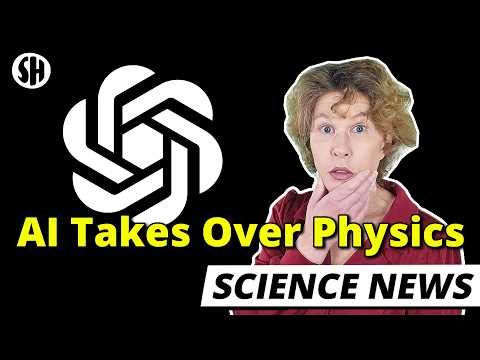
The Riemann hypothesis has stood as one of mathematics' most celebrated unsolved problems since Bernhard Riemann proposed it in 1859. Its connection to the distribution of prime numbers has made it central to number theory, while generations of extraordinary mathematicians have attempted to establish whether its prediction about the non-trivial zeros of the Riemann zeta function is correct. The announcement that a mathematician working with Claude may have finally produced a proof is therefore an extraordinary development, and the presentation captures the significance of the moment with genuine excitement and disbelief.
The historical background provides useful context for understanding why this announcement matters. The discussion touches on David Hilbert's famous list of mathematical problems, the Clay Mathematics Institute's million-dollar Millennium Prize, and the extensive computational verification of the first 12 trillion non-trivial zeros. The impressive list of mathematicians who have worked on the problem, including Alan Turing, John von Neumann, and others, reinforces just how formidable the challenge has been. These details establish the scale of the achievement without requiring viewers to possess an advanced mathematical education.
The explanation of the potential breakthrough is appropriately cautious about what has actually been established. The presenter references the mathematician's announcement and reactions from respected figures, including James Maynard and Steven Strogatz. Maynard's reported assessment of a 98–99 percent likelihood that the proof is correct is particularly significant, although his qualification about checking whether the formal verification establishes precisely the intended theorem is equally important. The distinction between a promising formal proof and a mathematical result that has survived independent scrutiny is essential, especially when the claim concerns a problem of this magnitude.
The discussion also benefits from its connection to the presenter's abandoned research project on random matrix theory. The planned exploration of Hugh Montgomery's observations and Freeman Dyson's recognition of similarities between mathematical statistics and physical systems sounds fascinating. The connection between the distribution of zeta zeros and phenomena in physics provides an intriguing example of how seemingly unrelated disciplines can reveal unexpected mathematical relationships. Although these subjects receive limited explanation here, their inclusion communicates the depth of the research that originally motivated the project.
Beyond the mathematical achievement, the presentation develops into a thoughtful examination of what increasingly capable automated research systems might mean for scientific discovery. The presenter expresses genuine admiration for the potential breakthrough while also mourning the possibility that some of the most intellectually rewarding aspects of mathematics could become automated. The distinction between obtaining a result and experiencing the human process of discovering it is particularly interesting. Mathematical research is presented not merely as a way to produce useful answers, but as an activity involving curiosity, creativity, historical context, and the satisfaction of understanding something previously unknown.
The discussion of AI safety introduces a more concerning dimension. The presenter argues that systems capable of making major mathematical advances could also accelerate the development of increasingly capable AI systems, potentially contributing to recursive self-improvement. This is a legitimate subject for concern, particularly given the uncertainty surrounding how much AI already contributes to frontier research and development. However, the presentation moves relatively quickly from one reported mathematical breakthrough to predictions that fully automated AI development could arrive within months or years. Those timelines are possibilities expressed by the presenter, not established forecasts, and the argument would benefit from a clearer explanation of the technical steps separating mathematical capability from autonomous AI development.
The emotional uncertainty is ultimately one of the presentation's defining characteristics. Rather than pretending to have resolved the philosophical and practical implications of the announcement, the presenter openly admits to struggling with the possibility that machines could eventually perform much of humanity's scientific research. This honesty makes the discussion more relatable, particularly when contrasted with the excitement surrounding the mathematical achievement. The references to additional discussions with mathematicians and researchers also provide useful avenues for viewers who want to understand the implications more deeply, although the central mathematical argument itself remains largely unexplained.
Pros
- The historical overview establishes why the Riemann hypothesis is considered one of mathematics' most important unresolved problems.
- The references to Hilbert, Turing, and generations of leading mathematicians communicate the extraordinary difficulty of the challenge.
- The reported reactions from James Maynard and Steven Strogatz provide important expert perspectives on the claimed breakthrough.
- The distinction between formal verification and independent mathematical scrutiny demonstrates appropriate caution about the announcement.
- The connection between random matrix theory, number theory, and physics introduces fascinating interdisciplinary research.
- The discussion of human creativity and the emotional rewards of scientific discovery adds an engaging philosophical dimension.
- The presenter's candid uncertainty makes the broader discussion of AI's implications feel personal rather than unnecessarily sensational.
Cons
- The actual mathematical proof receives almost no explanation, leaving viewers unable to understand what Claude contributed or how the result was constructed.
- The announcement is treated as potentially historic before the independent verification process described in the presentation has been completed.
- The explanation of the Riemann hypothesis remains relatively introductory despite repeatedly emphasizing its mathematical importance.
- The connection between advanced mathematical capabilities and recursive self-improvement is asserted more strongly than the available discussion demonstrates.
- Predictions about fully automated AI research arriving within months or years are speculative and lack supporting timelines or technical analysis.
- The promised exploration of random matrix theory and its connections to physics is largely deferred rather than meaningfully developed.
This is a fascinating account of a potentially historic mathematical achievement, strengthened by the presenter's enthusiasm, historical perspective, and willingness to confront uncomfortable questions about technological progress. However, the absence of a meaningful explanation of the proof itself and the speculative nature of some AI safety predictions prevent it from becoming a definitive examination of either subject. It succeeds considerably better as an immediate reaction to an extraordinary scientific development than as a comprehensive mathematical or technological investigation.