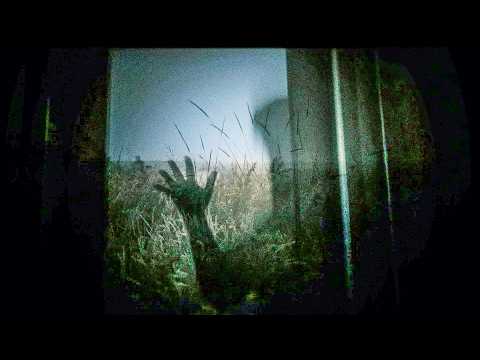
The brutal murder of 35-year-old Kelly Clayton in her upstate New York home presents investigators with a disturbing contradiction: her seven-year-old daughter witnessed the attack and believed the masked assailant resembled her father, yet Thomas Clayton was attending a poker game when the killing occurred. With multiple witnesses supporting his whereabouts and no physical evidence placing him at the bloody crime scene, detectives initially face the possibility that the husband could not have committed the murder himself. Trace Frame builds its examination of the September 2015 killing around that apparent impossibility, gradually revealing how a convincing alibi concealed a murder-for-hire arrangement. The storytelling establishes a compelling mystery while keeping the consequences for Kelly and her two children at the center of the case.
The opening reconstruction uses responding deputies' recorded observations to establish the extraordinary violence inside the Clayton residence. Blood throughout the upstairs hallway, children's rooms, staircase, and kitchen suggests that Kelly moved through the house during the attack, possibly attempting to reach her children. The narrator deliberately avoids displaying the interior crime scene, allowing the deputies' descriptions and investigator Allison Regan's later account to communicate the brutality without relying on graphic imagery. This restraint strengthens the presentation, although the suggestion that Kelly deliberately headed toward her children's rooms goes beyond what the physical evidence alone can conclusively establish. The reconstruction nevertheless provides essential context for understanding why investigators immediately questioned the robbery explanation Thomas offered.
Particularly effective is the attention given to Kelly's daughter and the procedures used to interview a traumatized child witness. The presentation explains why forensic interviewers establish a child's understanding of truth and falsehood, encourage uncertainty rather than guessing, and avoid introducing potentially influential details. Her descriptions of a masked attacker, familiar-looking clothing, and a pipe-like weapon become important pieces of the investigation, but the narrator appropriately acknowledges that identifying someone under traumatic circumstances is not straightforward. The contrast with Thomas Clayton's still-connected 911 call is especially revealing. After apparently believing the emergency call had ended, he repeatedly asked his daughter whether she had seen a robber, raising investigators' concerns that he might have been attempting to shape her account. The recording supports those concerns without independently proving his intentions, a distinction the presentation generally handles responsibly.
The investigation becomes increasingly absorbing as detectives begin examining Michael Beard, a former employee of Clayton's restoration business who also rented property from him. Beard's financial difficulties, employment history, familiarity with the family, and relationship with Thomas provide a plausible connection, but it is the communications evidence that gives the case its investigative momentum. Clayton borrowed a poker companion's phone to contact Beard, reportedly made another call using an auto business's landline, and offered explanations about cellular service that investigators questioned through phone records. Meanwhile, Beard's phone was switched off during a critical period surrounding the killing. The narrator methodically connects these circumstances without treating any individual phone call or temporary loss of cellular activity as definitive proof. This careful accumulation of evidence is among the presentation's greatest strengths, demonstrating how investigators can establish coordination even when a suspect has a legitimate alibi.
Beard's reported confession and the subsequent recovery of physical evidence supply the investigation with its decisive developments. According to investigators, Beard acknowledged killing Kelly for $10,000 and directed authorities to a discarded maul handle, bloody clothing, and house keys. The weapon reportedly contained Kelly's blood, while fragments recovered from the residence connected it to the attack. The presentation also addresses Beard's later rejection of his confession, his claim that he was hired to burn the house rather than commit murder, and his continued insistence on innocence. Importantly, the narrator acknowledges that the confession interview was not recorded, an evidentiary limitation that deserves attention. However, the discussion sometimes substitutes confident interpretations of Beard's behavior and his relationship with Clayton for independently established conclusions, particularly when describing nervousness as evidence of guilt or suggesting why the attacker concealed his face.
The examination of Thomas Clayton's possible motives adds another dimension through allegations of extramarital relationships, statements about the financial consequences of divorce, and changes to the family's life insurance coverage. Investigators' accounts suggest that Kelly's death could have provided both personal freedom and financial benefits, although these circumstances are necessarily interpreted within the broader prosecution case rather than independently proving motive. The presentation effectively distinguishes the hired killer's physical participation from the alleged organizer's responsibility, and its coverage of the court proceedings reinforces the significance of that distinction. Beard's first-degree murder conviction, Clayton's seven-week trial involving approximately 75 witnesses, extensive cellular analysis, and the subsequent appellate decisions establish that the prosecution's case ultimately survived judicial scrutiny. Both men received life sentences without parole, while Clayton continued to deny involvement.
Trace Frame's delivery is polished and accessible, relying on emergency recordings, investigative interviews, television reporting, courtroom developments, and the narrator's explanations to build a coherent chronology. Repeated prompts to remember particular details help connect information introduced far apart in the investigation, although the technique occasionally becomes overly insistent. Phrases emphasizing what investigators supposedly understood, what suspects were thinking, or what specific behavior revealed sometimes create more certainty than the available evidence warrants. The discussion of a husband's failure to touch his murdered wife is especially vulnerable to this problem, since reactions to traumatic discoveries vary considerably. Still, the presentation's decision to return to Kelly's sister Kim, who ultimately adopted the children, provides an important emotional conclusion without allowing the murderers' personalities to completely dominate the story. The result is a persuasive and frequently moving account whose strongest moments come from the evidence itself rather than its more dramatic interpretations.
Pros
- Establishes an engaging investigative mystery around Thomas Clayton's verified poker-game alibi and the evidence suggesting he arranged his wife's murder.
- Uses deputies' recordings and crime scene observations to communicate the violence of Kelly Clayton's killing without displaying graphic imagery.
- Carefully explains the importance of non-leading forensic interviews when obtaining testimony from a traumatized child witness.
- Effectively highlights how the still-connected 911 call raised concerns about Clayton's attempts to influence his daughter's description of the attacker.
- Builds a convincing investigative chronology through borrowed phones, landline calls, cellular records, witness accounts, and recovered physical evidence.
- Acknowledges Michael Beard's recanted confession, the absence of an interview recording, and the importance of corroborating evidence.
- Provides meaningful coverage of the prosecutions, convictions, sentencing, appeals, and lasting consequences for Kelly's children and family.
Cons
- Occasionally presents interpretations of suspects' behavior, psychological motivations, and presumed intentions with more confidence than the evidence independently supports.
- Gives insufficient attention to the limitations of interpreting emotional reactions, including Clayton's failure to touch his wife's body and Beard's apparent nervousness during questioning.
- Uses repetitive reminders and dramatic rhetorical questions that sometimes interrupt an otherwise compelling investigative narrative.
- Could examine the evidentiary implications of Beard's unrecorded confession and the limitations of cellular-location analysis in greater detail.
Trace Frame delivers a compelling and emotionally grounded examination of a murder-for-hire case in which a convincing alibi ultimately failed against a substantial body of circumstantial and physical evidence. Its strongest qualities are the careful reconstruction of the investigation, sensitive treatment of the child witness, and clear explanation of how communications records helped expose the conspiracy. Although occasional dramatic overstatements and limited examination of certain evidentiary weaknesses reduce its analytical precision, the presentation remains an informative and affecting account of how Kelly Clayton's murder was solved and how profoundly it devastated her family.