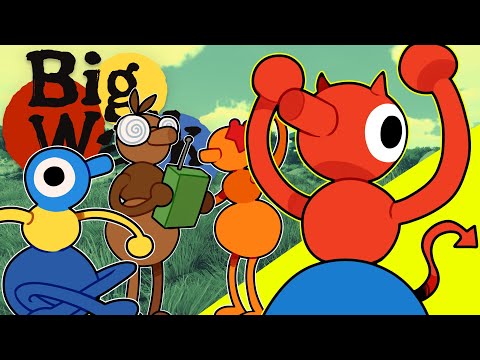
A missing child, a deserted indoor play center, and mascots based on bodily functions initially make the adventure look like a deliberately ridiculous spin on familiar mascot-horror ideas. That expectation becomes part of the entertainment, because the playthrough begins with open skepticism before gradually shifting into genuine enthusiasm. The contrast between the absurdity of characters such as Poopy, Pee, Farty, and Booty and the surprisingly elaborate environment gives the game a comic identity without completely undermining its attempts at horror.
Exploration reveals considerably more interaction than the premise suggests. The player searches bathrooms and party rooms, activates the facility's power, collects keys and wristbands, memorizes clues, solves numerical locks, crawls through play structures, and eventually navigates service areas beneath the attraction. Small touches such as item-inspection animations, reflections, usable slides and trampolines, and the ability to photograph or memorize clues repeatedly draw appreciative reactions. The commentary is especially effective when that initial mockery gives way to recognition that the developers have put real effort into the mechanics and presentation.
Puzzle solving provides both some of the funniest material and some of the roughest stretches. The electrical-panel sequence becomes manageable once its instructions are noticed, while later code hunts require tracking numbered clues scattered throughout a large environment. Watching the player forget values, mix up clue positions, brute-force missing digits, and repeatedly encounter enemies creates genuine tension, but these sequences can also become repetitive. Because so much of the commentary consists of thinking aloud, confusion that is entertaining for a few minutes occasionally turns into prolonged wandering.
The introduction of a small robotic helper adds welcome mechanical variety, particularly when remote controls are used to manipulate an otherwise inaccessible door. The laser-tag section goes further by transforming exploration into a shooting challenge, first through target practice and then through a confrontation with Booty. Earning coins, obtaining a ticket, learning where to shoot the mascot, and dealing with a darker second round give this middle section a satisfying sense of progression rather than relying exclusively on keys and combination locks.
Comedy dominates the presentation, often through improvised songs, intentionally juvenile wordplay, exaggerated reactions, and an enormous number of jokes about the mascots' names and designs. At its best, that energy makes an inherently silly game unusually entertaining and gives the playthrough a distinct personality. At other points, particularly during the extended laser-tag improvisation and repeated jokes about Booty's character model, the same gag is stretched well beyond its initial payoff. Viewers primarily interested in the game's puzzles, atmosphere, or story may find the constant commentary intrusive.
The horror becomes more convincing once the facility grows darker and hostile mascots begin roaming the play areas. Searching for code fragments while avoiding enemies produces substantially more tension than the opening exploration, and the cramped vent chase plays directly into the player's stated fear of being pursued in confined spaces. The final restricted area also starts supplying hints about what happened at the facility before an unidentified figure confronts the protagonist, acknowledges the search for the missing child, and orders an attack. It is an intentionally incomplete ending, but the Chapter Two preview and visible future chapter slots make the cliffhanger feel like setup rather than resolution.
What ultimately carries the playthrough is the genuine change in expectations. The game is repeatedly compared with familiar mascot-horror conventions and initially treated as though it will be a cheap imitation, yet its environments, mechanics, difficulty, scares, and variety steadily win the player over. That enthusiasm feels earned by what is encountered on screen rather than assumed from the beginning, even if the overwhelmingly positive closing reaction leaves little room for examining the game's less successful puzzle design or derivative genre elements.
Pros
- The gradual shift from skepticism to genuine enthusiasm gives the playthrough a satisfying arc.
- Exploration, code puzzles, remote-control mechanics, shooting practice, laser tag, enemy avoidance, and vent sequences provide substantial gameplay variety.
- Strong reactions to unexpected scares and chases help the horror sequences land despite the deliberately juvenile premise.
- Environmental details and interactive elements receive specific attention rather than being overlooked in favor of nonstop jokes.
- The player's energetic personality fits the game's absurd mascot designs particularly well.
Cons
- Repeated confusion over codes and objectives creates stretches of wandering and trial-and-error that could have been tighter.
- The improvised songs and bodily-function jokes become repetitive, especially during the lengthy laser-tag sequence.
- Constant commentary sometimes competes with dialogue and story information that could otherwise receive more attention.
- The closing praise is enthusiastic but offers relatively little reflection on the design frustrations encountered earlier.
A premise that looks like disposable mascot-horror parody develops into a surprisingly varied playthrough with puzzles, exploration, comedy, chases, and a memorable laser-tag centerpiece. The relentless joking can become exhausting and some puzzle sections drag, but the unexpected progression from ridicule to genuine excitement makes the experience unusually infectious.