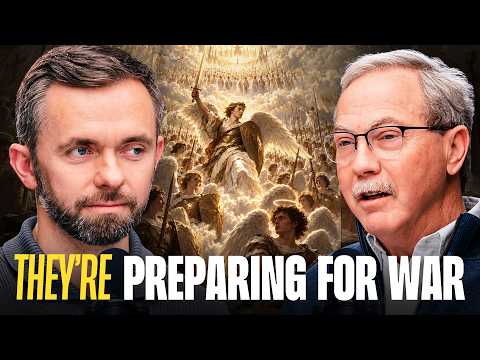
Dr. Colin Perry’s account of a medical emergency in 2008 develops into an extraordinary story of spiritual encounters, personal transformation, and warnings about humanity’s future. A retired university lecturer with a PhD in media, Perry describes suffering a heart attack, losing consciousness in an ambulance, and experiencing what he believes was a direct encounter with Jesus and several angels. His testimony combines deeply personal experiences with Christian theology, prophetic interpretations, and claims about supernatural healing. While his sincerity and emotional openness make the conversation engaging, the interview frequently treats extraordinary spiritual interpretations as established realities without providing independent evidence.
Perry’s description of his near-death experience is detailed and emotionally compelling. After experiencing severe chest pain while attempting to start a garden trimmer, he recalls hearing a divine warning instructing him to call an ambulance. During transport, he lost consciousness but describes remaining aware in a dark, weightless environment before experiencing a frightening downward movement. According to Perry, calling upon Jesus resulted in his rescue by a mysterious figure who transported him into a peaceful realm surrounded by towering angels. His descriptions of overwhelming love, interconnected consciousness, and an apparent choice between remaining in paradise or returning to his children give the account considerable emotional depth. However, the experience remains a personal recollection rather than independently verified evidence of an afterlife, and the interview never establishes that Perry was clinically dead rather than unconscious during the reported encounter.
The conversation becomes particularly interesting when Perry discusses free will, predestination, and the possibility of spiritual beings operating outside conventional time. He claims Jesus and the angels showed him glimpses of alternative futures, with different outcomes depending on individual decisions. Perry interprets these experiences as evidence that human choices carry eternal consequences while God possesses knowledge of possible futures. This provides an accessible framework for discussing complicated theological questions, particularly the relationship between divine foreknowledge and personal responsibility. Nevertheless, the explanations remain speculative, and the interviewer generally reinforces Perry’s interpretations rather than exploring competing theological perspectives or asking how these experiences might be distinguished from perceptions occurring during a medical crisis.
The discussion of Perry’s hospitalization introduces additional claims about supernatural intervention. He recalls hearing angels explain that three coronary arteries had been healed while a fourth remained untreated. After undergoing an angiogram and receiving a stent, Perry says his cardiologist described blood vessels that had developed alternative routes around existing blockages. Perry attributes this finding to angelic healing and believes the remaining blockage served a spiritual purpose by preserving evidence of his heart attack. Although the reported medical findings are relevant to his experience, the interview does not provide clinical documentation or establish that the vascular changes resulted from supernatural intervention rather than physiological processes. Similarly, his account of experiencing approximately 20 to 30 minutes of spiritual activity during what a paramedic reportedly described as one minute of unconsciousness raises interesting questions about subjective time perception without demonstrating the existence of another dimension.
The interview reaches its greatest emotional intensity when Perry discusses his daughter Rebecca, who suffered a devastating childhood accident, lived with profound disabilities, and died at 29 after developing a severe respiratory illness. His recollections of recurring dreams before her accident, the years spent struggling with grief, and his efforts to understand why she was not healed are deeply affecting. Particularly moving is his description of communicating with Rebecca about his near-death experience and interpreting her responses as confirmation that she had experienced heaven during her earlier coma. Their final moments together provide the conversation with a genuine human dimension that extends beyond its supernatural claims. Perry’s willingness to acknowledge unresolved questions about suffering and divine intervention is especially valuable, although the spiritual significance he assigns to Rebecca’s responses and his prophetic dreams cannot be independently established from the information presented.
The later discussion shifts toward apocalyptic prophecy, with Perry describing a dream involving three enormous waves that he associates with pestilence, natural disasters, and warfare. He connects these symbols to COVID-19, contemporary environmental catastrophes, international conflicts, and his interpretation of the Four Horsemen of Revelation. His geographical reading of biblical prophecy links different horsemen to threats emerging from the west, east, north, and south, with references to Russia, Africa, and broader geopolitical instability. These interpretations may interest viewers already familiar with prophetic Christianity, but they are among the interview’s least substantiated claims. The alleged predictions are not supported by contemporaneous records, the historical and scriptural interpretations receive little critical examination, and broad categories such as disease, disasters, and warfare make retrospective connections relatively easy. The interviewer’s enthusiastic agreement further reduces opportunities to distinguish religious interpretation from demonstrable prediction.
The concluding portion focuses on spiritual gifts, speaking in tongues, prophetic dreams, and Perry’s belief that Christians can develop a stronger awareness of divine communication. He offers a consistent explanation of his personal religious practice, encouraging believers to recognize what he considers spiritually inspired thoughts and to pursue a closer relationship with God. The interviewer contributes her own account of allegedly speaking unfamiliar languages while praying, including a claim that a linguistic expert identified fluent French, but no recording or supporting documentation is presented. References to Perry’s books, requests for subscriptions and financial support, and a closing promotion for another near-death testimony also introduce a commercial element into an otherwise personal conversation. Despite these distractions, Perry’s calm delivery and the interview’s conversational structure make the material approachable for its intended Christian audience, even as the lack of critical questioning limits its value as an evidence-based exploration of near-death experiences and prophecy.
Pros
- Features an articulate and emotionally open guest whose academic background, Christian faith, and personal experiences provide a distinctive perspective on near-death testimony.
- Delivers a vivid firsthand account of an apparent encounter with Jesus and angels, including memorable descriptions of overwhelming love, spiritual interconnectedness, and a choice between life and death.
- Explores meaningful theological questions involving free will, predestination, salvation, suffering, and personal responsibility.
- Provides a particularly moving account of Perry’s daughter Rebecca, emphasizing the lasting consequences of childhood disability, parental grief, and the search for spiritual comfort.
- Includes specific details about Perry’s medical emergency and hospitalization that help establish the circumstances surrounding his reported experience.
- Maintains an accessible conversational style, allowing Perry to explain complex spiritual concepts without becoming overly technical.
- Offers practical religious encouragement for viewers interested in prayer, spiritual gifts, and developing a deeper relationship with their faith.
Cons
- Does not establish that Perry experienced clinical death, despite the title’s definitive claim, or provide independent medical documentation supporting the circumstances of his near-death experience.
- Attributes coronary artery changes to supernatural healing without establishing a medical basis for that conclusion or adequately considering physiological explanations.
- Presents prophetic dreams, future predictions, and apocalyptic interpretations with greater confidence than the available evidence supports.
- The interviewer repeatedly affirms extraordinary claims instead of asking challenging questions or exploring alternative medical, psychological, and theological explanations.
- Connections between biblical prophecy and contemporary geopolitical events rely on selective interpretations without sufficient historical or scriptural examination.
- Claims involving angelic communication, unfamiliar languages, and supernatural knowledge lack independent verification.
- Promotional references to books, subscriptions, financial contributions, and another near-death account occasionally distract from the interview’s more meaningful personal reflections.
Dr. Colin Perry delivers an emotionally engaging testimony that combines an unusual medical experience with profound reflections on faith, grief, and the possibility of life beyond death. His account of Rebecca’s suffering and his struggle to reconcile personal tragedy with religious belief gives the conversation its greatest emotional credibility, while his descriptions of spiritual encounters provide compelling material for viewers interested in Christian near-death experiences. However, the interview’s consistently affirming approach, limited medical verification, and increasingly speculative prophetic claims prevent it from becoming a balanced investigation of the extraordinary events being described. It succeeds as a personal expression of faith and spiritual encouragement but is considerably less convincing as factual evidence of supernatural intervention or impending apocalyptic events.