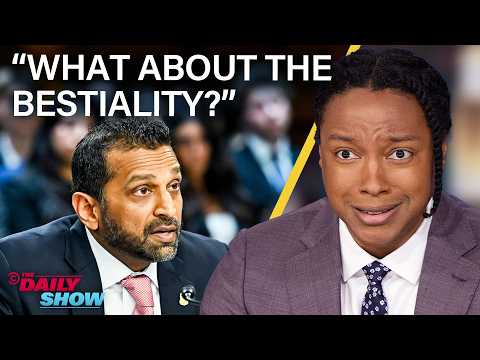
Andrew Bailey’s departure after roughly a year as FBI co-deputy director gives the segment a timely entry point into a larger argument about instability inside the bureau. His publicly stated reason is a return to his family in Missouri, while the reporting presented here says he was also frustrated by the treatment of two senior counterterrorism agents and had a strained relationship with FBI Director Kash Patel. That distinction matters, and the discussion generally acknowledges it rather than presenting Bailey’s alleged internal frustrations as his confirmed reason for leaving.
The more substantial story involves Michael Bergwald and Courtman Ray, two experienced officials in the Washington Field Office’s counterterrorism operation. According to the reporting discussed, they questioned whether alleged harassing calls to Katie Miller warranted treatment as a terrorism threat assessment and were subsequently demoted and transferred. The panel is careful to emphasize that Katie Miller, like anyone else, should be protected from criminal harassment; its concern is whether the counterterrorism apparatus was appropriate for the case and whether questioning that decision contributed to personnel consequences.
Ken Dilanian gives the segment its strongest journalistic foundation by repeatedly distinguishing what his sources are telling him from what the FBI officially maintains. His reporting says dissatisfaction from senior levels surrounded the handling of the matter, while the FBI says Patel was not involved in the personnel decision. Dilanian does not claim to possess the complete picture of the underlying investigation and even notes that criminal action may be forthcoming, an important qualification that prevents the discussion from implying there was necessarily nothing serious to investigate.
The panel’s skepticism becomes sharper when it examines the FBI’s explanation for the transfers. Former FBI general counsel Andrew Weissmann argues that moving officials from a field office back to headquarters could not simply be accomplished within the field office’s authority, challenging the plausibility of presenting the matter as an entirely local decision. Dilanian adds that the bureau issued multiple statements specifically distancing Patel from the decision. Those observations raise legitimate questions, but they remain arguments about what the institutional process suggests rather than direct proof that Patel personally ordered the personnel moves.
Where the segment becomes less disciplined is in its transition from reporting to broader conclusions about the administration’s motives. Weissmann characterizes the episode as retaliation driven by personal interests and argues that it demonstrates the administration’s priorities. That interpretation may fit the reported sequence of events, but the evidence presented does not conclusively establish the motivations of everyone involved. The host similarly frames the matter as the White House and Patel reaching into the FBI’s counterterrorism expertise before the precise chain of authorization has been demonstrated.
Bailey’s resignation also receives somewhat less scrutiny than the headline framing might suggest. The discussion cites reporting that Bailey and Patel sometimes went long stretches without speaking and that Bailey was annoyed by the counterterrorism demotions, but Dilanian explicitly says he does not know whether Bailey left because of that controversy. The publicly stated family explanation therefore remains part of the record, and the segment would have been stronger had it spent more time separating confirmed circumstances surrounding his exit from theories about what ultimately prompted it.
Pros
- Dilanian carefully distinguishes source-based reporting from the FBI’s official account and acknowledges important gaps in what is currently known.
- The discussion explains why the reassignment of two experienced counterterrorism officials could have consequences beyond an ordinary personnel dispute.
- Weissmann contributes useful institutional context about the authority required to transfer personnel from a field office to FBI headquarters.
- The panel explicitly recognizes that alleged harassment of Katie Miller could warrant legitimate law-enforcement attention while separately questioning its treatment as a terrorism matter.
Cons
- The discussion sometimes moves from evidence suggesting possible political retaliation to conclusions about retaliatory motives that have not been conclusively established.
- Bailey’s dissatisfaction with the demotions and strained relationship with Patel are given considerable weight even though the segment acknowledges that neither has been established as the reason for his resignation.
- The FBI’s denial of Patel’s involvement is treated with substantial skepticism without comparable exploration of evidence that might support the bureau’s account.
- The closing membership promotion abruptly interrupts what is otherwise a serious discussion of FBI leadership and counterterrorism priorities.
The segment is most persuasive when it focuses narrowly on the unusual personnel moves, competing accounts from sources and FBI leadership, and the institutional questions raised by transferring experienced counterterrorism officials after they reportedly challenged an assignment. Its reporting contains meaningful qualifications, but the panel’s commentary occasionally converts unresolved questions about motive and authorization into firmer political conclusions than the evidence presented can fully support.