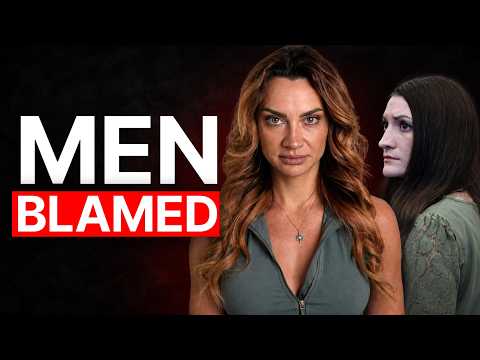
Three children are dead, their mother admits killing them, and yet much of the discussion surrounding Lindsay Clancy now revolves around a harder question: whether severe mental illness prevented her from being criminally responsible for what she did. Jillian Michaels approaches that conflict with obvious horror, while Dr. Phil repeatedly argues against collapsing an exceptionally complicated psychiatric and legal case into a simple judgment of evil. That tension gives the conversation substance because neither the brutality of the killings nor the defense's claim of postpartum psychosis is treated as something that can simply be wished away.
Dr. Phil's most useful contribution is his attempt to distinguish postpartum psychosis from the far more familiar ideas of baby blues and postpartum depression. He describes psychosis as a rare psychiatric emergency involving a break from reality, disorganized thinking, delusions and potentially commanding auditory hallucinations. He also repeatedly stresses that someone experiencing such symptoms requires inpatient intervention rather than informal support or casual medication adjustments. Those explanations provide a coherent framework for understanding the defense's position, although the interview frequently moves from general psychiatric principles into confident interpretations of Clancy's particular condition that remain disputed matters within an active criminal case.
The discussion of Clancy's treatment history raises serious questions without fully resolving them. The speakers describe numerous psychiatric prescriptions, previous hospitalization, reported warnings to providers and concerns expressed by her husband, then portray the situation as a combination of excessive medication and inadequate care. Dr. Phil calls it a "perfect storm" and criticizes fragmented treatment, but the program cannot establish from the information it presents precisely what caused Clancy's deterioration or whether particular medications, providers or treatment decisions were legally responsible. That distinction becomes especially important when the conversation turns to parallel civil litigation against medical providers and drug manufacturers.
Patrick Clancy's decision to leave his wife alone with the children receives a comparatively thoughtful examination. Michaels openly struggles to understand it, while trying not to make him responsible for the killings. Dr. Phil proposes several possible factors: previous postpartum episodes that had resolved, reliance on professional care and an apparent improvement in Lindsay's mood on the day of the killings. His explanation of why apparent relief can sometimes accompany suicidal intent adds useful context, but his reconstruction of Patrick's thinking is necessarily speculative, something the conversation could acknowledge more consistently.
The "#SameLindsay" material is where the presentation becomes most emotionally charged and least disciplined. Clips of supporters outside the courthouse offer genuine evidence that some people view Clancy primarily through the lens of failed maternal mental-health care, and the interview reasonably objects when sympathy becomes celebration or when children are used as props in disturbing social-media performances. However, claims that "thousands" of women are behaving in extreme ways, descriptions of alleged copycat incidents and sweeping conclusions about what is happening to society are presented with little supporting detail. Michaels' repeated use of the most provocative examples intensifies the outrage while blurring meaningful distinctions between people advocating for better postpartum care, people arguing for diminished criminal responsibility and people apparently glorifying the killings.
The legal discussion is similarly valuable but occasionally too certain. Dr. Phil explains the distinction between premeditation and criminal responsibility and argues that organized planning can coexist with psychosis because a person may behave logically within a delusional framework. He predicts that Clancy may be found not criminally responsible and sent to a psychiatric facility rather than simply acquitted, while repeatedly reminding viewers that the jury must decide her mental capacity. Even so, predictions about the verdict and assertions about what Clancy will eventually feel are opinions rather than established outcomes, and the interview would be stronger if those boundaries were drawn more sharply.
Despite its sensational moments, the closing portion delivers the clearest practical message: psychotic symptoms involving potential harm to a child should be treated as a psychiatric emergency rather than something a family tries to manage alone. The maternal mental-health hotline information is a responsible inclusion after an hour dominated by horrific details and online outrage. Unfortunately, lengthy advertisements and promotional segments repeatedly interrupt an already sensitive discussion, while repeated returns to the same social-media examples give the conversation a more combustible tone than its strongest clinical explanations require.
Pros
- Clearly distinguishes postpartum psychosis from postpartum depression and describes why psychosis involving hallucinations or delusions requires urgent psychiatric intervention.
- Maintains the essential distinction between understanding possible mental incapacity and excusing the deaths of three children.
- The discussion of apparent improvement before suicidal behavior offers useful context for Patrick Clancy's otherwise difficult-to-understand decision to leave briefly.
- Explains how premeditated behavior and psychosis are not necessarily mutually exclusive, helping clarify the central issue the jury must consider.
- Pushes back effectively against treating a horrific child-death case as a celebratory symbol for a broader social cause.
- Ends with concrete maternal mental-health crisis information rather than leaving viewers only with outrage.
Cons
- Frequently moves from explaining general psychiatric principles to confident conclusions about Clancy's individual mental state without evidence sufficient to establish those conclusions.
- Claims about medications, medical failures and potential causation are discussed forcefully even though responsibility remains contested in ongoing litigation.
- The treatment of the "#SameLindsay" phenomenon relies heavily on extreme examples and broad claims about its scale without establishing how representative those examples are.
- Predictions about the verdict, Clancy's future feelings and Patrick Clancy's internal reasoning are presented with more certainty than the available information warrants.
- Repeated outrage-driven clips and social commentary sometimes overshadow the more careful discussion of mental illness, legal responsibility and child safety.
- Multiple lengthy advertisements interrupt the flow of an unusually grave subject.
Serious psychiatric explanation and genuine concern for the murdered children give this discussion more depth than its inflammatory framing initially suggests. Dr. Phil provides a useful account of why postpartum psychosis can radically alter responsibility, but speculation about Clancy's condition, medical causation and online supporters sometimes outruns what the conversation actually establishes. The result is informative and often thoughtful, yet less rigorous whenever outrage replaces careful distinctions.