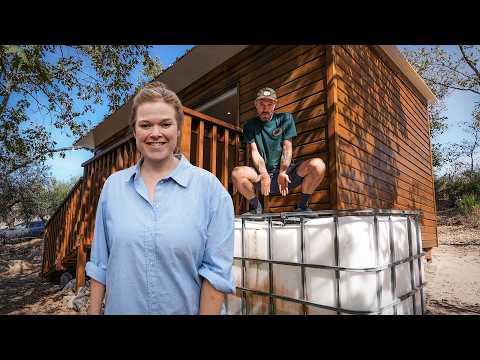
Six weeks before the expected arrival of serious winter weather, firewood, insulation, power, and food storage have all become immediate priorities for this family of nine. The presentation establishes those stakes effectively by connecting the approaching season to their experience of temperatures reaching minus 30 the previous winter. Rather than manufacturing a single dramatic crisis, it shows how preparation consists of numerous ordinary jobs that become consequential when a remote household depends on getting them finished before the weather changes.
The new log splitter provides the clearest example of a practical upgrade making a substantial difference. Hand splitting had previously limited most of that work to the father and his oldest son, while the machine allows his wife and older children to participate as well. Converting the former porch into a greenhouse that doubles as protected firewood storage is another smart use of existing space, and the explanation of keeping the wood out of the rain while exposing it to warmth makes the family's reasoning easy to follow.
Cabin maintenance adds welcome substance beyond the more familiar footage of cutting and stacking wood. Chinking the log walls is presented as a response to drafts and heat loss noticed during the previous winter, while the skirting project is especially interesting because the family openly acknowledges an earlier mistake. Their original framed skirting contributed to the cabin heaving, so they are rebuilding it as nonstructural skirting instead. Showing corrective work rather than only successful projects gives the homestead story more credibility and demonstrates how much of this lifestyle involves learning from previous seasons.
The preparations also extend beyond heating. A new generator is introduced as an important part of getting the homestead through the darker winter months, with plans to connect it to the cabin and solar system. Unfortunately, that project is only previewed rather than demonstrated, leaving one of the episode's potentially most informative subjects unresolved. The same is true of the upcoming large winter grocery stock-up: viewers see a normal trip to buy staples, but the more revealing discussion of how a nine-person off-grid household provisions for winter is saved for later.
Family and seasonal interludes prevent the work from becoming monotonous. The daughter's baked Alaska, a trip to the beach, breakfast, and observations about migrating sandhill cranes create a convincing sense of daily life continuing around the preparation schedule. The brief historical comment about baked Alaska is appropriately framed as something the dessert has been rumored to commemorate rather than presented as a settled origin story. These diversions slow the pace somewhat, but they also make the episode feel like a family chronicle rather than simply a sequence of construction tutorials.
The closing moose-hunting segment provides another useful glimpse into how food gathering fits alongside the workload. The father explains that his license permits him to take a bull rather than the cow and calf he sees, so he waits to see whether a bull appears and leaves without taking an animal. More importantly for the episode's larger theme, he describes the challenge of finding time to hunt while firewood and cabin projects remain unfinished. That tension between enjoying the remaining season, securing food, and completing essential work gives the otherwise relaxed presentation a natural deadline.
Pros
- The firewood, chinking, skirting, generator, and food preparations establish concrete reasons why the approaching winter matters.
- Acknowledging the previous skirting mistake adds useful honesty about the trial-and-error involved in maintaining the cabin.
- The log splitter demonstrates a practical improvement that allows more family members to contribute to winter preparations.
- Family activities and changing seasonal conditions give the work a strong sense of place without relying entirely on manufactured drama.
- The moose-hunting sequence responsibly explains why the observed cow and calf are not animals the hunter can take under the license described.
Cons
- The generator installation is teased as an important winter project but never actually shown or explained in meaningful detail.
- The grocery trip is explicitly not the major winter stock-up, limiting how much viewers learn about provisioning a family of nine for the cold season.
- Several projects are shown primarily as ongoing chores, with relatively little technical detail for viewers interested in replicating the work.
- Beach and family-life diversions make the episode personable but occasionally interrupt the momentum of the winter-preparation storyline.
The approaching cold gives a collection of otherwise routine homestead jobs genuine urgency, and the family's willingness to show both improvements and earlier mistakes makes the preparation process engaging. Some of the most interesting subjects are postponed rather than explored fully, but the combination of practical work, seasonal change, and everyday family life creates a convincing portrait of preparing an off-grid Alaskan home for winter.