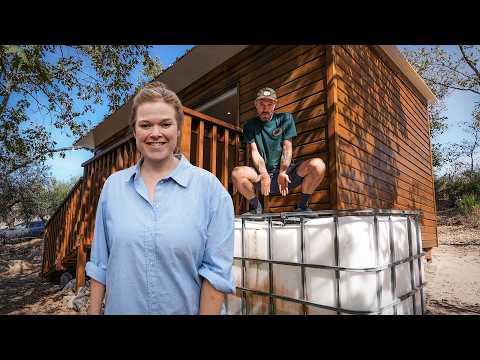
Diagonal bracing becomes the first major challenge as Becca works to stop the cabin walls from wobbling before Frank inspects her progress. Rather than skipping past the difficult parts, the construction footage shows repeated test fitting, cutting, chiseling, hammering, shimming, and fastening as an imperfect board is persuaded into place. That trial-and-error approach gives the work satisfying physical credibility, especially when Frank later approves the brace and the wall is noticeably more rigid.
The discussion around the bracing is also one of the more interesting instructional moments. Frank explains that the diagonal board ties the studs together rather than treating each cavity independently, while Becca acknowledges online criticism that the technique is old-fashioned and labor intensive. Their statements that this older approach is sturdier or sometimes preferable to modern construction are presented confidently but are not supported by engineering comparisons, building-code discussion, or information about the cabin's complete structural system. As practical job-site reasoning it is understandable; as a general claim about construction methods, it needs more qualification.
Progress continues through sheathing, additional wall bracing, window framing areas, and preparations for the roof. The work rarely delivers a dramatic single transformation, but that is partly the point: locating framing behind sheathing, correcting missed nails, working at awkward heights, cutting rafter templates, and calculating how many pieces remain are the incremental tasks that actually move a build forward. Frank and David provide useful assistance without taking ownership of the project away from Becca, and their easy banter keeps repetitive sequences watchable.
A recurring concrete problem adds some unresolved tension. Becca explains that the slab connecting the two structures is expected to be removed and possibly repoured, but deliberately avoids detailing the disagreement beyond attributing it to a lack of communication. That restraint prevents the episode from turning into speculative blame, although it also leaves viewers without enough information to understand what went wrong or why replacement is necessary. Because the concrete work remains pending, it functions more as a developing complication than a fully explored construction lesson.
The personal material makes the project feel less polished and more immediate, particularly when extreme heat, exhausted tool batteries, fatigue, wildlife discoveries, and Becca's difficult morning after blood work become part of the working day. Her account of panic, fainting, and vomiting is clearly presented as her own experience rather than medical guidance, and she responsibly notes that she did not drive after the appointment. Still, the extended story temporarily pulls attention away from the cabin and contributes to an already loose, diary-like structure.
That looseness is compounded by a lengthy FlexiSpot sponsorship near the beginning. The detailed descriptions of the bed frame's joinery, storage clearance, chair adjustments, warranty, and comfort are understandable advertising but have little connection to the construction storyline, and subjective claims about stability, support, and value remain promotional impressions rather than independent product testing. Once the build resumes, however, the mix of visible mistakes, corrections, humor, teamwork, and gradual structural improvement gives the episode genuine momentum even without reaching the bedroom-and-bathroom transformation suggested by the broader project framing.
Pros
- The diagonal-bracing work clearly shows measuring, fitting, cutting, fastening, and correcting real construction problems rather than reducing the project to a quick montage.
- Frank's explanation of how the brace ties multiple studs together gives viewers useful context for why the extra labor is being done.
- Becca openly shows mistakes, fatigue, missed nails, awkward cuts, and uncertainty, making the building process feel unusually candid.
- Progress on sheathing, bracing, rafter templates, and roof preparation provides substantial evidence that the cabin is moving forward.
- Natural chemistry among Becca, Frank, and David keeps repetitive construction tasks lively without overwhelming the work itself.
Cons
- Claims that the older diagonal-bracing method is inherently sturdier or preferable to newer construction are not supported with enough engineering or code context to establish that broadly.
- The extended FlexiSpot advertisement significantly interrupts the construction narrative and relies heavily on promotional product claims and personal impressions.
- The concrete-slab dispute is introduced repeatedly but explained too vaguely for viewers to understand the underlying problem or proposed solution.
- Personal digressions and loosely organized job-site conversation occasionally weaken the episode's focus.
- Despite the bedroom-and-bathroom framing, this installment remains largely concerned with structural stabilization, sheathing, and roof preparation rather than those finished spaces.
Visible problem-solving and an appealingly unpolished job-site atmosphere make the slow structural phase more engaging than its modest milestones might suggest. The episode would benefit from tighter editing, clearer technical qualification, and a shorter sponsorship, but its combination of genuine labor, incremental learning, and believable teamwork makes the continuing cabin project easy to invest in.