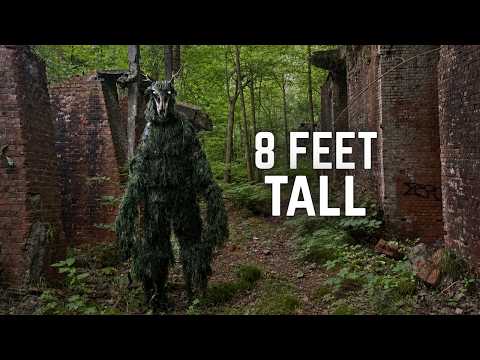
An eight-foot creature waiting inside a dark abandoned building is an effective scare setup before any additional technology enters the equation, but the upgrades here give the returning prank a stronger sense of progression. Redesigned 3D-printed eyes, a concealed body camera, a remotely controlled sound system and quieter spring joints all address limitations from the earlier attempt. The creator also explains the changes efficiently enough that the opening feels like preparation for a new experiment rather than a simple repeat of the original concept.
The costume remains the centerpiece, and much of the fun comes from how deliberately impractical and unsettling it is. Mechanical noises cannot be completely eliminated, the audio equipment gets disguised with a trash bag, and the remote is taped where it can be triggered with a pinky. Those rough solutions actually fit the homemade-monster premise well. Including unused scares involving friends also provides a quick demonstration before the abandoned-building sequences begin, although it delays the main attraction somewhat.
Once the action moves into the dark building, the night-vision cameras make the encounters much easier to follow than they otherwise would be. The creator directly addresses why the infrared illumination is visible to the recording equipment but not to the visitors, while also explaining why putting the mask-mounted camera into night-vision mode would interfere with the footage. The accompanying discussion of human dark adaptation is broadly presented as an explanation for how he can navigate the space, though the casual description of it as the eyes activating “mild night vision” is more playful shorthand than a careful scientific explanation.
Not everything works according to plan, which gives the production an entertaining trial-and-error quality. One camera fails to record, the sound system initially does not work because it was not charged, and another problem requires pressure on a wire before the amplifier will activate. The eventual solution—placing a brick on the wire—is hardly elegant, but showing these failures makes the successful scares feel earned. Adding separate phone audio and finally getting the sound effect operational noticeably improves the later encounters.
The reactions provide the payoff, particularly when visitors immediately retreat rather than stopping to investigate what they have seen. One group even participates further by bringing another friend into the situation, giving the creator an additional target without requiring an entirely new setup. The daytime attempt also finally creates an opportunity to use the mask-mounted POV camera, adding the perspective viewers had apparently requested. The editing leans heavily into exaggerated captions, jokes and reaction-style narration, but that energetic presentation generally matches the intentionally ridiculous premise.
There is still an uncomfortable edge to frightening unsuspecting people inside an abandoned property, especially when the prank involves a large costume emerging from darkness and pursuing visitors. The creator briefly acknowledges comments about the possibility of being shot and responds by pointing to Belgium's restrictions on carrying firearms, but that joke does not really address the broader safety issue. Panic can produce unpredictable reactions regardless of whether someone has a gun, and the video gives little attention to potential falls, collisions, confrontations or other consequences of chasing frightened strangers through a dark structure.
The final “top three scares” ranking provides a lively recap without adding much beyond reactions viewers have already seen, and the closing promotion repeats the sponsor message from earlier. The sponsor segment itself is lengthy enough to interrupt the transition from preparation into the first night, though it does clearly state that the promoted rewards service should not be treated as employment or income replacement. Overall, the production improves substantially on its basic scare formula through better camera coverage, technical experimentation and several strong reactions, even if the increasingly elaborate execution deserves a more serious consideration of participant safety.
Pros
- The redesigned eyes, concealed POV camera, remote audio system and quieter joints meaningfully develop the monster setup.
- Night-vision coverage makes the scares clear while the infrared explanation addresses an obvious question about the filming method.
- Equipment failures and improvised fixes are shown rather than hiding the difficulties behind the finished prank.
- Multiple camera perspectives and improved audio make the successful encounters more immersive.
- The strongest reactions deliver convincing payoffs to the lengthy setup and waiting periods.
Cons
- Frightening and chasing unsuspecting people through a dark abandoned building creates safety risks that receive little serious consideration.
- The discussion of firearm restrictions addresses only one possible danger while overlooking other unpredictable panic reactions.
- Equipment failures prevent some planned features from working consistently and cost potentially useful footage.
- The extended sponsor segment and closing promotional reminder interrupt an otherwise brisk prank-focused presentation.
- The final ranking largely revisits scares that have already delivered their payoff.
The upgraded costume, better camera coverage and willingness to show failed equipment make this a more developed production than a simple collection of jump scares. Its best moments combine clever homemade engineering with genuinely dramatic reactions, but the escalating prank would benefit from treating the risks of deliberately panicking strangers with the same attention given to its technical improvements.