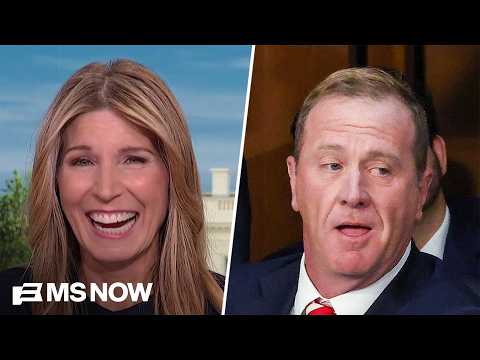
Anthony Scaramucci's explanation for Donald Trump's political rise begins not with Trump's personality, but with three major policy decisions that he believes damaged public trust in American institutions. Speaking with Nicolle Wallace before a live audience at New York's 92nd Street Y, the former Trump White House communications director argues that economic globalization, prolonged wars, and the financial crisis created the conditions for widespread political resentment. His willingness to criticize decisions made by both Democratic and Republican administrations gives the conversation a broader historical foundation than its confrontational political framing initially suggests.
The discussion's most substantial section examines Scaramucci's three proposed turning points. He argues that China's integration into the global trading system contributed to the erosion of American manufacturing opportunities, that the financial consequences of the post-9/11 wars weakened economic stability, and that the handling of the 2008 banking crisis intensified public anger toward political and financial elites. His description of the Tea Party and Occupy Wall Street movements as expressions of dissatisfaction that eventually helped produce MAGA is particularly memorable. However, this interpretation compresses complicated historical developments into a relatively straightforward causal narrative, leaving limited room for competing explanations or the broader economic forces involved.
Scaramucci's personal reflections strengthen his argument by acknowledging his own misplaced confidence in globalization and the expectations of policymakers who believed their decisions would produce positive results. Rather than portraying every historical mistake as deliberate misconduct, he emphasizes the danger of overconfidence and unintended consequences. His explanation of how inflation disproportionately affects wage earners also makes the economic discussion accessible, although his presentation sometimes treats contested relationships between government borrowing, inflation, and household financial hardship as more direct than the evidence presented establishes. The historical analysis is engaging, but its conclusions would benefit from more careful distinctions between established developments and Scaramucci's interpretations.
The conversation becomes considerably more combative when Wallace turns toward Trump's second presidency and the behavior of Republican politicians. Scaramucci criticizes what he sees as broken campaign promises, institutional attacks, and an unwillingness among Republican officials to challenge Trump publicly. His remarks about Ted Cruz, JD Vance, and Marco Rubio provide some of the interview's sharpest humor, particularly when discussing politicians who previously criticized Trump before becoming supportive of him. These exchanges are entertaining and reveal Scaramucci's familiarity with Republican political culture, but the reliance on insults and psychological interpretations occasionally substitutes ridicule for substantive examination. His suggestion that Trump's religious imagery was intended to undermine Vance is especially speculative, and the alleged private communications and motivations discussed are not independently established during the conversation.
Wallace contributes meaningfully by repeatedly redirecting the discussion toward the practical question of preventing another political breakdown. Their exchanges about voters who abandoned traditional party loyalties, Democratic leadership, and the consequences of dismissing Trump supporters help connect Scaramucci's historical argument to contemporary political strategy. His insistence that Democrats should engage disaffected voters rather than condemn them is one of the interview's more constructive observations. Nevertheless, Wallace largely shares his underlying assessment of Trump and the Republican Party, resulting in a conversation that offers relatively little direct scrutiny of its strongest accusations or meaningful engagement with alternative political perspectives.
The proposed reforms provide a welcome transition from criticism toward possible solutions. Scaramucci advocates opening primary elections to independent voters, reducing the influence of political donations, encouraging participation among eligible nonvoters, and finding leaders willing to limit presidential authority through stronger institutional safeguards. His criticism of entrenched political interests and the influence of money gives these recommendations a coherent theme: restoring accountability and public confidence. Yet several proposals remain underdeveloped. His enthusiasm for voting by phone, for example, overlooks the substantial security, verification, and election-integrity questions such a system would raise. Similarly, his predictions about Trump's possible pardons, future investigations, Republican defections, and Democratic electoral success are presented confidently despite remaining uncertain political scenarios.
The closing discussion offers a more hopeful perspective, with Scaramucci arguing that America's history of overcoming severe national crises demonstrates its capacity for renewal. His comparisons involving the Civil War, the Great Depression, and the country's immigrant-driven culture provide an optimistic conclusion to an otherwise frequently alarming conversation. The live-audience format allows his humor, storytelling, and energetic speaking style to emerge naturally, while Wallace maintains a generally effective balance between guiding the discussion and allowing extended answers. Still, the interview occasionally wanders into lengthy partisan commentary, and the final promotional segment feels disconnected from the substantive discussion that precedes it.
Pros
- Scaramucci provides an engaging historical framework connecting globalization, post-9/11 military spending, and the financial crisis to declining public trust and the emergence of populist politics.
- His acknowledgment of personal mistakes and the unintended consequences of well-intentioned policies adds nuance to his criticism of American political leadership.
- The discussion of economic insecurity, political alienation, and voters who shifted away from traditional party loyalties offers useful context for understanding Trump's political appeal.
- Wallace asks relevant questions about democratic accountability, leadership failures, and how future administrations might avoid repeating earlier mistakes.
- Concrete reform proposals involving open primaries, campaign finance, voter participation, and presidential accountability give the conversation practical substance beyond partisan criticism.
- Scaramucci's humor, political experience, and accessible storytelling make complicated historical and institutional issues understandable and entertaining.
- The optimistic conclusion provides a meaningful contrast to the interview's darker predictions about American politics.
Cons
- The three-crisis explanation oversimplifies complex economic and political developments, presenting disputed causal relationships with insufficient supporting evidence.
- Several serious allegations about Trump, his associates, and Republican officials rely on personal interpretations, unverified accounts, or predictions rather than evidence examined during the interview.
- The frequent insults directed at Republican politicians sometimes weaken the analytical credibility of an otherwise substantive discussion.
- Wallace and Scaramucci share similar political assumptions, limiting the examination of opposing arguments and reducing the interview's effectiveness as a genuinely nonpartisan discussion.
- Some proposed reforms, particularly voting by phone and changes to the primary system, receive insufficient attention to practical implementation and potential unintended consequences.
- Extended tangents about individual politicians and speculative electoral outcomes occasionally distract from the more valuable historical analysis and institutional reform discussion.
Anthony Scaramucci delivers an energetic and frequently insightful examination of how American political decisions can produce consequences far beyond their original intentions. His historical reflections, willingness to acknowledge past mistakes, and emphasis on institutional reform provide genuine value, although partisan rhetoric, speculative accusations, and insufficient scrutiny of complex claims weaken the discussion's analytical balance. The result is a compelling political conversation that works best as an informed insider's perspective rather than a definitive explanation of America's democratic challenges.