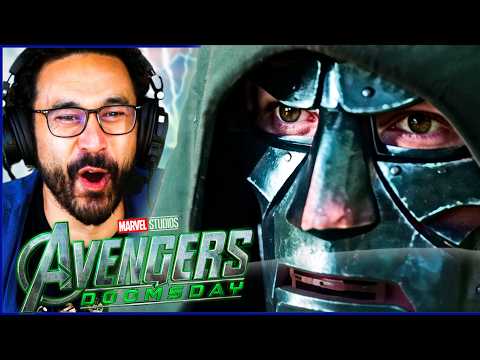
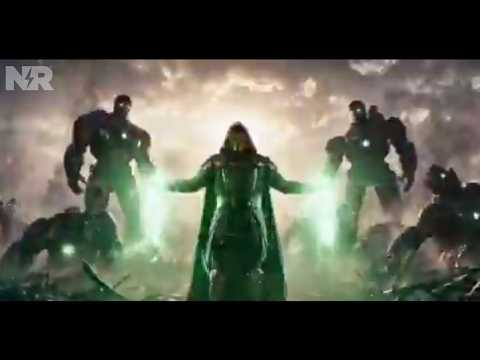
Marvel’s decision to bring back familiar actors while introducing Doctor Doom becomes the foundation of an intensely critical reaction to the final Avengers: Doomsday trailer. The commentator interprets the upcoming film as an expensive attempt to recover the enthusiasm that once surrounded the Marvel Cinematic Universe rather than a confident creative evolution. His frustration extends beyond the immediate footage, encompassing character development, casting decisions, production expenses, and the studio’s long-term direction.
One of the more substantial arguments concerns Steve Rogers and the consequences of his decision at the end of Avengers: Endgame. The commentator believes that Rogers prioritizing his personal happiness contradicts the selflessness that previously defined Captain America. His examination of the new trailer’s dialogue suggests that Doomsday may revisit the consequences of that decision, although his conclusions about the character’s ultimate fate depend on unverified plot leaks. The discussion raises worthwhile questions about character consistency, even if it leaves little room for alternative interpretations.
The casting of Robert Downey Jr. as Doctor Doom introduces another interesting debate about Marvel’s dependence on established performers. Rather than criticizing Downey for negotiating a potentially lucrative contract, the commentator questions whether bringing back the actor responsible for Iron Man compromises the opportunity to establish Doctor Doom as a long-term antagonist. However, the alleged $700 million production budget and $100 million salary are presented without independently verifiable supporting evidence, weakening the financial argument.
The trailer analysis becomes more engaging when the commentator examines specific visual and technical details. His observations about inconsistent lighting, insufficient shadows, artificial-looking environments, and the muted color palette provide concrete explanations for his dissatisfaction. He also acknowledges several positive elements, including Doctor Doom’s costume, Cyclops’ comic-inspired appearance, and the inclusion of Kirby Krackle effects. These occasional compliments demonstrate that his criticism is not entirely indiscriminate.
A particularly worthwhile discussion emerges when the commentator proposes periodically recasting established superheroes instead of indefinitely associating them with individual actors. He argues that Marvel could generate renewed excitement through casting announcements while adapting decades of comic book stories across horror, fantasy, science fiction, political thrillers, and other genres. This constructive alternative gives the commentary greater substance and addresses the perceived creative uniformity of contemporary superhero productions.
Unfortunately, the presentation frequently undermines its more thoughtful observations through excessive profanity, repetitive insults, and unnecessary personal remarks about performers. Speculation about actors’ sexuality, dismissive generalizations about female characters, and derogatory comments concerning gender identity contribute little to the examination of filmmaking quality. Allegations regarding Marvel’s internal workplace culture, executive decisions, and treatment of directors are also expressed with considerable certainty despite relying heavily on unnamed sources.
The commentator does make an important distinction between commercial success and artistic achievement, acknowledging that strong ticket sales could make Doomsday enormously successful despite his reservations. His willingness to praise earlier Marvel productions, including The Winter Soldier, Civil War, and Infinity War, establishes a recognizable benchmark for his expectations. Nevertheless, his predetermined dissatisfaction with the upcoming film makes the reaction feel less like an open-minded examination of promotional footage and more like an extended argument against Marvel’s current creative direction.
Pros
- The discussion raises meaningful questions about Marvel’s reliance on returning actors and established franchise nostalgia.
- The examination of Steve Rogers explores legitimate concerns surrounding character consistency and narrative continuity.
- Specific observations about lighting, shadows, visual effects, and color grading provide substance to the technical criticism.
- The commentator acknowledges several successful costume designs and comic-inspired visual details despite his broader dissatisfaction.
- The proposal to periodically recast superheroes and explore different cinematic genres offers a constructive alternative to Marvel’s current approach.
- The distinction between anticipated box office success and filmmaking quality introduces a valuable perspective on franchise performance.
Cons
- Excessive profanity and repetitive expressions of frustration weaken the effectiveness of the more substantial arguments.
- Claims regarding production budgets, actor salaries, and internal studio decisions lack independently verifiable supporting evidence.
- Unnecessary personal remarks about performers and derogatory commentary concerning gender and sexuality detract from the filmmaking analysis.
- The frequent interruptions and unrelated tangents undermine the pacing and coherence of the trailer reaction.
- The reliance on unverified plot leaks encourages premature conclusions about the upcoming film’s narrative and character development.
- The overwhelmingly dismissive approach leaves insufficient room for alternative interpretations of the trailer’s creative decisions.
Beneath the confrontational delivery lies an interesting discussion about whether Marvel can maintain its cultural relevance through creative reinvention rather than increasingly elaborate reunions. The technical observations and suggestions for revitalizing established characters deserve consideration, but speculative allegations, personal attacks, and prolonged hostility significantly diminish their impact. Dedicated superhero enthusiasts may appreciate the underlying franchise analysis, although viewers seeking balanced trailer criticism will likely find the presentation unnecessarily abrasive.