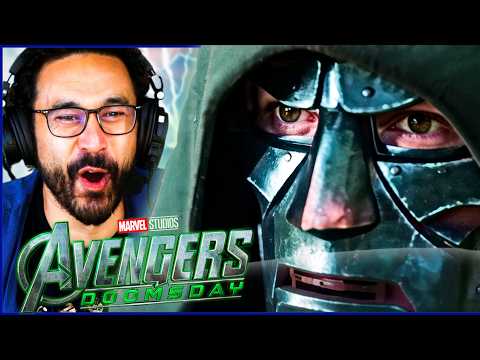
The exclusive footage appears to give Doctor Doom something the broader Avengers ensemble desperately needs: a personal center. Rather than presenting Victor as an unexplained multiversal threat, the description emphasizes Susan Storm remembering someone who was once intelligent, kind, caring, and apparently close to the Fantastic Four before losing everything he loved. Images of Doom studying a tapestry depicting a woman and child reinforce the possibility that grief is central to his motivation, while Reed's confrontation with Victor suggests betrayal between former friends. That emotional framework is far more interesting than simply assembling another enormous collection of heroes against an all-powerful villain, although much of the video's interpretation of those relationships remains theory rather than confirmed plot.
The breakdown is strongest when reconstructing footage actually shown in Hall H. Sue's tearful description of Victor, Magneto's wounded appearance, Gambit, Steve Rogers, Namor, Shuri, M'Baku, Sam Wilson, Thor, Reed confronting Doom, Johnny embracing Franklin Richards, the devastated city, Doom's throne room, and the Fantastic Four spacecraft provide a substantial picture of the trailer despite viewers not being able to see it directly. The climactic Doom-versus-Thor material sounds especially effective: Doom rapidly enters the battlefield, stops Stormbreaker with his gauntlet, disarms Thor, knocks him aside with sorcery, and raises damaged Sentinels with glowing green eyes. Even secondhand, those details communicate Doom as a threat capable of combining physical confidence, magic, technology, and theatrical intimidation.
Where the video becomes more ambitious is in trying to arrange these images into the movie's chronology. The suggestion that an Avengers Tower briefing occurs before a later gathering at the Baxter Building gives the multiple ensemble scenes a plausible purpose, with the latter potentially following major losses and the revelation that Doom is responsible for the incursion crisis. Reed's repeated demand to know whether Victor caused the destruction supports the possibility of a betrayal reveal, but ideas that Reed or Ben may already be dead, that Doom initially helps solve a crisis he secretly created, or that specific scenes occur after the midpoint are deductions rather than information established by the footage. The presenter generally signals this speculative quality, though the sheer density of theorizing can occasionally make possibilities sound more structurally certain than the available material warrants.
Franklin Richards becomes another major source of speculation. The video revisits Doom's appearance around Franklin, considers whether the post-credits encounter may have been less hostile than originally assumed, and uses Johnny's embrace with the child to theorize about Battleworld and reality-warping powers. The possibility that Johnny could become a source of light for Battleworld is imaginative, but it is several interpretive steps removed from the observed shot. Similarly, the attempt to explain Doom's accusation that the heroes have "stolen lives" by connecting Avengers: Endgame's reversal of the Blip to deaths elsewhere in the multiverse offers an intriguing motive, yet no evidence described here establishes that restoring those lives required equivalent deaths in other realities.
Theories surrounding the Latverian witches stretch the evidence even further. Costume colors become the basis for proposing variants of Peggy Carter, Sue Storm, and Jean Grey serving Doom as replacements connected to the family he lost. It is inventive pattern-building, particularly when combined with the newly confirmed presence of Peggy and the mysterious witch designs, but color similarities and thematic parallels are far too limited to support those identities confidently. The video is most useful when these ideas are treated as possibilities generated by Comic-Con imagery rather than likely revelations waiting to be confirmed.
More grounded contextual material helps balance that speculation. Anthony Mackie's comments distinguishing returning Steve Rogers from Captain America and invoking Nomad provide a meaningful character detail, while Kevin Feige's comparison between Doom's introduction and the relatively limited pre-Infinity War development of Thanos directly addresses concerns about the villain arriving without years of setup. Robert Downey Jr.'s Comic-Con jacket also gives the breakdown an enjoyable piece of visual decoding, with the presenter interpreting Latverian-style lettering as phrases including "justice," "revenge," "there is no promise of tomorrow," and the wordplay of "to the Victor go the spoils." These translations are presented as the presenter's reading of the lettering rather than indisputable revelations, appropriately leaving some uncertainty around the decoding.
The result is an energetic mixture of eyewitness reconstruction, franchise analysis, reported panel information, and increasingly elaborate prediction. That makes the video entertaining for viewers who enjoy treating every costume, line, missing character, location, rune, and editing choice as a potential clue, but less reliable as a clean account of what Marvel actually revealed. Its most convincing material paints Doom as a tragic figure connected personally to the Fantastic Four and powerful enough to dominate Thor and weaponize Sentinels, while its most speculative stretches attempt to reverse-engineer Battleworld, character deaths, multiversal consequences, and hidden identities from fragments. The enthusiasm is infectious, but separating confirmed footage from interpretation remains essential when so much of the larger story is still unknown.
Pros
- Provides a detailed shot-by-shot reconstruction of exclusive Hall H footage that viewers outside Comic-Con could not directly see.
- Sue Storm's description of Victor and Reed's apparent confrontation with him suggest a personal Fantastic Four relationship that gives Doom more emotional context than a generic multiversal villain.
- The Doom-versus-Thor sequence, magical Stormbreaker counter, and resurrection of damaged Sentinels create a vivid impression of Doom's abilities and threat level.
- Attempts to connect multiple ensemble meetings, locations, and previously released footage into a possible chronology give the trailer discussion useful structure.
- Panel comments about Steve Rogers and Doom's introduction add firmer context alongside the more speculative analysis.
- Decoding the Latverian-style lettering on Robert Downey Jr.'s jacket provides a distinctive Comic-Con detail with clear thematic connections to Doom.
Cons
- The breakdown frequently moves several speculative steps beyond what the described footage actually establishes.
- Theories involving Reed or Ben dying, Johnny becoming Battleworld's sun, and restored Blip victims causing deaths elsewhere in the multiverse rely on assumptions not confirmed by the material presented.
- Identifying the three Latverian witches as variants of Peggy Carter, Sue Storm, and Jean Grey is built largely from costume colors and thematic association rather than substantial evidence.
- The constant movement between eyewitness description, reported information, interpretation, and prediction can blur which details were actually shown and which are theories.
- The enormous number of characters, universes, previous scenes, and speculative connections makes the analysis dense for viewers who are not already deeply familiar with recent Marvel continuity.
The breakdown succeeds most when it reconstructs the Hall H footage and examines the emerging relationship between Doom and the Fantastic Four, with Sue's memories, Reed's apparent betrayal, Doom's family imagery, his confrontation with Thor, and his control of the Sentinels suggesting a villain being built around grief as much as overwhelming power. Theories about Battleworld, character deaths, multiversal exchanges, and the Latverian witches are entertaining but often travel well beyond the evidence available, making careful distinction between observation and prediction essential. Even so, the footage as described gives Doctor Doom a compelling presence, and the video's enthusiasm makes the unanswered questions surrounding Victor's history and motives almost as engaging as the material Marvel actually showed.