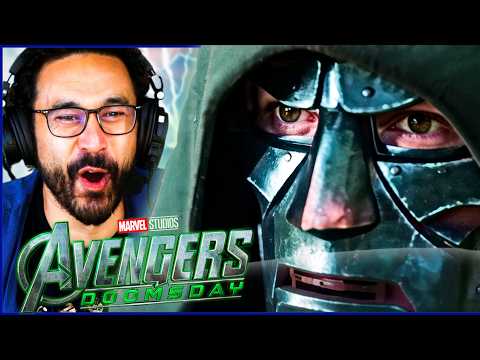
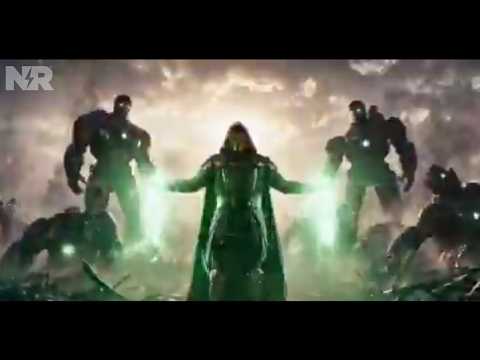
The strongest reaction comes from recognition rather than prediction. Cyclops appearing in blue and yellow, Shang-Chi returning after a long absence, Gambit entering the action, Loki showing up with TVA associations, Thor taking a prominent role, and Steve Rogers receiving the closing spotlight give the Blind Wave crew plenty to respond to without requiring an elaborate reconstruction of the movie's plot. Their excitement feels especially genuine around characters they believe have been underserved or absent for too long, with Cyclops and Shang-Chi generating some of the biggest enthusiasm. The trailer's scale clearly lands, but the discussion becomes more interesting when that excitement gives way to questions about why Marvel is assembling these particular characters now.
Thor's material produces one of the more thoughtful observations. The crew focuses on his apparent discussion of losing people and the fear associated with whatever is approaching, connecting that emotional weight with the enormous losses Marvel's characters have already experienced. They also notice how the Avengers theme seems stripped of its usual triumphant quality, interpreting the music as being dragged downward by the approaching threat. These are subjective reactions rather than claims about the finished story, but they demonstrate attention to tone rather than treating the trailer simply as a checklist of returning heroes.
The returning X-Men generate the most enthusiastic character discussion. Cyclops' costume immediately stands out, and the crew expresses hope that this version will finally give him the prominence they feel previous movies denied him, particularly compared with the character's treatment in X-Men '97. Mystique's appearance prompts uncertainty over whether Rebecca Romijn is being shown, while Xavier and Magneto's presence leads to questions about how physically active those returning characters will be. That uncertainty is appropriate for a reaction video: they identify what they think they see while generally avoiding pretending that every quick shot provides a definitive answer.
Gambit, Shang-Chi, Loki, Namor, and the wider ensemble reinforce just how much the movie appears to be combining. Channing Tatum's Gambit receives another excited response, including attention to his staff, cards, and kinetic-energy effects, while Shang-Chi's return is welcomed largely because of how long it has been since the crew last saw him. Loki prompts discussion of his current role following his multiversal transformation, and Namor's appearance raises questions about how he will fit into the larger conflict. The conversation remains deliberately loose, jumping from costumes to powers to character continuity, but that spontaneity fits a trailer reaction better than attempting to manufacture certainty from fragmented footage.
Steve Rogers and Thor also lead into a useful discussion about the state of the original Avengers. The crew notes that Tony Stark and Black Widow are gone, Hawkeye appears retired, Steve has been absent, and Hulk remains one of the few original members still potentially available, while Sam Wilson now carries the Captain America identity. Thor's apparent importance raises the possibility of a more mature or father-like role, while Steve's return and Robert Downey Jr.'s presence as Doctor Doom immediately make the film feel connected to Marvel's earlier era. The group does not claim to know how those pieces will fit together, which is appropriate given how little the trailer itself establishes.
The most valuable part of the discussion is the skepticism surrounding Marvel's apparent creative pivot. The crew acknowledges that the planned Kang direction did not continue and wonders whether bringing back Steve, Thor, Robert Downey Jr., and other familiar figures represents Marvel trying to regain momentum by responding to audience dissatisfaction. Their concern is not that course corrections are automatically bad, but that storytelling can suffer when creators become preoccupied with pleasing every segment of an audience. Comparisons with Justice League and The Rise of Skywalker illustrate the fear that reaction to outside pressures can replace a coherent creative direction. Whether that concern applies to Doomsday cannot be determined from this trailer, but raising it gives the reaction more substance than uncomplicated franchise enthusiasm.
The presentation remains characteristically informal, with jokes about Cyclops' missing yellow trunks, underwear, costumes, Robert Downey Jr.'s expensive eyes, and the consequences of failing to subscribe interrupting almost every serious thread. That chemistry is part of the appeal, particularly for viewers who prefer the feeling of discussing a trailer with friends rather than watching a formal breakdown. It also limits analytical depth: potentially interesting subjects such as Marvel's post-Kang direction, Steve's return, Loki's role, and the implications of the older X-Men cast are introduced but rarely explored for long before another joke or character sighting takes over. As a spontaneous reaction, however, the balance of excitement, uncertainty, humor, and genuine apprehension captures the trailer's biggest challenge: making an enormous collection of familiar Marvel pieces feel like a story rather than an emergency reunion.
Pros
- The crew's strongest reactions are tied to specific trailer elements, particularly Cyclops, Shang-Chi, Gambit, Loki, Thor, Steve Rogers, and the returning X-Men.
- Attention to Thor's dialogue and the less triumphant Avengers music adds discussion of tone alongside the expected character reveals.
- Uncertain identifications and story possibilities are generally treated as questions rather than confidently presented as established plot information.
- The discussion of Marvel potentially responding to the abandoned Kang direction introduces meaningful skepticism into an otherwise enthusiastic reaction.
- Comparisons with other franchises help explain why the crew worries about storytelling driven by audience response rather than a clear creative plan.
- The group's chemistry and recurring costume jokes keep a dense collection of character reactions energetic and conversational.
Cons
- Frequent jokes and interruptions prevent several potentially interesting discussions about Marvel's direction and returning characters from developing very far.
- Much of the middle becomes a rapid sequence of character recognition and excitement rather than sustained analysis of what the trailer communicates.
- Speculation about Thor, Steve, Loki, Namor, and the Avengers' leadership is necessarily limited by the footage and remains largely unresolved.
- The closing promotion for the upcoming Spider-Man review, livestream, subscriptions, and the extended yellow-trunks joke makes the ending less focused than the stronger discussion immediately before it.
Blind Wave captures both sides of Marvel's latest ensemble spectacle: genuine excitement at seeing neglected and returning characters collide, and reasonable concern that familiar faces may be serving as a course correction after the franchise's disrupted plans. The loose humor keeps the reaction entertaining but limits its depth, while the willingness to question Marvel's creative motivation gives the conversation more value than a simple celebration of cameos.