Decorative beam details finally moving into place give the house a noticeably more finished character, and the crew’s reaction to them captures one of the pleasures of following a long construction series: design choices that seemed uncertain on paper can become convincing once they exist at full scale. The four installed beams are also treated as a practical budget decision, with additional pieces on less visible sides of the building dropped by the homeowner because they were not considered worth the expense. That combination of aesthetics, cost and installation work gives the progress more substance than a simple reveal.
Window installation provides some of the most useful hands-on material. The crew explains why it wants an even gap around the frame for later trim work, why the sashes are locked together during installation and how that helps keep the frame square. There is also a fair amount of attention paid to the Fibrex windows themselves, including favorable comparisons with vinyl alternatives. Those product assessments should be understood as the crew’s experience and opinion, particularly because Andersen is identified as a project partner, but the actual installation footage gives viewers something concrete beyond the endorsement.
The arrival of a nine-person roofing crew changes the pace dramatically. Materials are lifted onto the roof rather than carried up manually, ice-and-water shield is installed around vulnerable areas, and the roofers organize shingles so they are accessible without unnecessarily bending bundles over the ridge. Watching one worker slide shingles down to another installer is a particularly effective glimpse of professional workflow. The crew also makes the sensible decision to stop installing windows directly below the roofers after loose material is seen coming off the roof.
Preparing the board-and-batten siding is another strong practical segment. Rather than purchasing every piece in a narrower 16-inch format, the crew rips larger panels with a track saw, explaining that the factory-sized alternative comes in 16-foot lengths and would create unnecessary waste in many locations. The demonstration clearly shows how the track guides the saw and why moving a saw across a large sheet can be easier than feeding a ten-foot panel through a table saw. It is straightforward construction reasoning presented in a way that even viewers unfamiliar with a track saw can follow.
Not everything goes according to an ideal schedule, which helps preserve the series’ job-site authenticity. Once the roofers arrive, unfinished details around the fireplace and roof intersections suddenly become urgent, while other crew members spend much of the day cutting siding material, painting inaccessible areas and moving supplies. The telehandler is especially valuable throughout the work, although discussion of operating near full boom and handling very heavy roofing loads would have benefited from more explicit attention to equipment load limits rather than relying primarily on the operator’s judgment that the setup was sufficiently level and positioned.
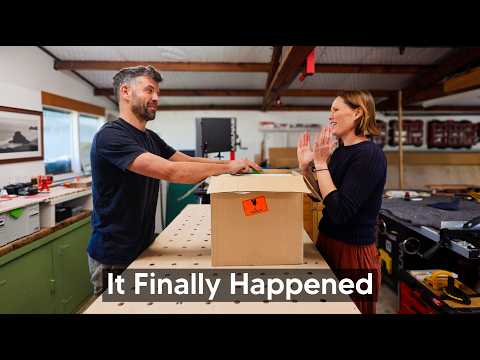
The relaxed crew banter remains a major part of the presentation, from the tiny trim hammer experiment to jokes about unpleasant painting positions and the end-of-day viewer packages. That personality keeps a work-heavy installment entertaining, but the extended sponsor messaging and lengthy package-opening sequence dilute the construction focus somewhat. There is also an uncomfortable moment when a crew member’s blood-sugar fluctuations and decision to shut off his pump are treated casually; without medical context, the segment is better viewed as an incidental personal moment than as anything viewers should interpret as health guidance.
Pros
- Window installation, siding preparation and roofing sequences provide clear demonstrations of real construction workflow.
- The explanation for ripping larger siding panels into 16-inch sections connects installation convenience with material cost and waste.
- Roofing footage effectively shows how an experienced crew organizes labor and materials on a large, active roof.
- Decorative beam installation provides visible architectural progress while also revealing the homeowner’s cost-conscious decision-making.
- Natural crew interactions keep a technically focused installment approachable and entertaining.
Cons
- Multiple promotional segments and the extended viewer-package opening take time away from the central construction work.
- Favorable window and retailer commentary occurs within disclosed commercial partnerships, limiting its value as independent product evaluation.
- The telehandler discussion acknowledges a potentially heavy load at full boom without giving viewers concrete load-capacity information.
- The brief discussion of blood-sugar management is presented without medical context and sits awkwardly within otherwise light job-site banter.
A busy combination of roofing, window installation, siding preparation and decorative carpentry makes this a satisfying progress-focused entry, with enough practical explanation to give the work educational value. Commercial interruptions and a few loosely handled safety and health moments keep it from being among the series’ sharpest installments, but the craftsmanship and job-site problem-solving remain engaging.