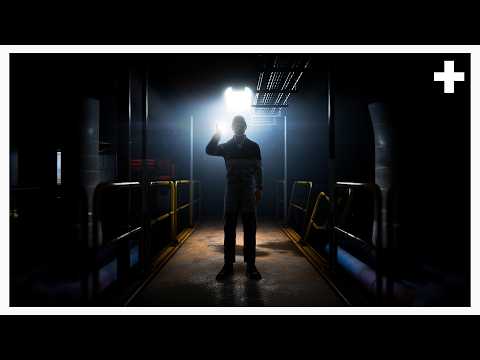
A stressed reload that can involve shaking hands, fumbling ammunition or losing grip on a rifle bolt immediately becomes the centerpiece of the reaction. Rather than treating those differences as cosmetic flourishes, the developers describe separate calm and stressed states, multiple animation variations within each state, and weapon-specific behavior. The host’s increasingly astonished responses communicate why that matters: ordinary FPS actions are being treated as physical performances affected by circumstances rather than fixed animations triggered by a button.
The most interesting discussion comes when the reaction moves beyond visual realism and considers how these systems could alter decisions. Revolvers replace only the rounds that have actually been fired, meaning a one-round reload is presented as quicker than replenishing an entire cylinder. Shotguns, bolt-action rifles and magazines receive similarly granular treatment. The host memorably characterizes the project as effectively doing a “PhD” in FPS mechanics, and although the praise becomes hyperbolic, he does identify a worthwhile broader point: unusually detailed implementations can demonstrate possibilities that other developers may choose to explore.
Body movement provides an even more striking example. The developers present a procedural stumbling system intended to make injured characters attempt to maintain balance before collapsing, with bullet impacts, terrain and movement affecting the result. The host speculates that this might resemble balance calculations used by robots and immediately acknowledges that he is guessing, which appropriately separates his improvised theory from the developers’ actual explanation. His fascination is infectious, particularly as he reacts to the strange achievement of making believable walking, stumbling and falling into a major technical challenge.
That same attention extends to the body-mounted perspective. Looking around is described as independent from whatever action the character is performing, checking a magazine requires actually looking toward it, and the virtual body camera can be switched on, adjusted after impacts and incorporated into protective reactions. The developers also say the camera movement was informed by studying real body-camera footage. The reaction sometimes interrupts these explanations with personal stories and jokes, including a lengthy anecdote about the host’s father giving tactical advice while watching PUBG, but these diversions reinforce his interest in whether game mechanics intuitively communicate physical situations to players.
The optics section produces some of the strongest technical material. The devlog contrasts ordinary camera zoom with picture-in-picture rendering, then claims its modified Unreal Engine rendering approach can provide realistic magnified optics at substantially lower performance cost. The host accepts this enthusiastically and praises the resulting glass, lighting, reflections and distortions, but there is no independent performance testing here to verify how large the efficiency gain actually is. His excitement is understandable from the demonstration, yet statements that the project is raising the standard for an industry remain predictions rather than demonstrated outcomes.
Weapon customization, drones and the interface broaden the showcase considerably. Parts such as barrels, grips, stocks, magazines and optics are said to influence handling, while certain sights require appropriate mounting hardware. The drone system is presented with both accessible controls and a physics-oriented FPV mode, along with small hitboxes that supposedly make drones vulnerable to a single accurate shot. The host’s Ukraine-related observations underline how closely he associates drone warfare with contemporary combat, but his claim about the capability of real drones is casual speculation rather than something established by the material being discussed. The tablet-based replacement for conventional menus is more clearly evaluated on its own merits, with the host explaining his preference for interfaces that preserve immersion instead of repeatedly pulling players out of the game world.
What begins as an intention to watch only a few minutes succeeds in changing the host’s mind; he stays for the entire developer presentation and ends genuinely considering playing the early-access game when the September 2 update arrives. That spontaneous escalation gives the reaction a convincing sense of discovery, especially because his enthusiasm is tied to specific features rather than visuals alone. At the same time, the final stretch becomes considerably looser, moving into Steam pricing, player-count comparisons, Marathon, other games and whether audience interest warrants a future play session. The energy remains high, but the frequent profanity, tangents and repeated declarations that the game looks “amazing” eventually substitute for deeper scrutiny of whether all this painstaking realism will actually produce better gameplay.
Pros
- The reaction engages closely with concrete systems including stress-dependent reloads, procedural stumbling, body-camera behavior, optics, weapon customization and drones.
- Genuine surprise gives the presentation an energetic sense of discovery, particularly when the host abandons his plan to watch only the opening minutes.
- The host frequently connects technical details to their potential gameplay consequences rather than admiring graphical realism alone.
- Speculation about how the procedural balance system might work is explicitly identified as guesswork rather than presented as fact.
- The underlying developer material provides unusually detailed explanations of how animation, rendering and interface choices are intended to support immersion.
Cons
- Enthusiasm repeatedly becomes hyperbole, including claims that the project is raising the standard for the entire industry before those broader effects can be demonstrated.
- Performance and realism claims from the developers are largely accepted without independent testing or meaningful skepticism.
- Frequent jokes, personal anecdotes and unrelated game comparisons interrupt several technically interesting explanations.
- The closing discussion becomes repetitive as admiration gives way to extended speculation about player counts, competing games and whether the host should stream Bodycam.
- Casual commentary about real-world drone warfare reaches beyond what the showcased game material establishes.
A remarkably detailed developer showcase becomes an entertaining reaction because the host recognizes that the impressive part is not simply photorealistic imagery but the attempt to rethink familiar FPS mechanics at an unusually granular level. His infectious enthusiasm and attention to specific systems outweigh the tangents and limited critical testing, though the strongest technical claims would benefit from more skepticism before being treated as breakthroughs.