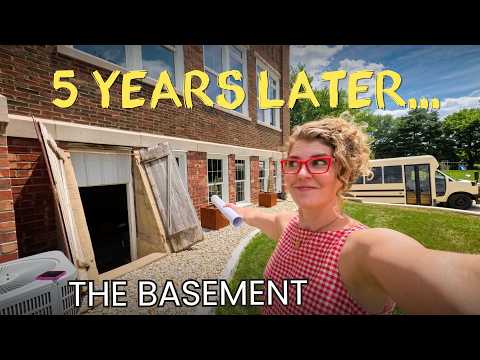
A 40-foot shipping container becomes the practical key to restarting work on the downstairs floor, giving the accumulated furniture, lumber and salvaged objects somewhere to go while construction continues. The delivery provides an effective opening bit of tension as the truck has to squeeze through the property and position the container near the boundary, but the process goes considerably more smoothly than feared. That small logistical victory immediately gives the project a sense of forward movement after so much material has been occupying the building.
The physical work is less cooperative. Several helpers tackle the refrigerator and larger pieces of furniture, but there is not enough manpower to completely empty the space on the first attempt. Rather than pretending the day's goal was accomplished, the presentation openly acknowledges the shortfall and adjusts the plan: the remaining heavy furniture will wait for additional help while everything manageable can be transferred individually. It is an ordinary renovation setback, but showing it makes the progress feel more authentic.
Much of the episode is consequently devoted to hauling crates, lamps, baskets, wood, trash and other miscellaneous objects out to the container. The work is repetitive by nature, yet occasional discoveries help break it up, including an old typing machine, a lock box apparently found inside the safe and the collection of keys that failed to open that safe earlier in the project. These callbacks give the stored objects some history rather than reducing the sequence to an extended cleanout montage.
Organization inside the container is also handled sensibly. Items are lined along one side while the opposite side is reserved for the long furniture still awaiting removal, with plans to preserve a walkway through the middle. More importantly, the cleanout has a clear construction purpose: once the remaining heavy pieces and final sections of old wood are dealt with, work can return to demolition and rebuilding the downstairs floor. The dramatic visual difference inside the homestead makes an otherwise mundane storage job feel consequential.
Working through a heat wave approaching 100 degrees adds genuine difficulty, although it also produces the episode's most questionable decision. The host repeatedly acknowledges the extreme heat and eventually reports feeling lightheaded and dizzy, even saying she may need to sit, before continuing with the final loads. She does avoid the remaining demolition because of the conditions, which shows some restraint, but the sequence still presents pushing through obvious heat-related symptoms as part of completing the job. From what is shown, there is no need to dramatize the danger further for the physical challenge to register.
The sponsor segment is reasonably connected to the workday through its focus on a convenient snack, but claims and preferences surrounding ingredients such as organic corn, grass-fed beef tallow and the absence of seed oils are promotional statements rather than evidence that the product is inherently healthier. The advertisement also arrives in the middle of the moving effort and runs long enough to interrupt its momentum. Once back on the renovation, however, the episode ends with a useful preview of the next steps: finishing the floor demolition, restarting the joists, arranging painting and following up on glass work.
Pros
- Turns a basic storage-container delivery into meaningful progress toward restarting the downstairs floor renovation.
- Honestly shows that the first moving attempt fell short when there was not enough help for the heaviest furniture.
- Salvaged objects and callbacks to earlier discoveries add personality to an otherwise repetitive cleanout.
- Clearly shows how the container is being organized and what construction work the cleared space will enable.
Cons
- Continuing strenuous work after reporting dizziness and lightheadedness during extreme heat is an uncomfortable part of the presentation.
- The sponsored snack discussion makes health-oriented ingredient claims without providing evidence that those characteristics make it healthier.
- Extended carrying sequences become repetitive once the basic task and its difficulties are established.
A necessary cleanout becomes a satisfying renovation milestone because the newly cleared space visibly opens the way for substantial floor work to resume. Some repetition and an overly long sponsor break slow the episode, while the decision to keep hauling after feeling dizzy is difficult to endorse, but the tangible progress and informal discoveries keep the project engaging.