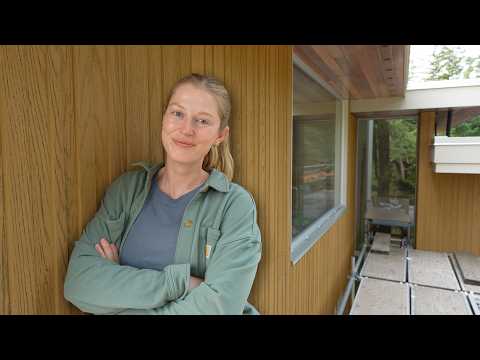
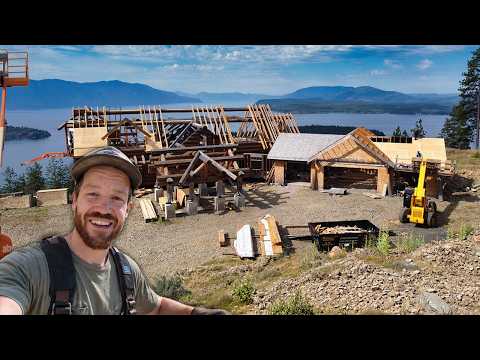
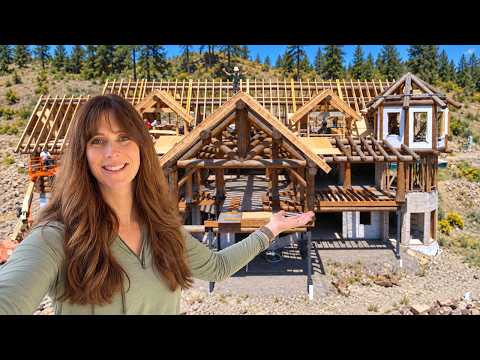
An unfinished octagonal turret stands between Riley and Courtney and their goal of making their enormous lakeside mansion fully weatherproof before winter. The distinctive tower is one of the property's defining architectural features, visible from across the lake and immediately recognizable from the driveway. Unfortunately, it is also one of the most intimidating construction challenges remaining. What follows is an engaging combination of complicated roof framing, practical problem-solving, occasional frustration, and the satisfaction of transforming a long-exposed structure into something that finally resembles a finished home.
Riley's initial hesitation provides an unusually relatable starting point for such an ambitious renovation. After admitting that they arrived the previous day without accomplishing anything, he commits to installing at least one board. That modest objective quickly develops into a demanding exercise in geometry as the couple attempts to construct an eight-sided roof using tongue-and-groove decking. Incorrect measurements, confusing angles, and unexpectedly large overhangs force repeated adjustments. Rather than disguising these setbacks, the presentation makes them part of the experience, showing how even experienced builders can struggle when familiar techniques encounter unusual architectural shapes.
The construction sequences offer considerable practical detail, particularly when Riley explains how the roof components fit together. Viewers see the installation of substantial decking boards, adjustments to imperfect joints, the use of galvanized ring-shank nails, and the challenges of creating clean intersections between the turret and surrounding roof structures. The decision to remove and replace boards that would leave visible gaps demonstrates attention to the finished interior appearance. However, much of the work relies on improvisation, visual judgment, and trial-and-error fitting rather than clearly documented measurements or engineering specifications. This makes the process entertaining to follow but less dependable as a step-by-step instructional resource.
One particularly memorable complication involves routing electrical wiring through the large cedar stump supporting the turret's center. Riley initially attempts to drill directly through the timber using an assortment of long bits and extensions, only to encounter what he believes are concealed structural fasteners. After breaking several drill bits and extensions, he finds an alternative route through a natural crack in the wood, allowing the chandelier wiring to remain largely concealed. The sequence effectively illustrates the unpredictable nature of renovating an unfinished structure built by someone else. It also provides a satisfying example of persistence leading to a workable solution, although the electrical installation itself is not examined in enough detail to establish its eventual code compliance or safety.
The roof insulation and waterproofing work introduces another worthwhile layer of complexity. Riley selects two-inch polyisocyanurate foam board, describing its approximate R-13 insulation value, and uses seam tape to create what he intends to be a continuous air barrier. Cutting rectangular materials to fit an octagonal structure proves particularly tedious, and the couple discusses how remaining gaps might be sealed with expanding foam. Later, they tackle the challenging intersection between the turret and the main roof, constructing a cricket intended to redirect water away from a vulnerable drainage point. These explanations help viewers understand the purpose behind the work, but the final waterproofing claims remain provisional. No completed leak test, detailed flashing inspection, or long-term performance evidence establishes how the assembly will withstand heavy rain, snow, or ice accumulation.
Working conditions provide both dramatic tension and some of the production's clearest weaknesses. The couple acknowledges the dangers of operating at considerable height on a remote property, explaining their agreement not to undertake hazardous work alone. Harnesses, anchor points, ladders, and a boom lift feature prominently throughout the project. Nevertheless, Riley suffers a painful ankle injury after slipping on wet plywood, encounters additional near-falls, and occasionally resorts to questionable shortcuts while moving around the roof. These incidents reinforce the difficulty of the undertaking but also expose inconsistencies in the couple's safety practices. The casual humor surrounding some mishaps can be entertaining, yet it occasionally diminishes the seriousness of risks that deserve more disciplined attention.
Beyond the technical work, the relationship between Riley and Courtney gives the lengthy project much of its personality. Courtney's affectionate criticism of Riley's chaotic working habits, their playful disagreements over measurements, and their shared excitement when a complicated piece finally fits create a natural conversational rhythm. The surrounding landscape adds another dimension, with passing trains, changing autumn foliage, boats on the lake, wildlife, and expansive views repeatedly reminding viewers why the couple considers the property worth restoring. These quieter moments strengthen the emotional connection to the renovation, although repeated commentary about the scenery and progress sometimes slows the construction narrative. The extended financial sponsorship and later merchandise promotion also interrupt the momentum without contributing meaningfully to the central building challenge.
Pros
- The unusual octagonal turret presents a genuinely demanding construction challenge with a clear visual objective.
- Riley's willingness to document incorrect measurements, failed attempts, and revised solutions makes the renovation feel authentic.
- The construction sequences explain several important techniques involving tongue-and-groove decking, roof insulation, framing intersections, and drainage.
- The concealed chandelier wiring challenge provides a particularly satisfying example of adapting to unexpected structural obstacles.
- Riley and Courtney's natural humor and collaborative relationship make the repetitive construction work enjoyable to follow.
- The lakeside setting and distinctive architecture give the project considerable visual character and emotional significance.
- The progression from an intimidating unfinished structure to a substantially enclosed and weatherproofed roof delivers a rewarding sense of achievement.
Cons
- Several dangerous working situations and improvised access methods raise legitimate concerns about construction safety.
- The reliance on eyeballing, trial-and-error fitting, and incomplete measurements limits the video's usefulness as a precise instructional guide.
- The insulation, flashing, and waterproofing methods are not accompanied by enough technical verification to establish their long-term reliability.
- Repeated trips between the roof and ground, material shortages, and extended troubleshooting occasionally make the pacing feel unnecessarily drawn out.
- The financial sponsorship and merchandise promotion interrupt the construction narrative.
- The project concludes without a demonstrated leak test or completed exterior roofing system, leaving the ultimate performance of the turret unresolved.
Riley and Courtney turn one of their mansion's most intimidating architectural challenges into an enjoyable renovation story filled with creativity, persistence, and genuine accomplishment. The detailed construction footage, natural chemistry, and beautiful surroundings make the experience rewarding, even when repetitive sequences and promotional interruptions slow the pace. More consistent safety practices and stronger technical verification would improve its credibility as a building resource, but as an entertaining account of an ambitious restoration, it succeeds remarkably well.