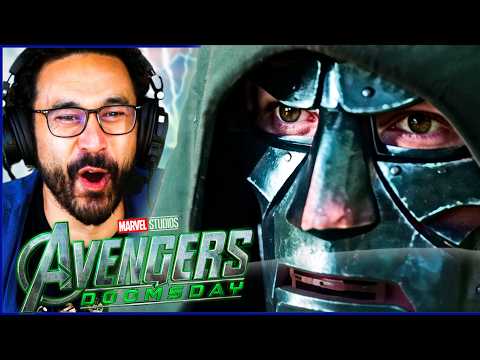
Steve Rogers’ decision to build a life with Peggy Carter after the events of Avengers: Endgame becomes the foundation for an extensive examination of Marvel’s next major crossover. Charlie approaches the latest Avengers: Doomsday trailer as a collection of interconnected clues, exploring how seemingly ordinary family moments could have enormous consequences for the multiverse. His enthusiasm and familiarity with Marvel’s cinematic history make the breakdown engaging, although his willingness to construct elaborate theories occasionally takes him well beyond what the footage establishes.
The examination of Steve Rogers’ personal timeline is particularly interesting. Charlie uses changes in Steve’s beard, differences between residential settings, the trailer’s color grading, and the apparent age of his son to reconstruct a possible sequence of events. His theory that Loki relocates Steve and his family to the Fantastic Four’s universe offers a potential explanation for several lingering questions surrounding the conclusion of Endgame. It is an imaginative interpretation that demonstrates considerable attention to continuity, even if the precise chronology and its implications remain speculative.
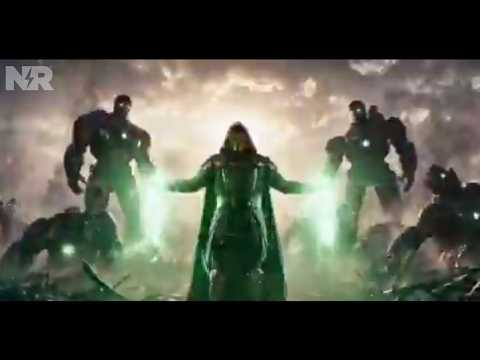
Doctor Doom receives substantial attention, particularly regarding his motivations, relationship with the Fantastic Four, and apparent hostility toward individuals who have interfered with their timelines. Charlie proposes that Doom may blame Steve Rogers for the loss of his own family, connecting this possibility to the villain’s speeches about stolen lives and the destructive consequences of multiversal incursions. References to the Time Runs Out storyline and God Emperor Doom provide useful comic book context, but the suggested personal tragedy and its connection to Steve are presented with greater confidence than the available evidence necessarily warrants.
The breakdown is especially effective when examining smaller production details that casual viewers could easily overlook. Charlie discusses the rotating Avengers Tower logo, updated visual effects surrounding Namor’s underwater settlement, Doctor Doom’s magical imagery, and the different arrangements of the Avengers musical theme. His recognition of the circular superhero formation as a reference to the original Avengers assembly sequence also illustrates how Marvel appears to be drawing upon familiar cinematic imagery to emphasize the scale and significance of this crossover.
The involvement of the X-Men provides some of the most entertaining material, with Charlie highlighting Cyclops confronting Sam Wilson, Nightcrawler teleporting characters into battle, and the appearance of numerous Sentinels. His excitement surrounding Cyclops wearing a more comic book-inspired costume and delivering his signature rallying cry captures why these moments could resonate with longtime fans. Discussions involving Kate Bishop, Cassie Lang, Sentry, and Namor further demonstrate the enormous range of characters and unresolved relationships potentially involved in the story.
However, the distinction between trailer observations and narrative predictions becomes increasingly blurred as the analysis progresses. Suggestions that Doctor Doom has been digitally removed from certain scenes, that Namor will betray the other heroes, and that Loki’s powers will be stolen form an interconnected interpretation without conclusive support from the footage discussed. Charlie frequently acknowledges uncertainty, but some predictions are subsequently treated as foundations for additional theories, creating an increasingly complicated narrative that may differ considerably from the finished movie.
Charlie’s conversational delivery, humorous character impressions, and extensive franchise knowledge maintain an entertaining atmosphere throughout the breakdown. Nevertheless, repeated explanations of Steve Rogers’ relocation, Doctor Doom’s presumed motivations, and the mechanics of incursions make portions unnecessarily lengthy. Viewers deeply invested in Marvel’s interconnected storytelling will appreciate the abundance of references, while more casual audiences may struggle with the rapid movement between previous movies, television series, comic book storylines, and hypothetical future developments.
Pros
- Charlie demonstrates extensive knowledge of Marvel’s cinematic continuity and comic book history.
- The examination of Steve Rogers’ family life presents an intriguing possible explanation for unresolved questions surrounding Avengers: Endgame.
- Detailed observations involving costumes, environmental imagery, visual effects, and musical arrangements reward attentive viewers.
- References to previous Marvel productions help establish potential connections between seemingly unrelated trailer sequences.
- The discussion of Cyclops and the returning X-Men effectively captures the excitement surrounding their involvement.
- Charlie’s enthusiastic delivery and humorous commentary make the extensive analysis entertaining.
- The exploration of Doctor Doom’s potential motivations provides an interesting thematic framework for understanding the multiversal conflict.
Cons
- Several major theories rely on assumptions that the trailer footage does not conclusively establish.
- Repeated explanations of Steve Rogers’ timeline and Doctor Doom’s presumed motivations weaken the pacing.
- The distinction between observed details, established franchise continuity, and hypothetical plot developments is occasionally unclear.
- Secret Wars extends considerably beyond the immediate trailer analysis.
- The abundance of character references and complicated multiverse terminology may overwhelm viewers unfamiliar with Marvel’s interconnected stories.
Charlie delivers an enthusiastic and remarkably detailed trailer breakdown that offers considerable entertainment for Marvel fans eager to explore the connections between Doctor Doom, the Avengers, the Fantastic Four, and the X-Men. Although excessive speculation and repetitive explanations prevent the analysis from being consistently convincing, its attention to visual details, franchise continuity, and comic book influences makes it a rewarding companion to the trailer. Viewers should approach its larger narrative predictions as entertaining possibilities rather than reliable revelations about the finished movie.