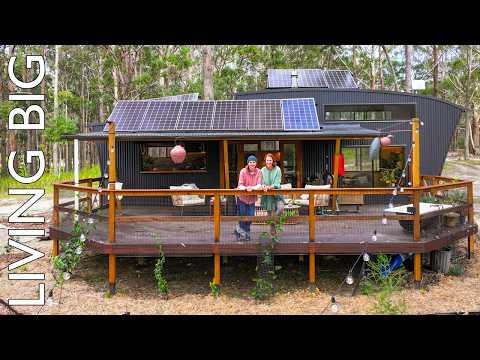
A hundred-plus-meter electrical trench becomes the clearest sign that this container house is moving beyond its shell and toward becoming a functional home. With the electrician completing the first rough-in, the build finally has wiring routed through the property and much of the planned lighting, switches, and power points positioned. The walkthrough gives viewers a detailed look at those choices, including the decision to abandon most of the originally planned downlights in favor of pendant lighting and a simpler electrical layout.
That level of specificity is one of the update’s strengths. Rather than merely announcing that the electrical work is progressing, the creator walks through individual rooms and explains where outlets, switches, pendant lights, smoke alarms, and the remaining downlights will go. She also explains how her preferences diverged from the draftsman’s original plans, particularly when it came to numerous downlights and outdoor power points. The result feels genuinely connected to how she intends to live in the house rather than simply following a plan she no longer wants.
Some of those decisions are presented more as personal convictions than thoroughly examined building choices. The planned wood-fired stove will serve as both the cooking appliance and heating system, while the proposed air conditioner has been removed because she believes the home’s design, insulation, orientation, and local nighttime temperatures will make mechanical cooling unnecessary. Her experience working on the property gives useful context for that choice, but it does not establish how the completed, occupied house will perform across every season. Likewise, installing the very heavy wood stove and its flue herself is introduced as another DIY challenge rather than explored in much technical depth.
The trench work provides the episode with its most tangible demonstration of just how much physical labor sits behind seemingly straightforward infrastructure. Soil has to be replaced and compacted to the required depth before warning tape can be run above the electrical cable, with photographs taken for the electrician’s records. Water trapped in the clay soil creates another complication, and the unexpectedly short roll of warning tape prevents the entire trench from being finished. The lengthy sequence can feel repetitive, but that repetition also communicates the scale of moving, compacting, and checking soil across such a long run.
Meanwhile, the contaminated bifold doors provide a satisfying problem-solving arc carried over from the earlier installation. A test patch of treatment appears to remove the troublesome spotting, after which all six doors are treated, dried, sanded, sealed, and fitted with their hardware again. Rain, an apparently immovable old handle, replacement seals, and the challenge of remembering the doors’ correct order keep the restoration from becoming an unrealistically smooth montage. By the time the refinished doors are reinstalled, the payoff feels earned because the amount of corrective work has been shown rather than skipped.
The biggest setback arrives with the loss of the plumber who had been associated with the project since the septic system was installed. For a remote build, the problem is portrayed as more consequential than simply calling another contractor: the creator says the existing plumber is the only one in the immediate area, while more distant tradespeople may bring travel and accommodation expenses that clash with her limited budget. More importantly, she explains that plumbing delays could prevent progress on the kitchen, laundry, and bathrooms for months. It gives the update genuine stakes and effectively contrasts the week’s visible progress with a new dependency she cannot solve through additional DIY labor alone.
Pros
- Gives a detailed, room-by-room explanation of the completed electrical rough-in and the creator’s revised lighting and power choices.
- Shows the substantial trench backfilling, compaction, warning-tape, and documentation work required after the electrical cables are installed.
- Turns the bifold-door contamination into a satisfying repair process built around testing the treatment before committing to all six doors.
- Includes genuine complications such as waterlogged clay, insufficient warning tape, rain, stubborn hardware, and the loss of the project’s plumber rather than presenting the build as effortlessly successful.
- Clearly explains why losing a local plumber could delay several major areas of a remote, budget-conscious build.
Cons
- The lengthy trench and door-restoration sequences become repetitive once their basic processes have been established.
- The decision to eliminate air conditioning rests largely on personal experience and expectations rather than evidence of how the completed house will perform through a full range of conditions.
- The planned DIY installation of the heavy wood-fired stove and flue is mentioned without much technical discussion of the installation requirements involved.
- Despite the emphasis on electrical completion, several electrical tasks remain pending, making the milestone somewhat less final than the headline suggests.
The update works best as an honest snapshot of owner-building, where a major infrastructure milestone, a successfully rescued set of doors, and an exhausting day of trench work can coexist with a setback capable of delaying the entire project. Its detailed hands-on approach occasionally makes the pacing drag, but the practical obstacles and visible progress give the episode an engaging sense of consequence.