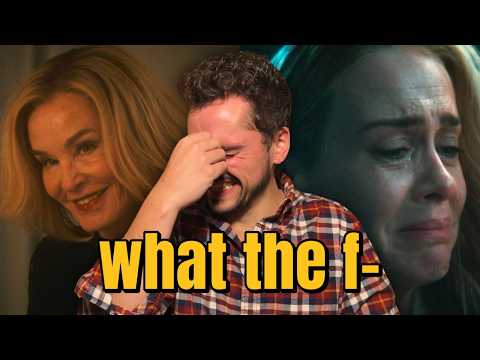
A runaway chicken, a misunderstood taxi destination, and an exhausted lumberjack's afternoon nap become the starting points for three disturbing stories about ordinary situations taking unexpectedly fatal turns. Mr. Ballin uses his familiar suspense-driven storytelling style to explore how seemingly insignificant decisions can set off disastrous chains of events. Although the presentation promises cautionary tales about momentary distractions, the actual incidents involve a broader combination of poor judgment, communication failures, environmental hazards, and extraordinary circumstances. The result is an entertaining collection of dark stories, though their credibility and connection to the central theme vary considerably.
The opening story takes place in rural Egypt in 1995, where an 18-year-old farmworker named Ahmed accidentally allows a chicken to escape into a deep water well. His attempt to retrieve the animal triggers a sequence of increasingly tragic rescue attempts as his siblings and two neighbors descend into the well without returning. The storyteller builds tension effectively by repeatedly emphasizing the silence coming from below, interrupted only by the sound of the surviving chicken. The eventual explanation involves dangerous gases accumulating inside the poorly ventilated well, creating an oxygen-deficient environment that allegedly kills six people. While oxygen displacement and hazardous gas accumulation are genuine confined-space dangers, the precise chemical conditions, exceptionally rapid deaths, and explanation for the chicken's survival are presented without supporting documentation. The story nevertheless delivers a memorable warning about entering enclosed spaces without understanding their hazards.
The second account, involving 20-year-old South Korean college student Kim Yun-so in March 2022, provides the clearest connection to the dangers of distraction. Preoccupied with an unfinished university assignment, Kim allegedly fails to recognize that her elderly taxi driver is attempting to confirm her destination. When he drives past her university and continues toward another location, she interprets his apparent refusal to respond as evidence of a kidnapping. Her mounting fear leads her to jump from the moving vehicle, only to be struck and killed by a passing SUV. The subsequent investigation reveals that the driver reportedly had severe hearing difficulties and misunderstood which university she wanted to reach. This tragic misunderstanding gives the story an emotional dimension beyond its initial appearance as a possible crime.
What makes the taxi incident particularly effective is its shifting perspective. Kim's growing panic initially appears understandable because the driver ignores her repeated requests to stop, accelerates through traffic, and continues toward an unfamiliar destination. The eventual explanation forces viewers to reconsider those same actions through the driver's limited ability to hear and his belief that he was following the correct route. However, attributing the tragedy primarily to Kim's phone use oversimplifies the situation. The driver's communication limitations, the absence of a reliable destination-confirmation process, and the frightening circumstances also contributed to the alleged misunderstanding. The account mentions involuntary manslaughter charges against both drivers and their eventual acquittals, but provides little legal detail or independent evidence to substantiate the sequence of events.
The final story moves to Virginia's Great Dismal Swamp in 1901, where former longshoreman Grant Wilkins is struggling financially after participating in an unsuccessful labor strike. Forced to earn money cutting cedar trees, he reportedly falls asleep after eating sardines and drinking beer during a break. Another lumberjack later discovers him dead, with what initially appears to be his tongue moving inside his open mouth. The narrator reveals that a large venomous snake supposedly entered Grant's mouth, traveled down his throat, consumed the sardines inside his stomach, and suffocated him. The story's grotesque imagery and carefully delayed revelation create a striking horror sequence, but the extraordinary biological claims are not accompanied by evidence. The suggestion that a four-and-a-half-foot snake could enter a sleeping person's digestive tract in this manner without awakening him raises substantial anatomical and physiological questions.
Across all three stories, Mr. Ballin demonstrates considerable skill at transforming simple situations into suspenseful narratives. His conversational delivery, descriptive scene-setting, and carefully timed revelations make the incidents easy to follow while encouraging viewers to anticipate what might happen next. Details such as the chicken clucking inside the dark well, Kim's unanswered messages to her boyfriend, and the lumberjack's unsettling discovery create vivid mental images without requiring elaborate explanations. However, the narration frequently describes characters' private thoughts, motivations, and conversations with considerable certainty, even in situations where those involved supposedly died. Without identifying the sources behind these reconstructions, it becomes difficult to distinguish documented events from dramatic interpretation. The extended Fabletics sponsorship also interrupts the momentum between the first and second stories.
The collection ultimately works better as suspenseful entertainment than as a thoroughly researched examination of preventable tragedies. Its central message about paying attention to one's surroundings has merit, particularly in the taxi account, but the first story is more fundamentally about unsafe rescue decisions and hazardous confined spaces, while the third relies on an exceptionally implausible animal encounter. The title's emphasis on putting away one's phone is therefore misleading when only one of the three stories involves a mobile device. Mr. Ballin's storytelling remains engaging throughout, yet stronger sourcing, more careful treatment of extraordinary claims, and a clearer connection between the incidents would have made the presentation considerably more convincing.
Pros
- Mr. Ballin's conversational narration, descriptive details, and well-timed revelations create consistent suspense across three distinctly different stories.
- The Egyptian well incident offers an effective illustration of how unplanned rescue attempts can become deadly when rescuers fail to recognize hazardous environmental conditions.
- The South Korean taxi tragedy develops a compelling misunderstanding by presenting the passenger's frightening experience before revealing the driver's reported hearing impairment.
- Specific atmospheric details, including the sounds inside the well, the increasingly unsettling taxi journey, and the mysterious movement inside the lumberjack's mouth, make the stories particularly memorable.
- The varied settings and circumstances maintain audience interest while exploring how seemingly minor decisions can have serious consequences.
Cons
- The central warning about phone distraction is poorly aligned with the collection, since only the taxi incident involves mobile phone use.
- The extraordinary snake account contains major biological and anatomical plausibility problems that receive no examination or supporting evidence.
- The Egyptian well tragedy includes specific claims about gas exposure, rapid fatalities, and the chicken's survival without providing documentation or sufficient scientific explanation.
- Detailed reconstructions of deceased individuals' private thoughts and motivations are delivered as factual narratives without distinguishing speculation from established information.
- The taxi account places disproportionate emphasis on the passenger's distraction while giving insufficient consideration to the driver's communication difficulties and other contributing circumstances.
- The lengthy promotional segment disrupts the suspense and pacing established by the opening story.
Mr. Ballin delivers an atmospheric and frequently gripping collection of tragedies built around ordinary decisions that supposedly produce extraordinary consequences. His storytelling is particularly effective in the Egyptian well and South Korean taxi accounts, where escalating tension and unexpected revelations create genuine emotional impact. However, questionable factual claims, limited sourcing, and an inconsistent connection to the promised warning about phone distraction prevent the presentation from achieving the credibility of a carefully researched cautionary examination.