Playtime Co.’s sinister toy factory becomes less a straightforward horror setting than a launchpad for relentless absurdity, profanity, character riffs, and sudden tonal detours. Familiar elements including Poppy, Kissy, the Prototype, Elliott Ludwig, the Doctor, and the company’s experiments are woven into a deliberately unruly parody that assumes viewers already understand much of the underlying world. That approach gives the material considerable energy, but it also makes the story difficult to follow as a self-contained retelling.
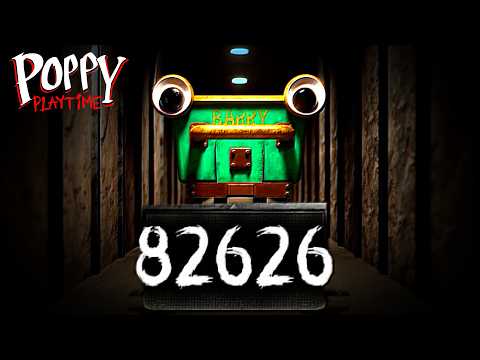
The comedy operates through rapid escalation rather than careful setup. A children’s-show-style Q&A can jump into a simulated fight, a mangled Playtime Co. advertisement, an absurdly complicated train code, fan questions, arguments, and explicit jokes with almost no transition. Some of the funniest moments come from that contrast between cheerful presentation and hostile dialogue, particularly when supposedly wholesome characters abruptly become crude or impatient. The downside is that the constant pursuit of another gag leaves relatively little room for individual jokes to breathe.
There is still a recognizable story beneath the chaos. Safe Heaven is presented as a refuge where toys can supposedly recover the freedom and care denied to them elsewhere, while references to children being killed or starved, concealed casualties, and the Prototype maintain the darker foundations of the setting. Conflicts over who can be trusted and whether bringing outsiders into a protected home creates danger also give portions of the comedy genuine stakes. These threads are intriguing, though they are frequently interrupted before they can develop into sustained dramatic scenes.
Character interactions provide more continuity than the plot itself. Romantic misunderstandings, jealousy, exaggerated flirting, insults, requests for food and water, and mundane conversations about things such as whipped cream or popsicles turn monstrous figures into dysfunctional personalities sharing an increasingly bizarre social environment. The deliberately petty behavior is an effective counterpoint to the larger horror mythology, especially when characters treat potentially catastrophic events with the emotional maturity of an argument between roommates.
The special-edition framing adds another layer through Lillian Ghibli’s Question Corner and direct fan questions. Questions about future episodes, fan art, Chapter 6, and the production team give the presentation a celebratory, behind-the-scenes flavor rather than simply replaying the retold material. The acknowledgment that Chapter 6 cannot yet be retold because the game has not come out is also a fittingly straightforward punch line amid a presentation otherwise built around exaggeration.
That density is ultimately both the production’s defining strength and its main weakness. There are inventive shifts between commercial parody, horror, fan interaction, character comedy, meta commentary, and outright nonsense, but the editing style is so fragmented that scenes can feel like disconnected highlights rather than parts of one escalating narrative. Viewers already familiar with Fera’s interpretation of these characters are positioned to enjoy the callbacks and personality-driven humor most; anyone seeking a clear Chapters 1–5 recap may struggle to extract the actual sequence of events.
Pros
- The cheerful Q&A and toy-commercial framing contrasts effectively with the crude, chaotic character humor.
- Familiar horror elements are repeatedly transformed into inventive character-driven comedy rather than merely reenacted.
- Safe Heaven, the Prototype, Playtime Co.’s experiments, and internal conflicts preserve meaningful stakes beneath the parody.
- Fan questions and production-focused material give the special edition a distinct celebratory identity.
- Mundane arguments and relationship jokes give the toy characters exaggerated personalities beyond their horror roles.
Cons
- Extremely rapid transitions make the overarching Chapters 1–5 storyline difficult to follow.
- Constant profanity, non sequiturs, and deliberately abrasive humor can overwhelm more developed jokes and dramatic moments.
- Important story threads are often interrupted before their tension or character implications can fully develop.
- The presentation depends heavily on prior familiarity with the characters and underlying Poppy Playtime mythology.
Fera Animations delivers an energetic compilation that works best as an irreverent celebration of its established Poppy Playtime parody rather than as an accessible recap of five chapters. The special-edition additions provide welcome personality, but the relentless pace and fragmented storytelling make its considerable creativity easier to appreciate than its narrative.