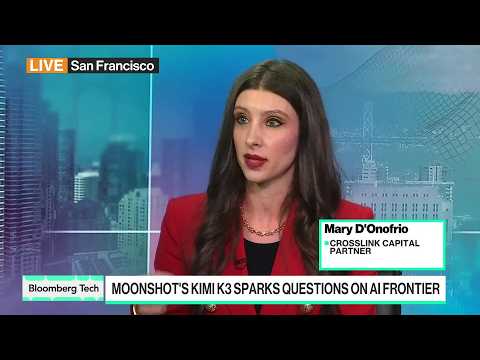
Rather than focusing on a single product announcement, this video surveys an unusually dense stretch of AI news and ties the developments together through a broader narrative about accelerating competition among the world's leading AI laboratories. The discussion moves between rumored model releases, new research directions, commercial strategies, safety initiatives, and policy debates while attempting to explain why these individual announcements may represent parts of a larger trend rather than isolated headlines.
A substantial portion of the presentation centers on reports surrounding Moonshot AI's rumored Kimi K3 model. The presenter carefully notes that many of the specifications, benchmark comparisons, and early demonstrations remain unofficial, repeatedly encouraging viewers to treat leaked information cautiously until verified releases and independent testing become available. Even so, the discussion uses those reports to explore the possibility that Chinese AI companies may be approaching or even matching leading Western models, framing this as a potentially significant shift if confirmed rather than presenting it as an established fact.
The video then broadens into a discussion of recursive self-improvement, arguing that multiple organizations are beginning to experiment with AI systems that help improve other AI systems. Examples include NVIDIA's coding agent research and OpenAI's GPT-Red project, which is described as an automated red-teaming model designed to discover weaknesses in other language models. The presentation explains these concepts in accessible language by comparing them with familiar ideas such as self-play in game-playing AI, making technically complex subjects easier to follow without oversimplifying them.
Another recurring theme is the changing business strategy of AI companies. Rather than treating model quality alone as the primary product, the presenter argues that companies such as Thinking Machines and Microsoft appear to be emphasizing open model releases alongside enterprise fine-tuning and reinforcement learning services. This interpretation is supported by references to publicly announced products and company statements while remaining clearly framed as analysis of their apparent strategic direction rather than confirmed corporate intent.
The discussion also examines Google's reported efforts to strengthen its coding capabilities, Anthropic's hiring strategy, and increasing investment in compute infrastructure. Here the presentation blends factual reporting with informed speculation. Company announcements, executive statements, and publicly reported hiring decisions are distinguished from rumors and predictions, although viewers should recognize that some broader conclusions about competitive positioning remain interpretive rather than proven.
One of the video's strongest qualities is its willingness to separate confirmed information from developing stories. Throughout the presentation, the narrator repeatedly labels leaks, internal reports, rumors, and unofficial benchmark claims as unverified. That distinction helps preserve credibility even while discussing rapidly evolving developments where complete information is unavailable.
The closing section shifts toward AI governance and safety, highlighting growing calls from industry leaders for regulatory frameworks while emphasizing that recursive self-improvement is moving from theoretical discussion toward practical implementation. Although the presenter expresses personal concern about the pace of change and potential societal disruption, these opinions are presented as commentary rather than objective conclusions. Viewers should likewise recognize that predictions about future AI capabilities, economic disruption, and geopolitical consequences remain speculative despite being grounded in real ongoing research and public statements.
Pros
- Covers a wide range of significant AI developments while connecting them through a coherent overarching narrative.
- Regularly distinguishes confirmed announcements from rumors, leaks, and early reports instead of presenting speculation as established fact.
- Explains complex topics such as recursive self-improvement, red teaming, and reinforcement learning using accessible analogies.
- Evaluates both technical progress and business strategy rather than focusing exclusively on benchmark performance.
- Provides balanced commentary by separating personal interpretation from publicly reported information.
- Places individual announcements into the broader context of competition between major AI organizations.
Cons
- The rapid pace and large number of topics leave some developments without deeper technical examination.
- Several discussions rely on leaks, unofficial reports, or early testing that remain unverified at the time of presentation.
- Some broader conclusions about competitive dynamics and future industry outcomes extend beyond currently established evidence.
- The sponsored segment creates a noticeable interruption to the flow of the news coverage.
This is a thoughtful and well-structured roundup that succeeds by doing more than simply listing AI headlines. The presentation consistently encourages viewers to distinguish between verified developments and emerging rumors while offering a broader perspective on how technical progress, commercial strategy, infrastructure investment, and AI safety research may be converging. Although several predictions and interpretations remain speculative by nature, they are generally presented as informed analysis rather than certainty, making the video a useful overview for viewers following the rapidly evolving AI landscape.