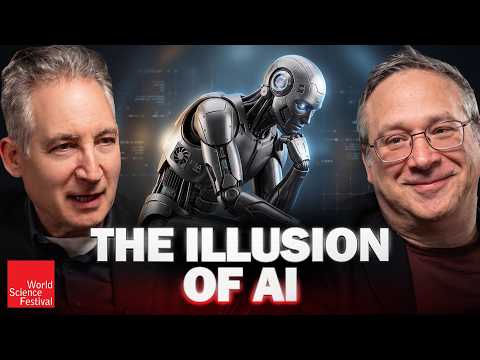
Taylor Jones makes his strongest point by challenging the increasingly popular habit of treating a handful of stylistic quirks as definitive proof that machine assistance was involved. He acknowledges the familiar patterns—overly enthusiastic validation, punchy fragments, repeated constructions such as “it’s not X, it’s Y,” groupings of three and favored vocabulary—but argues that many of these are also perfectly ordinary rhetorical techniques. That distinction gives the discussion more depth than a simple checklist of suspicious words, particularly because Jones repeatedly demonstrates how easily competent human writing can trigger the same suspicions.
The most useful section focuses on semantic coherence rather than surface style. Jones argues that generated prose frequently combines words that statistically fit together while producing metaphors or conceptual relationships that collapse under scrutiny. His examples of “overarching pillars” that simultaneously “undergird” something, containers being treated like blank slates and a toolkit that somehow “buys” something when pointed at a problem make the principle immediately understandable. Whether this constitutes the single best detection method is Jones's argument rather than something established here through controlled testing, but it is a considerably more substantive diagnostic idea than searching mechanically for words such as “delve,” “honestly” or “toolkit.”
The explanation of why these failures supposedly occur is less convincing. Jones characterizes modern large language models as essentially extremely powerful next-word predictors built around N-grams, TF-IDF and related machinery, while also acknowledging that his technical knowledge comes partly from building his own system roughly a decade earlier and that the field has advanced considerably since then. That caveat matters because his broader description compresses complicated modern systems into an intentionally accessible but sweeping account. The practical observation that fluent output can still contain conceptual nonsense remains useful, but the technical explanation is presented with more certainty than the video's own acknowledgment of Jones's dated knowledge comfortably supports.
Jones is considerably more careful when discussing the ethics and usefulness of these tools. Rather than treating every assisted sentence as equivalent, he distinguishes between using a model to organize material someone already understands and relying on it to generate information the user cannot independently evaluate. His example of outlining a book he has already read and taught several times makes that distinction concrete. He similarly identifies boilerplate, checking drafts for omissions, cutting unnecessary material and language study as potentially productive applications, while repeatedly emphasizing verification and editing.
That nuance is reinforced by unusually relevant disclosure about his own workflow. Jones says he has experimented with machine-assisted YouTube scripts, found that such videos performed better in his experiment, eventually moved away from that process because correcting incoherent language became burdensome, and still uses assistance for tasks such as descriptions and occasionally trimming drafts. Those admissions prevent the episode from becoming an easy denunciation of a technology the presenter secretly benefits from. His position instead becomes a practical argument about choosing tasks according to what the technology does well and maintaining enough subject knowledge to recognize when the resulting prose stops making sense.
The presentation is lively enough to keep a fairly abstract linguistic discussion accessible, with jokes about architectural metaphors, toolkits, cafés, science-fiction fears and “LLM Bingo” breaking up the explanation. The downside is that some of the opening discussion wanders well beyond what is needed to establish the central thesis. Comments about water-use objections, Bitcoin, Elon Musk, historical financial bubbles and broader moral panic introduce numerous contentious subjects without examining them in enough detail to contribute much to the eventual detection method. The later criticism of an undergraduate-written Atlantic article likewise illustrates the larger point that humans can produce incoherent prose too, but its dismissive tone is less persuasive than the carefully dissected language examples.
Ultimately, the most valuable lesson is also the simplest: readers should evaluate whether words actually express a coherent idea rather than attempting authorship detection through vocabulary alone. Jones even identifies the unavoidable limitation of his own method—humans mix metaphors and write incoherently as well—so semantic failure cannot prove who or what produced a passage. That limitation arguably strengthens the practical takeaway: if writing is conceptually confused, determining whether a person or a machine caused the confusion may matter less than recognizing that the writing itself deserves skepticism.
Pros
- Makes a strong distinction between superficial stylistic clues and deeper problems of semantic coherence.
- Concrete mixed-metaphor examples make an abstract linguistic argument easy to understand and apply.
- Appropriately warns that familiar rhetorical constructions and favored words cannot independently prove machine involvement.
- Offers a nuanced discussion of acceptable assistance based on the user's existing knowledge and ability to verify the result.
- Candid disclosure of Jones's own experimentation and continuing limited use gives the discussion useful practical context.
Cons
- The technical account of how modern language models operate is highly simplified despite Jones acknowledging that some of his underlying technical experience is dated.
- The claim that semantic incoherence is the strongest detection method is argued through examples rather than demonstrated through systematic evidence.
- The opening spends substantial time on loosely related cultural, political and environmental controversies before reaching the central linguistic argument.
- Some jokes and dismissive asides, particularly around other writers and public debates, distract from the more rigorous analysis.
- Semantic incoherence cannot reliably establish authorship because, as the video itself acknowledges, human writers also produce mixed metaphors and confused prose.
The video is most persuasive when it stops hunting for fashionable telltale words and asks whether a sentence's underlying concepts actually fit together. Jones's examples, practical experience and willingness to acknowledge false positives make that framework genuinely useful, even though his technical explanation and claims about detection would benefit from stronger evidence and more qualification. It is an engaging linguistic critique whose best lesson is ultimately about reading critically rather than confidently identifying an author.