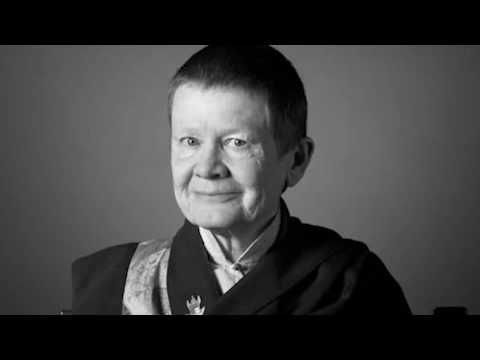
Spiritual teachers often promise techniques, disciplines, or philosophies that claim to lead people toward enlightenment. In this talk, Gangaji takes a very different approach. Rather than offering another method to improve oneself, she repeatedly challenges the audience to abandon the endless pursuit of becoming something "better" and instead recognize the awareness that already exists beneath every thought, emotion, and identity. It is a deeply philosophical presentation that rewards patient listening and thoughtful reflection.
One of the talk's greatest strengths is its willingness to question assumptions that many spiritual seekers take for granted. Gangaji argues that both feelings of worthlessness and feelings of spiritual superiority originate from the same source—the ego. Whether someone feels deflated by failure or inflated by enlightenment, she suggests both states are simply different expressions of identification with the mind. It's an intriguing perspective that encourages listeners to examine the subtle ways the ego can disguise itself.
Throughout the discussion, Gangaji repeatedly returns to a simple but powerful invitation: stop striving. Instead of endlessly searching for peace, love, or enlightenment as future achievements, she encourages the audience to recognize the awareness that is already present in every moment. This emphasis on direct experience rather than intellectual understanding gives the presentation an unusual sense of calm and consistency.
Another highlight is her discussion of the "super ego"—the internal voice that constantly judges, rewards, criticizes, and compares. Her explanation of how people become trapped by the endless cycle of self-improvement, guilt, and perfectionism is both psychologically insightful and surprisingly practical. Even viewers who don't fully embrace nondual philosophy may find themselves recognizing these patterns within their own lives.
The question-and-answer format works particularly well. Rather than delivering a formal lecture, Gangaji responds to audience members wrestling with issues such as spiritual ambition, judgment, self-criticism, relationships, purpose, and meditation. These exchanges make abstract philosophical concepts feel more personal and relatable, allowing listeners to see how the teachings might apply in everyday life.
One of the most compelling themes running through the entire talk is the distinction between authentic awareness and the mind's attempt to imitate awakening. Gangaji repeatedly warns against turning spirituality into another ego project—a pursuit of becoming the "perfect" spiritual person. It's a refreshing reminder that genuine growth often comes through acceptance rather than constant self-correction.
However, this presentation won't resonate equally with every audience.
Its nondual philosophy assumes a degree of familiarity with concepts like consciousness, awareness, ego, and self-realization. Viewers new to these ideas may find portions of the discussion abstract or difficult to follow, particularly since many explanations build upon earlier concepts rather than defining them explicitly.
Additionally, Gangaji's teaching style intentionally avoids offering concrete techniques or step-by-step practices. Those looking for practical meditation exercises or structured guidance may leave feeling inspired but uncertain about how to apply the teachings in daily life.
Pros
- Thought-provoking exploration of nondual awareness and consciousness.
- Insightful discussion of ego, self-judgment, and spiritual identity.
- Calm, compassionate, and engaging teaching style.
- Excellent audience interaction that makes abstract concepts more relatable.
- Encourages deep self-reflection rather than superficial self-improvement.
- Offers timeless philosophical insights that extend beyond any single spiritual tradition.
Cons
- Abstract concepts may be difficult for beginners to grasp.
- Provides few practical exercises or actionable techniques.
- Some ideas may feel repetitive as key themes are revisited throughout the talk.
- The nondual perspective may not resonate with viewers who prefer more traditional religious or psychological frameworks.
Gangaji delivers a thoughtful and deeply reflective conversation that challenges listeners to reconsider their understanding of identity, awareness, and personal growth. Rather than encouraging people to become more spiritual, she asks them to examine the very impulse to become anything at all—a subtle but profound shift in perspective. While the talk demands patience and an openness to contemplative philosophy, those willing to engage with its ideas are likely to come away with meaningful questions about the nature of consciousness, the role of the ego, and the possibility of finding peace without endless striving. For viewers interested in nonduality, Advaita philosophy, meditation, or the teachings of awareness-based spirituality, this is a rewarding and intellectually stimulating presentation that lingers in the mind long after it ends.