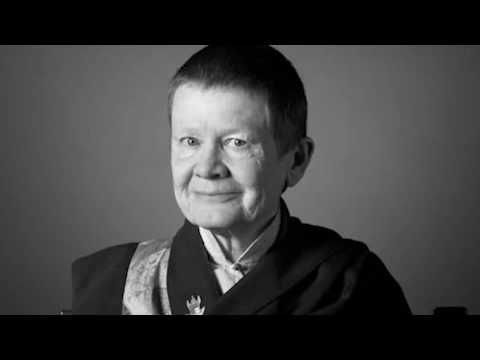
Questions surrounding astral projection often come wrapped in expensive courses, elaborate techniques, or years of promised spiritual discipline. This interview takes a noticeably different approach. Nelson argues that out-of-body experiences are a natural human ability rather than a rare mystical achievement and spends much of the conversation explaining why he believes these experiences can be learned quickly and, in his own practice, without charging participants. The discussion unfolds as an informal exchange that explores astral projection alongside broader topics such as religion, consciousness, spiritual identity, fasting, reincarnation, and humanity's relationship with the divine.
One of the interview's greatest strengths is its conversational style. Rather than delivering a lecture filled with rigid doctrine, Nelson answers a wide range of spontaneous questions while the host challenges him to explain extraordinary claims in everyday language. Analogies involving video games, movie projectors, puzzles, and everyday life make many of the abstract concepts easier to follow, even when the underlying ideas remain highly speculative. The host also asks the kinds of questions many viewers are likely to have, including how these experiences supposedly occur, why some people report them while others do not, and whether any evidence exists beyond personal testimony.
The presentation centers almost entirely on Nelson's personal worldview. He describes consciousness as consisting of body, soul, and spirit, each operating in different realms that can supposedly be experienced independently. Throughout the interview he recounts numerous personal experiences, including intentional out-of-body travel, encounters with spiritual beings, conversations with God, visions of Jesus and the Holy Spirit, visits to heavenly realms, and guiding other people through similar experiences. These accounts are presented sincerely and consistently, but they remain matters of personal belief rather than claims that have been independently verified through established scientific evidence.
The conversation also spends considerable time examining organized religion from a critical perspective. Nelson explains how his experiences gradually led him away from traditional Baptist Christianity toward a broader mystical outlook that draws ideas from multiple religious traditions. Rather than arguing for a single religious system, he encourages viewers to pursue direct spiritual experience over institutional rules. Whether viewers agree with these conclusions will depend largely on their own theological and philosophical perspectives, but the discussion generally remains focused on personal experience instead of hostility toward those who hold different beliefs.
Another interesting section explores spiritual development beyond astral projection itself. Topics such as self-identity, purpose, manifestation, enlightenment, fasting, discipline, healing, and meditation are woven together into a larger philosophy emphasizing personal transformation over fear or punishment. Even when discussing controversial subjects, Nelson consistently returns to themes of authenticity, rest, compassion, and self-discovery instead of sensationalism.
The interview's largest limitation is that its central claims extend far beyond what can presently be confirmed through empirical research. Assertions regarding astral travel, heavenly encounters, spiritual entities, metaphysical realms, healing abilities, and communication with divine beings rely almost entirely on personal testimony and anecdotal reports from students. While the discussion acknowledges that individual experiences are difficult to prove, viewers seeking scientific investigation, controlled evidence, or critical examination of alternative explanations may find the presentation one-sided.
The interview is also expansive in scope. Although the broad range of topics keeps the discussion engaging, it occasionally shifts rapidly between astral projection, theology, reincarnation, healing, comparative religion, and consciousness without exploring each subject in substantial depth. Viewers hoping for a step-by-step instructional discussion of astral projection may find that much of the runtime instead develops Nelson's broader spiritual philosophy.
Pros
- Presents astral projection in an approachable, conversational manner rather than through fear or mystique.
- Uses clear analogies that help simplify complex metaphysical concepts.
- Explores a wide range of spiritual topics beyond astral projection, including consciousness, purpose, fasting, healing, and comparative religion.
- The host asks thoughtful questions that encourage detailed explanations instead of simply accepting extraordinary claims.
- Encourages personal reflection, authenticity, and self-improvement rather than fear-based spirituality.
- Maintains an open, respectful tone throughout the discussion.
Cons
- Central claims about astral projection, heavenly travel, spiritual beings, and divine encounters rely primarily on personal experience rather than independently verifiable evidence.
- Offers limited skeptical examination of extraordinary metaphysical assertions.
- Frequently transitions between major philosophical topics, making parts of the discussion feel unfocused.
- Viewers seeking scientific explanations or rigorous evidence may remain unconvinced by many of the interview's conclusions.
This interview succeeds as a thoughtful exploration of one practitioner's understanding of astral projection and mystical spirituality rather than as an attempt to prove its claims conclusively. Nelson presents an internally consistent worldview that connects consciousness, spiritual practice, healing, religion, and personal transformation into a unified philosophy, while the host keeps the discussion accessible through genuine curiosity and practical questions. Those interested in metaphysical exploration and first-hand spiritual experiences are likely to find the conversation engaging and thought-provoking, while viewers who prioritize empirical evidence will likely view many of its central assertions with understandable skepticism. :::